Long before “bringing the outdoors in” was a design trend and sustainability was a household concept, early-1900s Kansas City architect Mary Rockwell Hook was putting both into practice—starting with one of her most famous works, the Pink House.
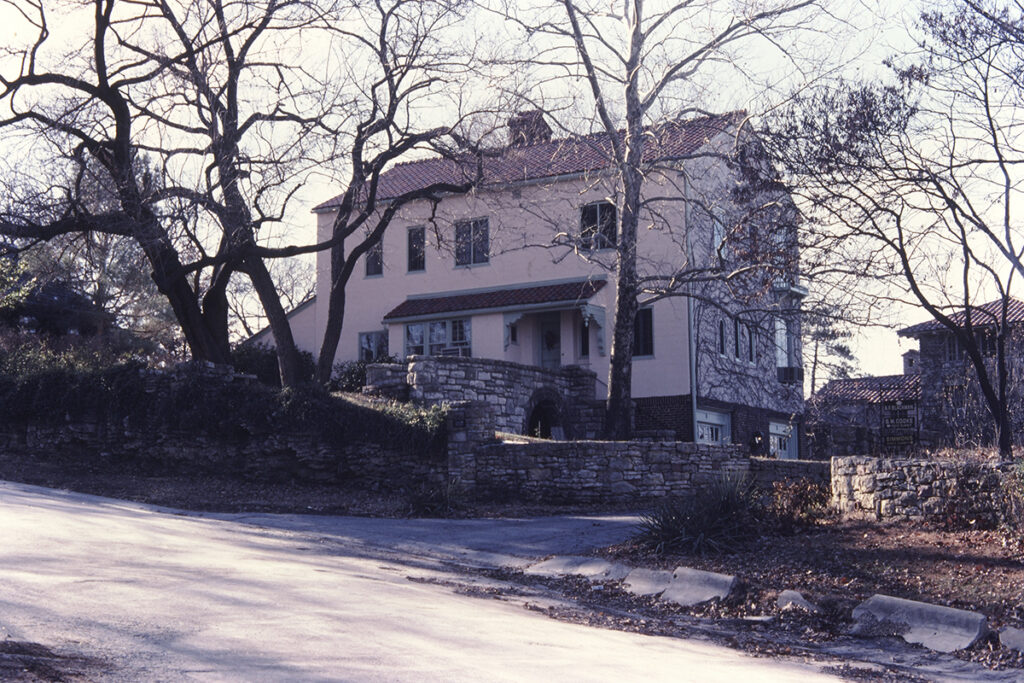
Perched on a Sunset Hills cul-de-sac near Loose Park, Hook designed and built the Pink House soon after returning from the 1915 World’s Fair in San Francisco, where she fell in love with the pink plaster used on the fair’s pavilions. That rosy hue went on to define one of the city’s most distinctive homes.
The Pink House perfectly reflects Hook’s design philosophy: dramatic integration with the surrounding landscape, a Mediterranean-Italianate look and a playful, almost theatrical touch. “She borrowed heavily from the places she visited around the world, particularly European architecture styles and Filipino influences,” says Sarah Biegelsen, special collections librarian and archivist at the Kansas City Public Library.
Built directly into the hillside, the home features multiple entrances on different levels and expansive windows that flood the space with natural light. It also leans hard into outdoor living, with porches, balconies and open terraces that blur the line between inside and out. Hook incorporated native limestone into the structure while sourcing other materials from unlikely places. She used stonework from dismantled streetcar lines, discarded railroad materials and even lanterns from Italy. “She used a lot of salvaged materials, long before a lot of people did,” Biegelsen says. “If something was being thrown in the trash, she wanted it and she was gonna use it.”
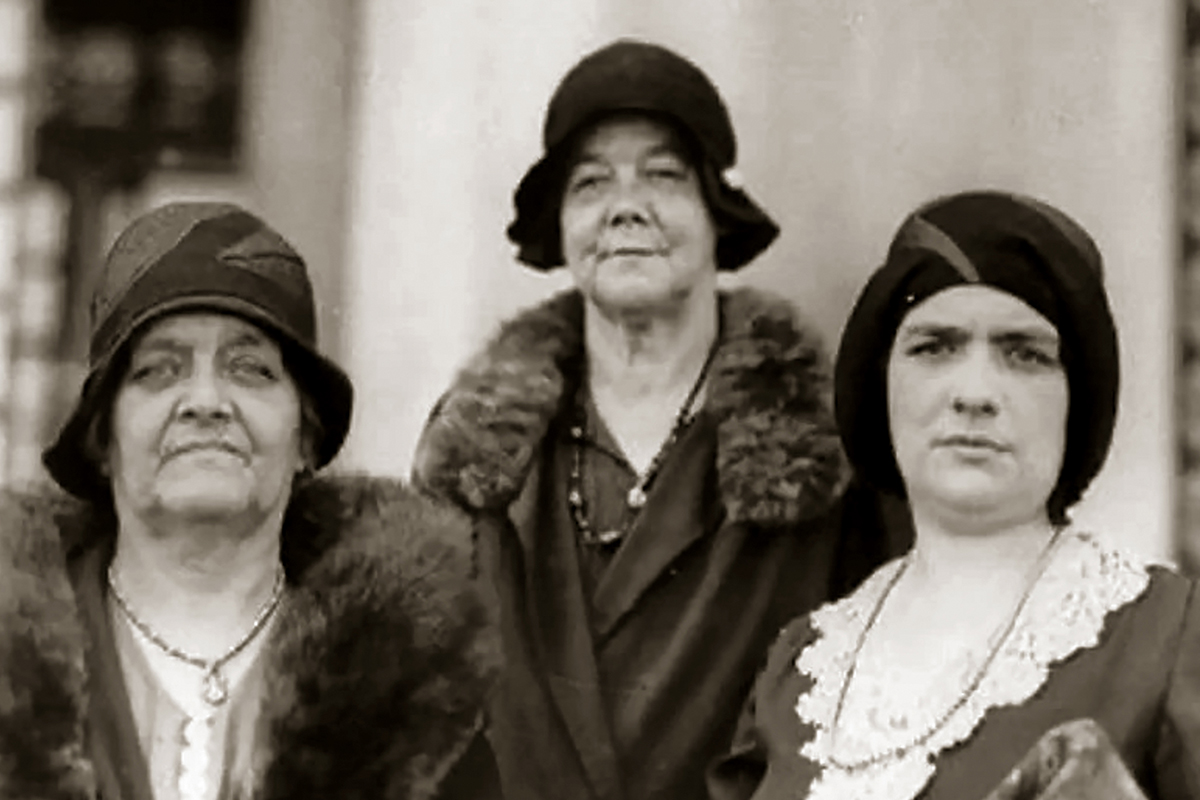
Hook’s vision thrived despite some institutional resistance. She was one of only five female architects practicing in Kansas City between 1910 and 1931, and the American Institute of Architects denied her membership twice because she was a woman. “The limitations of her gender is the factor that likely held her back the most,” Biegelsen says. Still, Hook’s background worked in her favor. Raised as one of five daughters whose parents encouraged professional independence, she found similar support in Inghram D. Hook, the Kansas City lawyer she married in her 40s.
Beyond the Pink House, Hook pioneered several architectural “firsts” in Kansas City, including the first attached garage (a feature so unusual at the time that it required a special permit) and some of the area’s earliest poured concrete foundations. Nine of her residential designs in the area were eventually listed together on the National Register of Historic Places in 1983, including the Pink House. Seven out of those nine homes sit in Sunset Hills alone.
Hook’s career stretched into her 70s, with projects across the country and even a renovation in Italy. In 1977, when Hook was 99, the American Institute of Architects—the organization that had twice rejected her—hosted a multi-home tour of her Sunset Hills projects as tribute. “She was still alive at the time,” Biegelsen says. “It was a way to honor her and honor her architectural career and also showcase her legacy in the houses in Sunset Hills.”