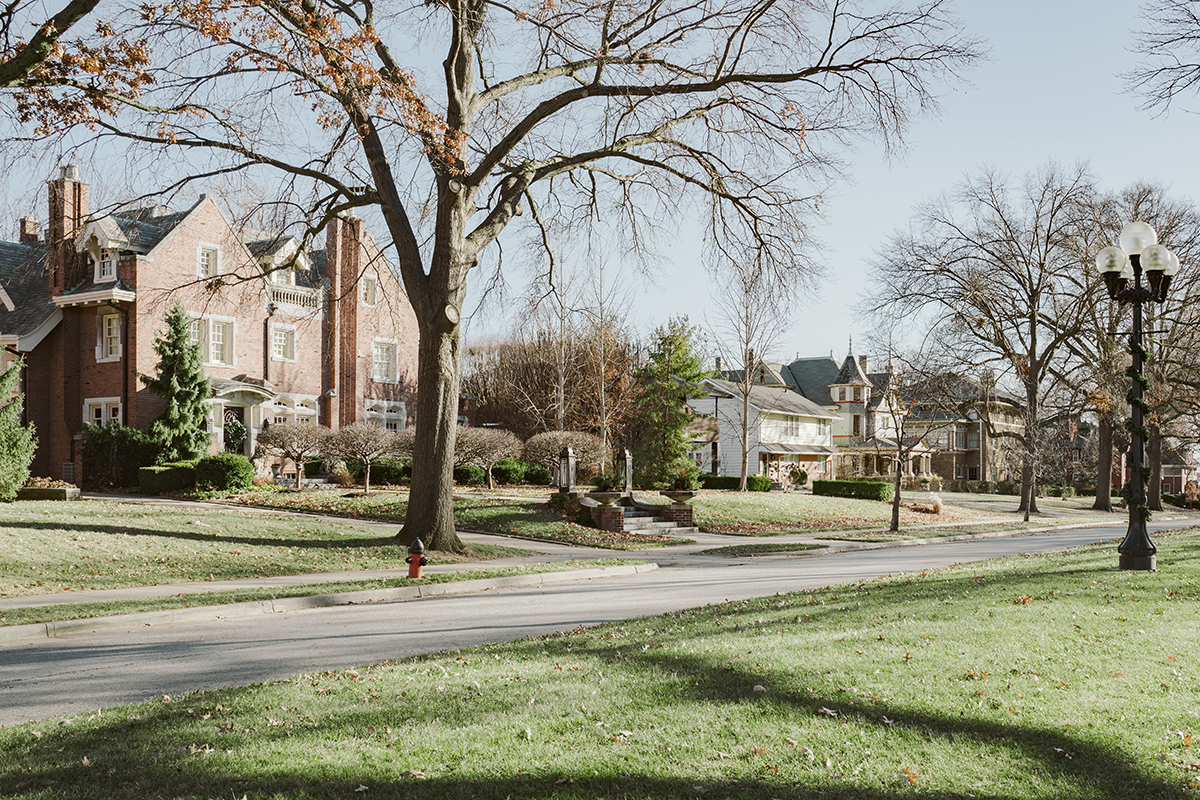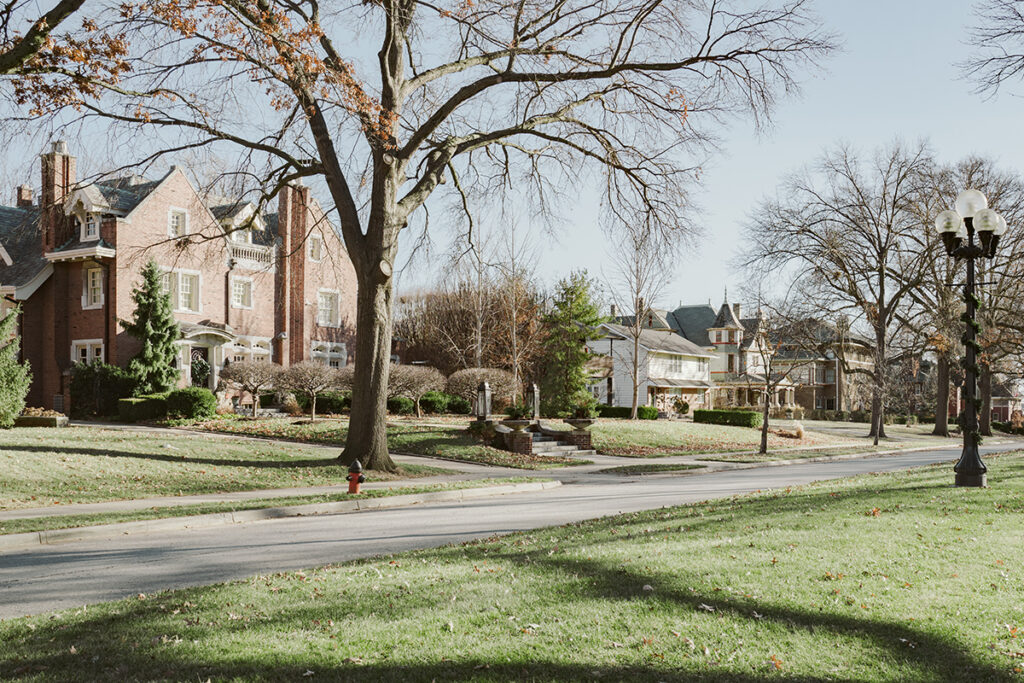
19 mansions circle a leafy parkway. From stone facades to leaded glass and mahogany interiors, Janssen Place has been a showcase of wealth and craftsmanship for 128 years, and it remains largely unchanged.
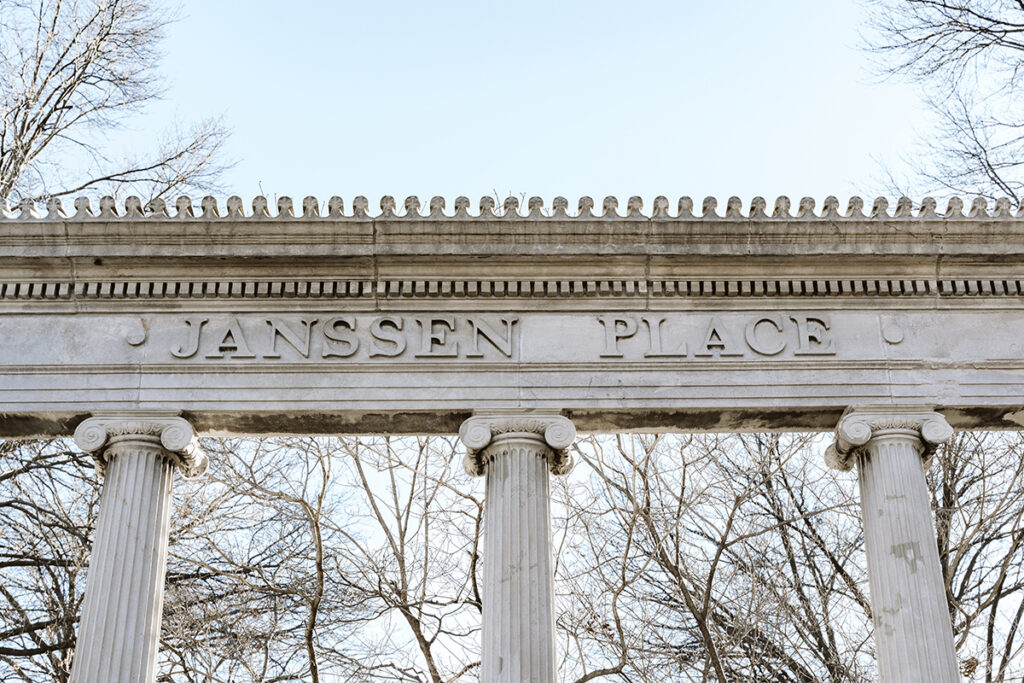
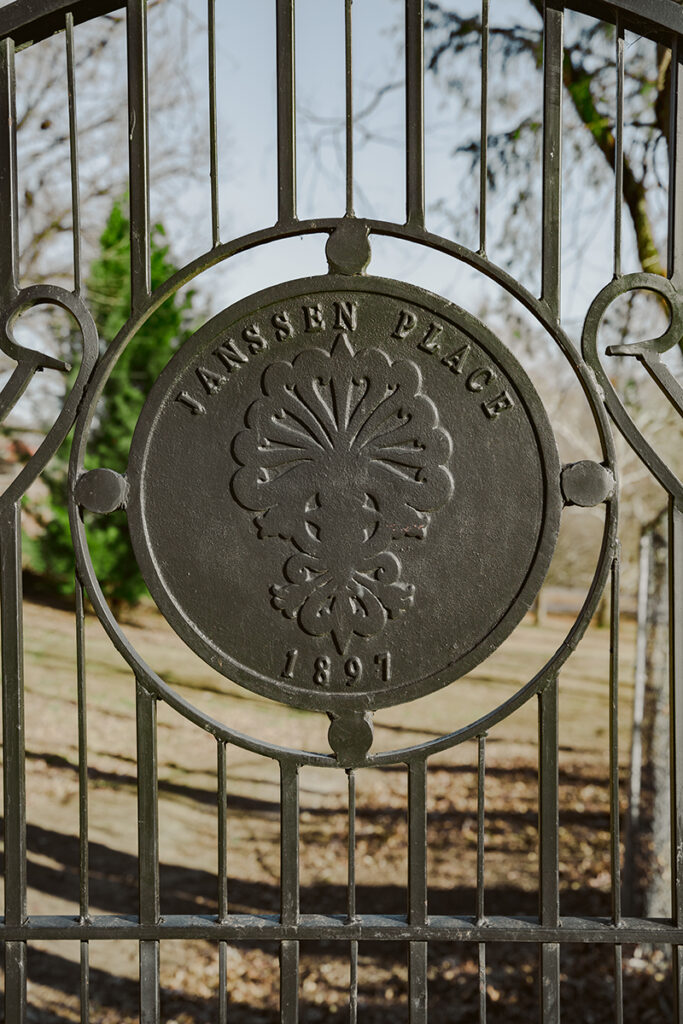
From the start, Janssen Place was different. Platted in 1897 by railroad baron Arthur Stilwell, it was a private street that housed some of Kansas City’s elite. Stilwell commissioned local architect George A. Mathews to design the neighborhood’s layout, including entry features and the street’s arrangement. Homeowners maintained their own streets and sidewalks, creating a controlled, exclusive environment. “It was a very exclusive address,” says longtime resident Steve Mitchell, who has lived at 2 Janssen Place since 1985.

Mitchell and his wife raised their four children there, and over the years, he’s watched as younger families move in and the neighborhood evolves. “I think Janssen Place has greatly improved, particularly since the 2001 project,” he says, referring to what he calls the million-dollar makeover: streets, sidewalks, driveways and storm sewers all rebuilt. But to qualify for the financing, Janssen Place had to give up something it had guarded since 1897: It became a public street for the first time, though in practice, little changed.
The change was more paperwork than philosophy, according to Mitchell. The city took over maintenance, but the soul of the street remained intact. That preservation is partly thanks to its historic designations: Janssen Place has been a National Register Historic District since 1976 and a local historic district since 1980, meaning the Kansas City Landmarks Commission must approve any exterior changes.

The original residents were a who’s who of Kansas City’s turn-of-the-century wealth. Seven of the 19 residents were in the lumber business, earning the street its nickname—Lumberman’s Row. William Pickering, whose company was the third-largest lumber business in the nation, built number 20. The Tschudys, who built Mitchell’s house, were hardwood lumber tycoons who helped found the Kansas City Chamber of Commerce. Number six belonged to the Peet family of Colgate-Palmolive fame. And at number 80 lived Bertha Glasner, heiress to a distilling fortune. “She was probably the wealthiest person that ever lived on Janssen Place,” Mitchell says.
The original architecture that lines Janssen Place reflects its wealth: All but one of the houses are built of stone or brick, and many interiors are drenched in intricate mahogany woodwork. Home styles range from Colonial Revival to Italianate Renaissance.

Despite the wealth, the neighborhood didn’t remain untouched by broader economic shifts. In the mid century, particularly in the years around The Great Depression and World War II, maintaining and purchasing massive single-family homes became difficult. Many of these architectural gems were divided into multi-unit apartment buildings, and eventually deterioration set in.

In research for his book, Janssen Place, which he co-authored with Bruce Matthews, Mitchell explored six boxes of archival material entrusted to him by longtime trustees Dick Hetzel and Joe Kostelac. “It was a treasure trove,” Mitchell says. Meeting minutes from 1911 through the 1930s revealed not just the logistics of running a private street but the human stories behind it. The aforementioned economic pressures came to a head in 1945, when residents attempted to renew single-family restrictions. Two owners opted out, temporarily converting many homes into duplexes. Mitchell’s own carriage house once held 11 separate apartments.
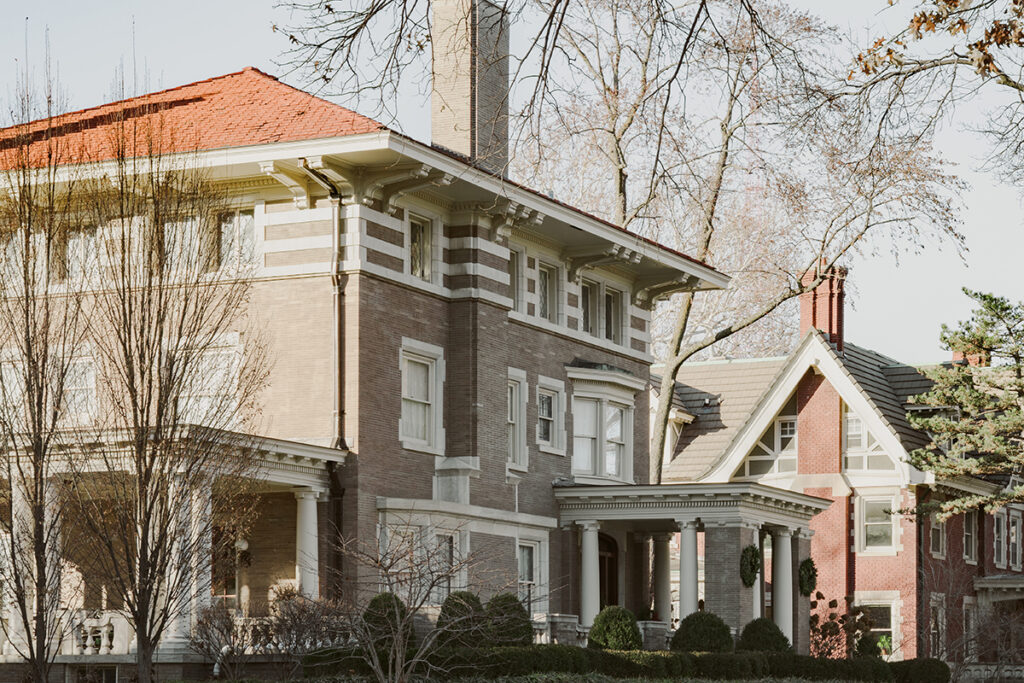
Janssen Place is a labor of love in its truest sense. Neither Mitchell nor Matthews makes a dime from sales; all proceeds go to Mount Washington Cemetery and the Hyde Park Neighborhood Association. Mitchell just wants to preserve the role the street has played in its history, and preserved he has: The Mitchells have restored number two “basically the way it was when the Tschudys lived here.” Built in 1905, the home features woodwork from 11 different hardware companies and a first floor wallpapered in documents from the era. When the Mitchells bought it in 1985, the previous owners had started converting it back to a single-family residence after years as a boarding house, but they didn’t have the resources to finish. The property’s carriage house has since been converted into an Airbnb, giving visitors a unique way to experience Janssen Place firsthand.
More than 11,500 people have toured the Mitchell home over the years. It’s been on the Hyde Park home tour twice, most recently in 2022, and remains open for curious neighbors. There’s only one home on Janssen Place that has seen that many eyes, Mitchell says. And it happens to be his.