What exactly makes a quilt a quilt?
At Cross Threaded, a new exhibition at the Kansas City Artists Coalition, the answer isn’t always straightforward. Curated by artist Thayer Bray, the show brings together 14 artists working across fiber- and textile-based practices. The show opens with a preview on July 17, followed by a First Friday reception on August 7, and runs through September 4.
“It really was built off of how we do our monthly or annual shows,” Bray says. “I was reviewing a lot of solo shows and group shows, and I just kept seeing textile work over and over and over again. This isn’t just one person’s process. This seems to be a movement.” That movement inspired a group exhibition that could show multiple approaches to the same or similar materials.
“I can’t do a solo show for all of [the artists],” Bray says. “But having a six-week show where all these people come together in different voices, using the same material in vastly different ways … I got really excited about that.”
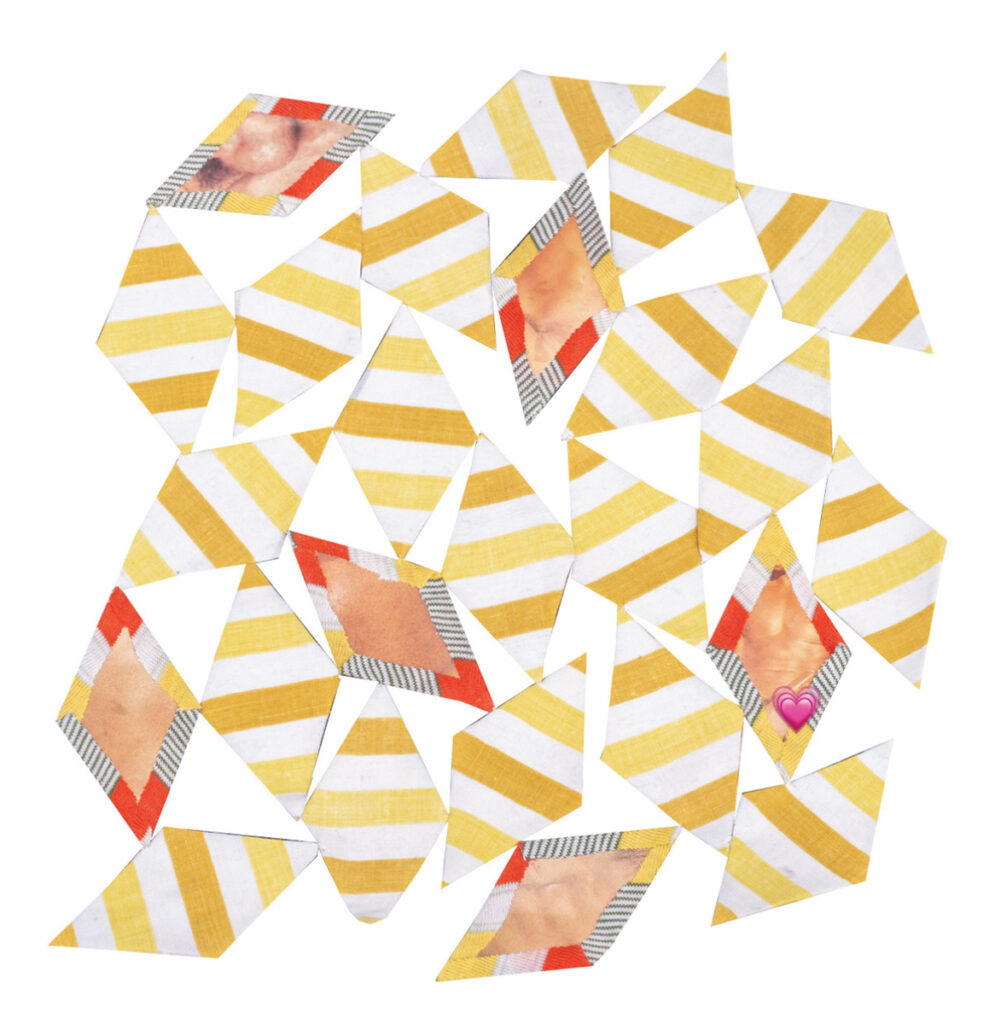
Cross Threaded aims to bend the true definition of fiber art. Across the gallery, works will cover weaving, embroidery, digital jacquards, soft sculpture and quilt-based processes, each exploring how textile practices can shift between image, object and structure.
“Textile is three-dimensional,” Bray says. “It is pliable and movable and therefore exists in more than just a flat image.”
That flexibility is evident in the work of the 14 participating artists. Ashleigh Robek, who trained in fashion design before pivoting toward more conceptual textile work, is bringing soft sculpture and hanging forms to Cross Threaded. She says her work is a mix of the arts of garment, object and installation.
“Through creation and making, you realize those labels don’t matter,” Robek says. “It’s actually pretty hard to define anything.” That blurred line is part of what draws her to soft sculpture. “I get excited when the label changes day to day, like when a soft sculpture can become a garment or can become a chair.”
Her practice begins with found or repurposed materials, which she configures into sculptural forms. In recent work, she’s pushed further into symbolic material histories, using textiles to challenge and question how domestic tools and fashion objects carry layered meaning.
Artist Nathan Ford’s approach is rooted in improvisational quilting traditions, a practice historically credited to African American quilting communities where makers often repurposed worn clothing, blankets and other textiles into functional works. The visual language of improvisational quilting has evolved into finding creative ways to waste little while building something new.
Ford came to the medium through his own family history. Raised in a family of quilters and fiber artists, he describes his practice as his own contemporary spin on those traditions that breaks from rigid grids and blocks and moves toward gestural, free-form looks.
“It’s more about movements and how things are pieced together,” Ford says. “It’s not about perfection. It’s more about your creative spin on quilting.”
Ford works primarily with secondhand materials sourced from thrift stores and estate sales, building quilts that often reference the industrial and domestic realities of the American Rust Belt.
Together—despite the wide range of materials, techniques and subject matter on display—the works in Cross Threaded are designed to feel intertwined. “If you pull one thread, you realize it’s connected to everything else in the room,” Bray says. kansascityartistscoalition.org