Kansas City designers are giving fashion’s most iconic wardrobe staple a little hometown attitude. From daring micro-minis to deconstructed leather creations and extravagant gowns, eight local designers have put their own spin on the Little Black Dress—proving that even after 100 years, this fashion classic still has a few surprises up its sleeve.
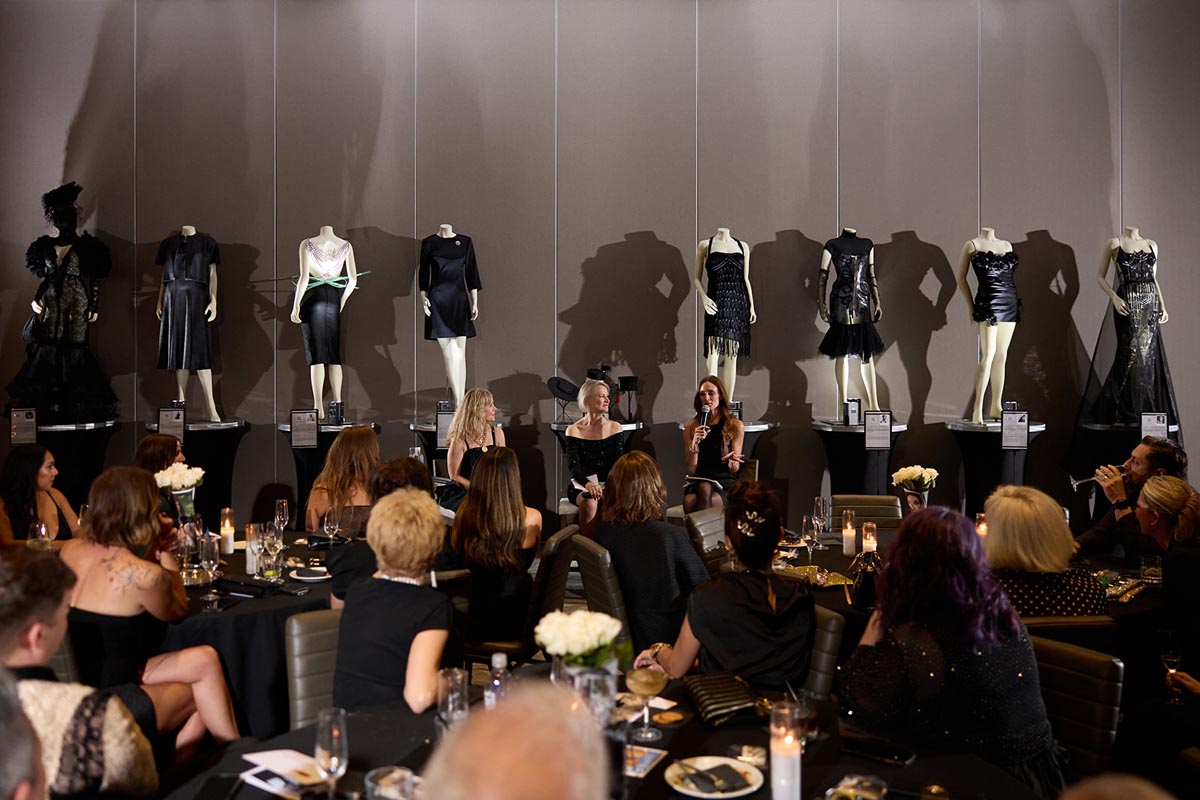
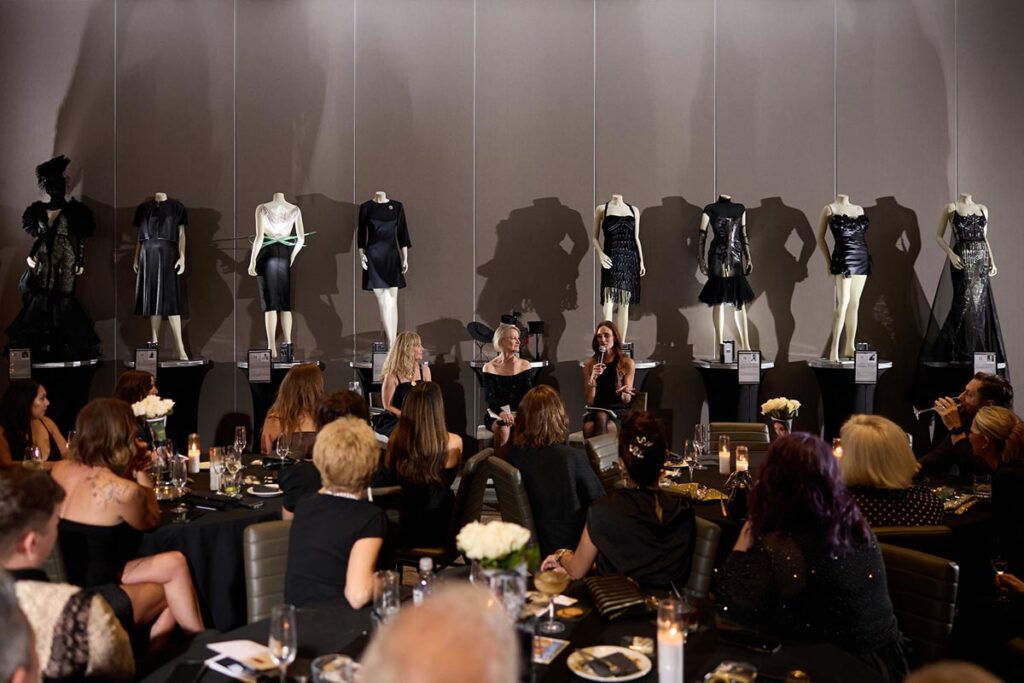
The designs were created for The Longest Fashion Table: Celebrating 100 Years of Chanel’s Little Black Dress, a two-part September event presented by Fashion Group International of Kansas City. The eight interpretations were unveiled at the Cascade Hotel before becoming part of an exhibition at The Museum of Kansas City. The celebration paid tribute to Coco Chanel, who helped transform black from a color associated with mourning into a symbol of modern fashion a century ago.
For Danielle Huppe, membership chair of FGI Kansas City, the creative challenge was about seeing just how far designers could push an idea that has already spent 100 years evolving.
“I did not want to see eight versions of a shift dress,” Huppe says. “I also didn’t want them all to be little or short nor the same material. I specifically wanted to see how far the envelope could be pushed.”
That freedom resulted in designs that looked nothing alike—which was exactly the point.
“I see it as The Little Black Number,” Huppe says, imagining the phrase as a broader definition for the black suit, the go-to dress or whatever black piece makes a woman feel like herself.
FGI member Paul Gutiérrez, the deputy director of visitor experience and public engagement at The Museum of Kansas City, collaborated with the participating designers to bring their work into a museum exhibition.
For Huppe, that sense of community is part of what drew her to FGI after moving from New York to Kansas City. “Attending my first FGI event, I felt like I found my people,” she says.
That feeling is one FGI hopes to extend to designers and creative professionals throughout Kansas City. The organization provides opportunities for members to build relationships, gain exposure and collaborate with other creatives.
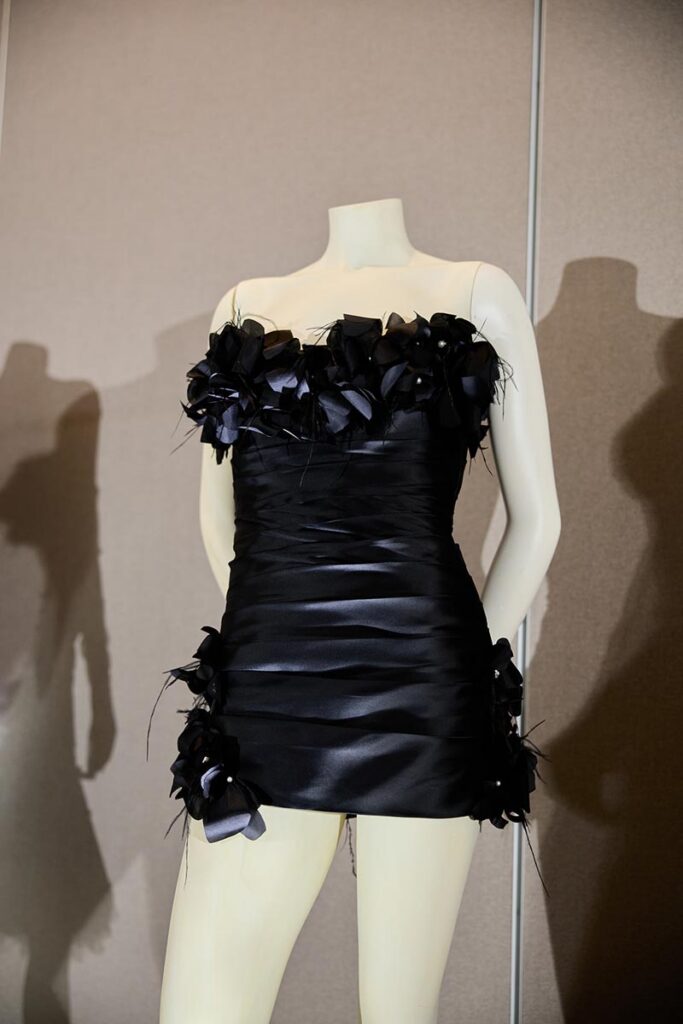
Èlon Kebede, founder and designer of fashion house ÈLU, took the LBD in a playful and daring direction with a micro-mini inspired by her own wedding bouquet. Organza wraps around the body while handmade flowers, feathers, pearls and rhinestones create dimension at the bust. The result is feminine, flirtatious and personal, reflecting Kebede’s belief that today’s LBD can be multidimensional.
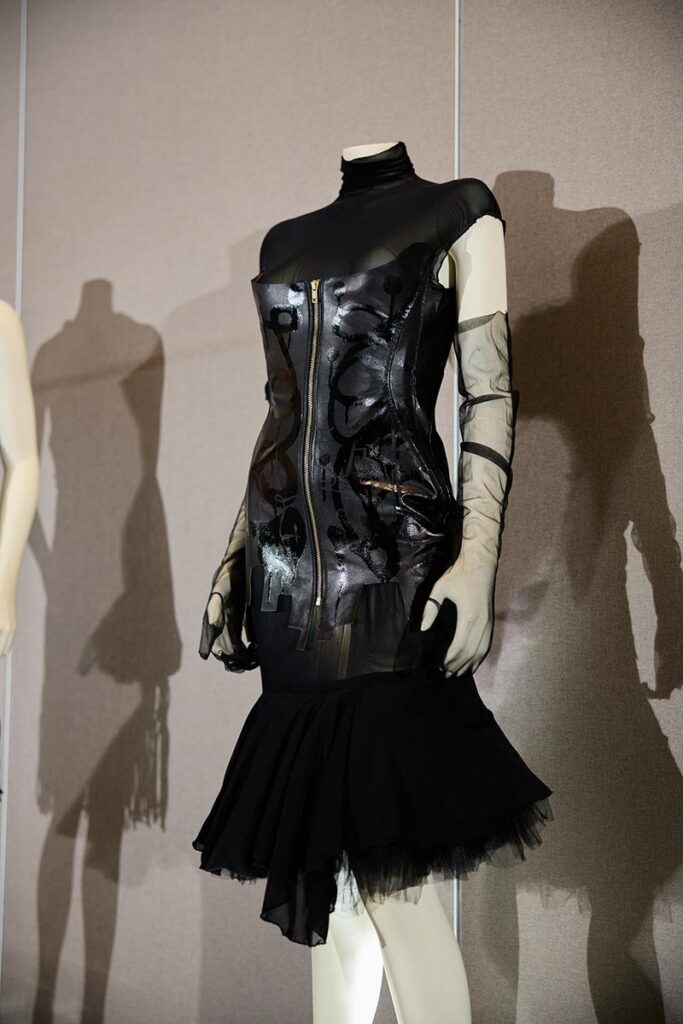
Whitney Manney brought her signature streetwear perspective. Her piece, “Made It Thru The Nite,” drew inspiration from female rappers of the 1990s and early 2000s who embraced Chanel while creating their own visual language. Manney constructed an outer dress from a thrifted $14 genuine leather coat and incorporated a mesh underdress and painted pattern to create depth and optical illusion.
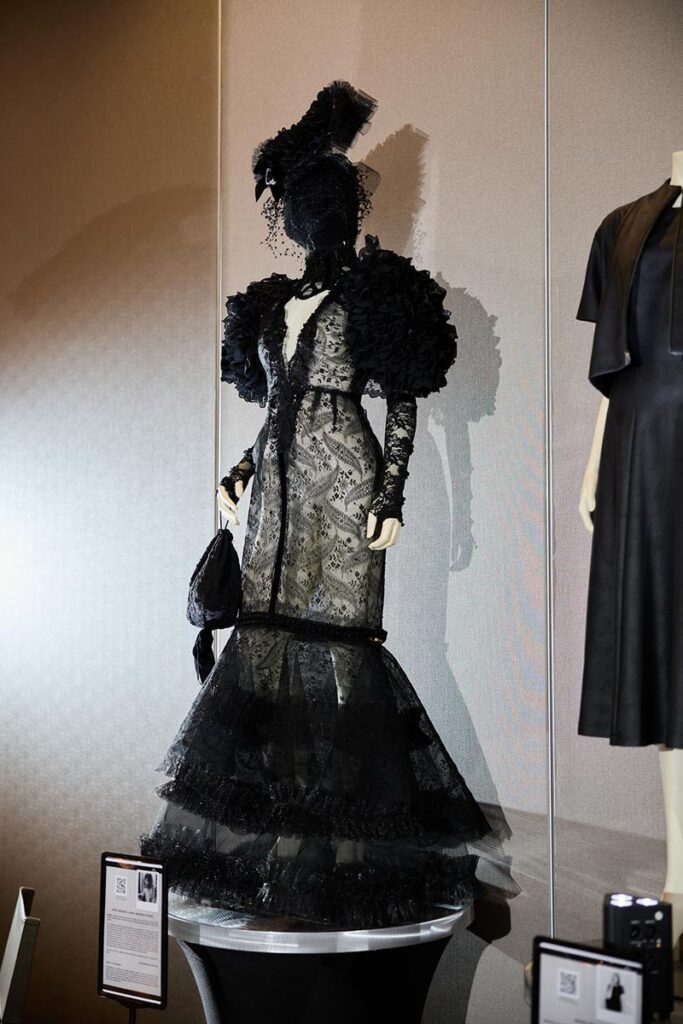
And then there was clothing and costume designer April Madden’s interpretation: an extravagant evening gown built from a 1960s cocktail dress, 100-year-old moiré ribbon, vintage lace, antique collars, crinoline and horsehair. Madden described the experience as a rare full-circle moment of wearing a work of art she had created entirely just for herself.