Before The Who were rock legends, they were getting kicked off the stage at a suburban Kansas City high school.
It was November 1967, and the British rockers were the opening act for The Buckinghams at the brand-new Shawnee Mission South High School. But when the band launched into its equipment-smashing finale during “My Generation,” the principal apparently had seen enough. The show was over.
Welcome to Kansas City in the late ’60s and early ’70s, when rock ‘n’ roll was loud, the rules were loose and some of music’s biggest future stars were playing in the most unlikely places.
From smoky Midtown coffeehouses and makeshift hippie hangouts to sprawling ballrooms and free concerts in city parks, Kansas City was an unlikely stop on the road to rock stardom. The Who, The Byrds, Bruce Springsteen, Linda Ronstadt and countless others passed through town, sometimes playing to crowds that were as unpredictable as the performers themselves.
It was a brief, wild chapter in Kansas City’s music history—one filled with legendary performances, questionable decisions and stories that have only gotten better with age.
A Whole Lot of Rock ‘n’ Roll
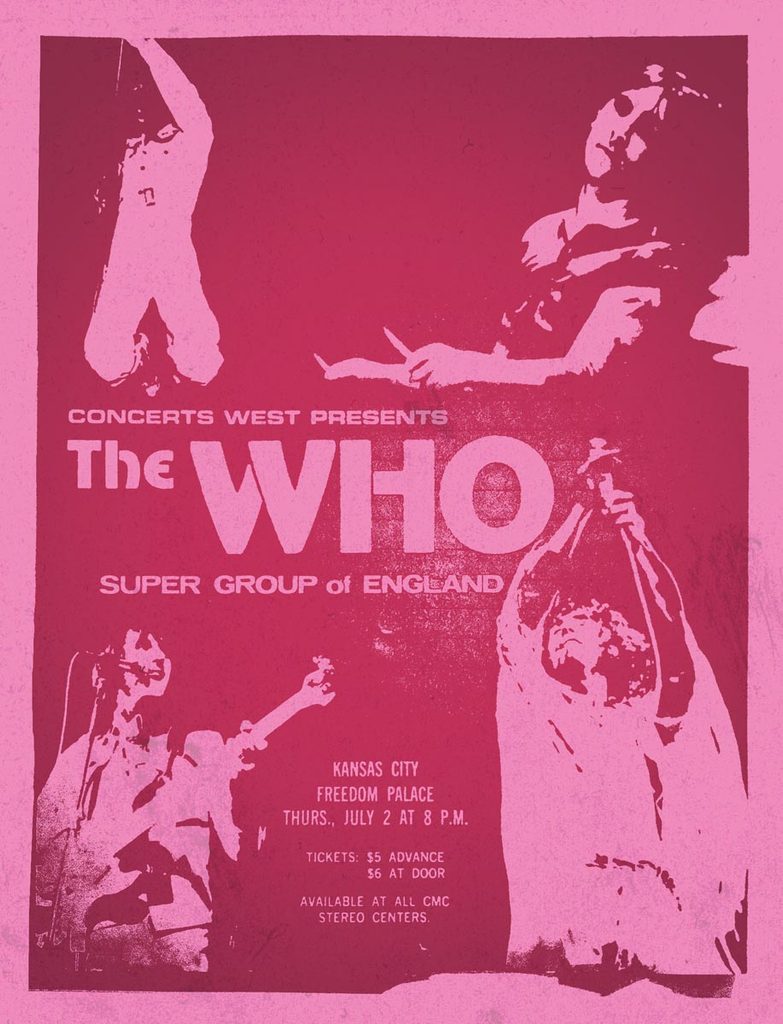
Consider The Who’s return to Kansas City in July 1970, this time at the Freedom Palace, a short-lived rock venue in the former Pla-Mor Ballroom at 31st and Main streets.
It was a sweltering summer day, with temperatures topping 90 degrees. The venue had no air conditioning, and an estimated 5,000 fans had crammed into a space designed for 3,000.
“There were people flooding in through the fire escape,” says Mike Loschke, whose older brothers,\ Jimmy and John, helped run the venue. “Somebody had forged tickets, so there were a lot of fake tickets coming in.”
Then the fire department arrived for an inspection. Amid the chaos, organizers were cited for a burned-out light bulb above an exit sign, and the venue’s president was hauled off to jail.
Meanwhile, The Who kept blowing electrical circuits during their performance, and frontman Roger Daltrey was losing patience.
“He was yelling quite a bit,” Loschke says. “He goes: ‘This all sucks. It’s so damn hot in here.’”
The organizers came up with an unconventional solution: ice. Volunteers began dumping ice from a small balcony onto the overheated crowd below. “It was quite chaotic, but The Who did finish their set, and everybody went home happy,” Loschke says.
The next day, 13-year-old Loschke helped clean up the aftermath.
“There was a lot of stuff a young kid like me shouldn’t have seen down there,” he says. “Like pipes, joints, whole bags of weed, bottles of whiskey. You name it.”
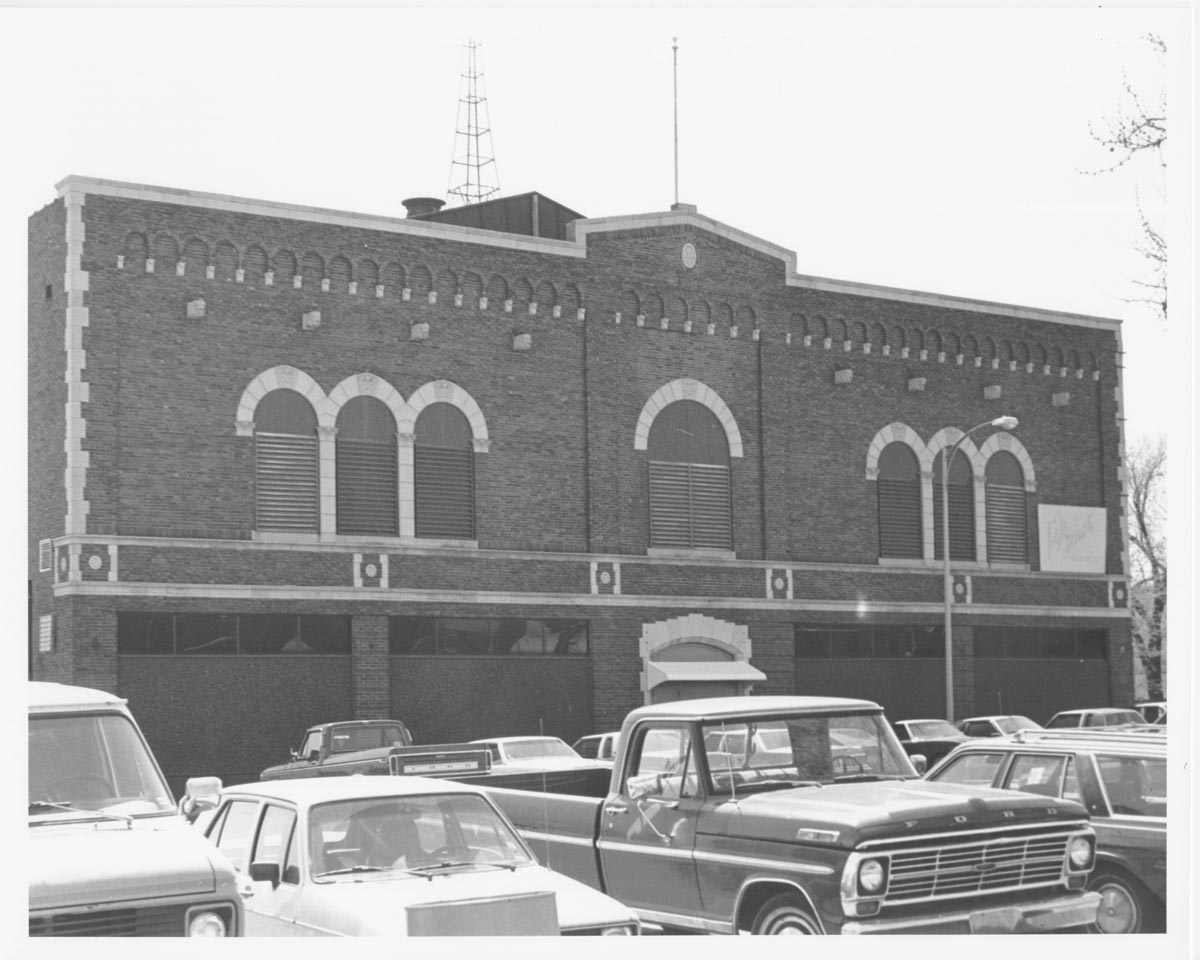
Such was life at the Freedom Palace, which opened in May 1970 and lasted just seven months. The Freedom Palace occupied the former Pla-Mor Ballroom, which in its heyday had been a sprawling entertainment complex with a 14,000-square-foot dance floor, bowling alleys, an ice rink and a swimming pool. The Pla-Mor had hosted some of the biggest names in American music, including Louis Armstrong, Frank Sinatra and Ella Fitzgerald.
During the Freedom Palace’s brief run, the venue hosted an impressive lineup of rock acts, including Canned Heat, fresh off its Woodstock appearance, and Grand Funk Railroad. Pink Floyd was reportedly scheduled to open for Grand Funk, but the band’s equipment had been stolen the night before at another venue.
The Palace’s history is something Loschke has spent years trying to piece together. His brother Jimmy, then 21, was the venue’s vice president, while 19-year-old John served as general manager.
“I’ve been trying to compile as much as I can about the venue,” Loschke says. “Unfortunately, that was 50-plus years ago, and there were lots of drugs involved, so memories have faded.”
From High School Gyms to Hippie Hangouts
The Freedom Palace wasn’t the only unlikely place to catch a future rock legend.
Three years before that sweltering The Who concert, Shawnee Mission South junior Paul Clark had been given an enviable assignment: chauffeur The Who around Kansas City in his 1964 GTO convertible.
The band spent part of the day playing miniature golf near Glenwood Manor at 92nd Street and Metcalf Avenue before heading to their now-infamous high school concert. At the time, The Who were still building their American audience.
Their single “I Can See for Miles” had reached No. 9 on the Billboard Hot 100 while headliners The Buckinghams were riding a wave of five Top 40 hits, including the chart-topping “Kind of a Drag.”
Two years later, in April 1969, another legendary band, The Byrds, performed in the same high school gymnasium. Elsewhere around the city, the scene was considerably less supervised.
Volker Park (now Theis Park) and Loose Park became gathering places for Kansas City’s counterculture, hosting free concerts that occasionally got out of hand.
At a 1968 “love-in” at Loose Park, police reportedly moved in after marijuana smoke became too much to ignore. Officers drove across the park’s grassy hills in pursuit of concertgoers, some of whom jumped into the lagoon and sought refuge on its small island.
Kansas City had officially entered its hippie era.
The Ballroom That Put KC on the Map
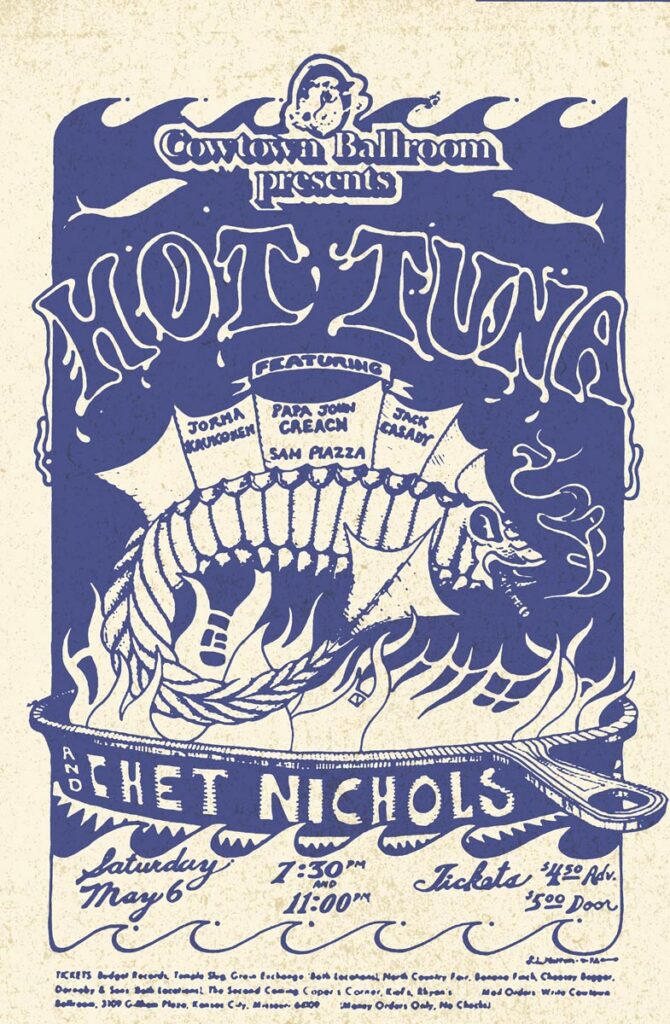
If the Freedom Palace represented the chaos of the era, Cowtown Ballroom became its defining venue. Located on the second floor of a building at 31st Street and Gillham Road, Cowtown opened in July 1971 under the direction of music promoter Stan Plesser, who had already helped establish Kansas City’s emerging folk and rock scene.
The space had a colorful past. It was originally the El Torreon dance hall, where jazz greats such as Cab Calloway performed, before becoming an indoor roller-skating rink.
By the early ’70s, it had been transformed into a 2,000-capacity rock venue, complete with fake-grass carpeting and a three-foot-high stage built from recycled wood salvaged from the Pla-Mor’s bowling alleys.
There were no plush seats or fancy amenities. Concertgoers simply sat—or stretched out—on the floor. “As soon as the lights went down, everyone just lit up,” says Joe Heyen, a UMKC film instructor who wrote and directed the 2009 documentary Sweet Jesus about Cowtown Ballroom.
The shows were alcohol-free and open to all ages. “People brought their toddlers in the early days and let them crawl around on the floor,” Heyen says. “Then they realized they were getting high from all the marijuana smoke in the air, so they had to get babysitters.”

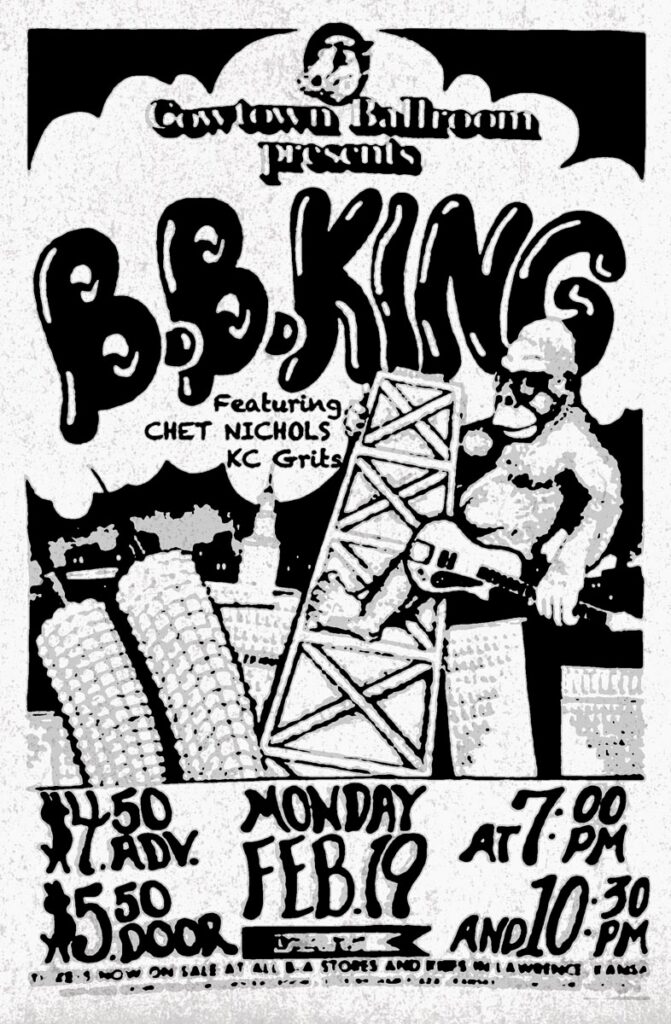
Despite—or perhaps partly because of—its unconventional atmosphere, Cowtown developed a national reputation. Bruce Springsteen, B.B. King, Blue Öyster Cult, Arlo Guthrie, Charlie Daniels and Foghat were among the acts that performed there, according to Concert Archives, a fan-built database of historic concerts.
The Nitty Gritty Dirt Band played the venue roughly 10 times, often with a young comedian named Steve Martin opening the show. Martin, who was developing his stand-up career, also learned the finer points of banjo playing from band member and high school friend John McEuen.
In 1972, Linda Ronstadt took the Cowtown stage with two musicians in her band who would eventually become rock royalty too: Glenn Frey and Don Henley. The pair had also played on Ronstadt’s third solo album before heading out on their own with Bernie Leadon and Randy Meisner as the Eagles.
For fans lucky enough to be in the room, these were the kinds of performances that became lifelong bragging rights.
Cowtown’s reach extended well beyond Kansas City, thanks in part to the Lee Jeans Living Rock Concert radio show, which broadcast performances to audiences across the country and even overseas. “The radio show went out to all 40 markets plus London,” Heyen says. “A lot of people knew about it.”
The Local Connection
Cowtown wasn’t just a stop for touring acts. It also gave local musicians a chance to share the stage with performers on their way to national fame.
“Cowtown is where the local and national groups were put together,” says Kansas City music historian and KCUR jazz show producer Chuck Haddix. “The organizers gave these local groups a leg up.”
Kansas City music legend Danny Cox opened for numerous acts at Cowtown. Cox, who had previously toured with Neil Young, was also connected to the creation of folk duo Brewer and Shipley’s counterculture anthem “One Toke Over the Line,” according to the Center for Recorded Music. Brewer and Shipley were frequent Cowtown performers themselves.
Another local talent who benefited from the scene was Nicolette Larson, who grew up in Kansas City and attended UMKC. Larson would eventually find national success with her rendition of Neil Young’s “Lotta Love,” but Cowtown was among the places where her career began taking shape.
“She came out of nowhere,” Haddix says. “Nobody in Kansas City really knew who she was. Then after Cowtown, there she is getting national airplay on Warner Brothers.”
Before Cowtown, There Was Coffee
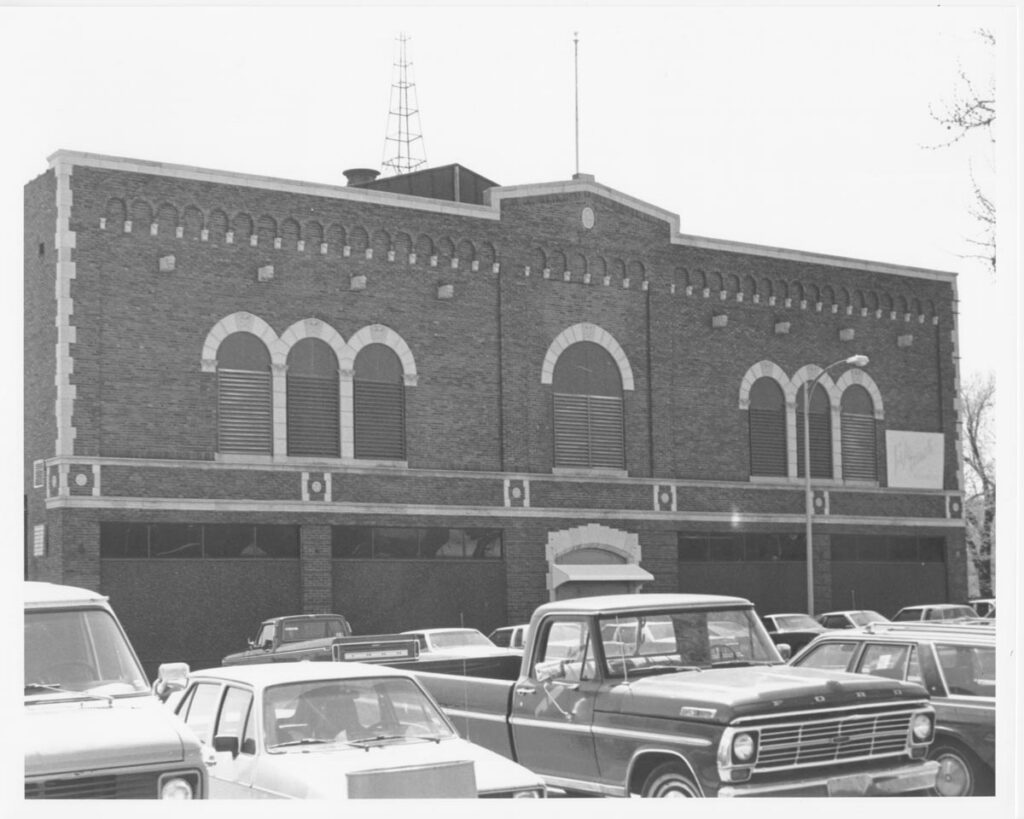
Kansas City’s rock revolution didn’t happen overnight. Its roots were in the folk clubs and coffeehouses that helped nurture the city’s emerging counterculture.
Among the most influential was the Vanguard Coffee House on Main Street, a beatnik gathering place that was opened in 1963 by Prairie Village resident and music promoter Stan Plesser.
The Vanguard attracted folk musicians, aspiring performers and unconventional acts, including the young Martin, who became a regular presence in the late 1960s.
Nearby, the Castaway Lounge was another important stop for local and national musicians. Gene Clark performed there in the early 1960s before going on to be a founding member of The Byrds.
These relatively modest venues helped lay the groundwork for the much larger rock shows that followed.
“The Cowtown Ballroom and Freedom Palace were outgrowths of the success of the Vanguard and Castaway,” Haddix says.
Why Kansas City?
So how did a Midwestern city better known for jazz, barbecue and stockyards become a destination for emerging rock bands?
Geography certainly helped. Kansas City’s central location and transportation connections made it a logical stop for touring musicians crossing the country.
But the city’s musical heritage was probably just as important. KC had already earned an international reputation through jazz legends such as Charlie Parker and Count Basie. Their influence reached far beyond jazz clubs, shaping the musicians who would eventually redefine rock ‘n’ roll.
“I mean, the Yardbirds took their name from Charlie ‘Bird’ Parker,” Haddix says. “All these musicians were hip to the Kansas City jazz scene.”
For bands steeped in blues, jazz and American roots music, Kansas City carried a certain musical credibility. “Kansas City has a certain cachet,” Haddix says. “The city has a reputation as a music center, along with Nashville, New York City and Los Angeles.”
By September 1974, Cowtown Ballroom had closed, joining the Freedom Palace, Pla-Mor and the Vanguard as another casualty of a fast-changing music scene. The building later briefly returned to its El Torreon name as a punk, ska and metal venue in the early 2000s before being renovated into an event space.
But the stories have endured. The Who smashing equipment in a high school gym. Future Eagles playing backup for Linda Ronstadt. Concertgoers sprawled across fake grass carpeting while some of rock’s biggest future stars played just a few feet away.
Despite an ever-evolving music scene, Kansas City seems to always be a part of the show.