A Killer Collection
The Cherryvale Historical Museum displays a collection of artifacts found at the Benders’ cabin that includes three hammers believed to have been used in their crimes.
The Kansas Museum of History in Topeka has a knife with reddish-brown stains that is associated with the murders and a sign advertising the Benders’ cabin as an inn.
A historical marker telling the story of “The Bloody Benders” was once placed close to the junction of U.S Route 400 and 169 north of Cherryvale; it has since been permanently removed.
The Victorian Age is often seen as a rather quaint time, with its starched collars, tight corsets and rigid etiquette—but there was also the wild, lawless frontier side.
In the 1870s, a family of serial killers known as the Bloody Benders brutally murdered at least 11 or 12 and possibly as many as 22 people near Cherryvale, Kansas.
They were never caught.
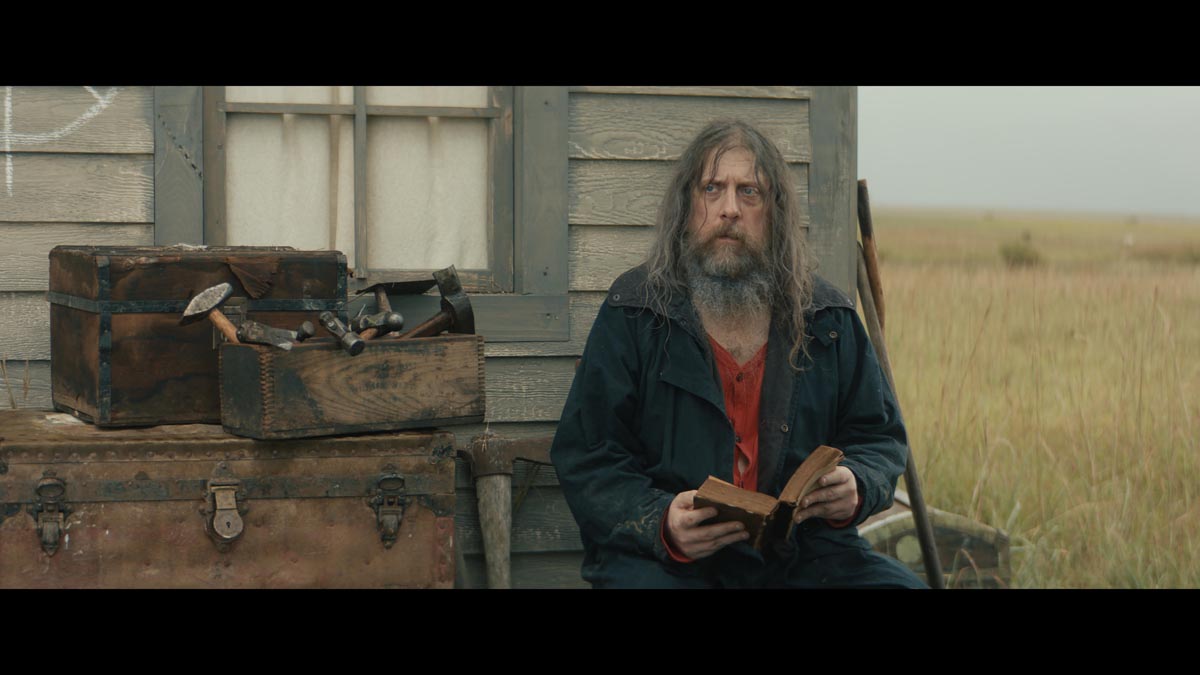
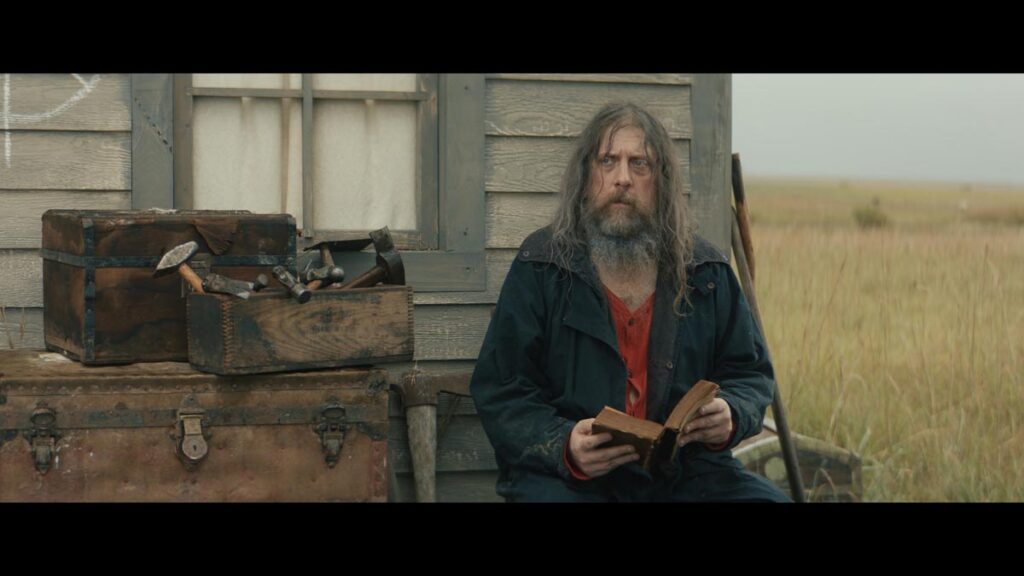
Author and director Nicholas Nicastro, who wrote about the Benders in his true crime novel, Hell’s Half-Acre, is currently producing a full-length movie about the notorious family. “The tagline for the movie is ‘Another Kind of Little House on the Prairie,’” he says.
Nicastro, who is from Virgina, began filming in the Flint Hills near Cottonwood Falls, Kansas, in September and has since gone home. “We’ve completed 65 to 70% of the movie,” he says. Nicastro will return to the Flint Hills as time and weather permit to finish. “Our hope is that we will be finished by November of 2027. Fall is always the optimal time to release a horror film.”
Nicastro produced a short film about the Benders called Hell’s Half-Acre: Sojourn in 2025, based on his novel of the same name. That year, the film won Best Indie Short at the LA Indie Shorts Festival, Best Narrative at the Toronto Indie Shorts, an Award of Merit at the IndieFEST Film Awards and the UK’s Freewheeling Film Award for Best Actress. It has also been selected for Panic Fest 2026, a prominent horror-themed festival.
Nicastro finds murderers such as the Benders fascinating because their disappearance is mysterious. “I really like stories such as theirs that are open-ended,” Nicastro says, “They give me the latitude to create endings that are historically plausible and also intriguing. No one knows what happened to them, but they tend to live on in peoples’ imaginations.” In 2010, Nicastro wrote a historical fiction book about Jack the Ripper, another serial killer who vanished into history. In Nicastro’s book, The Passion of the Ripper, he examines not only the killer’s psychology but also the societal dysfunction of the 1880s.
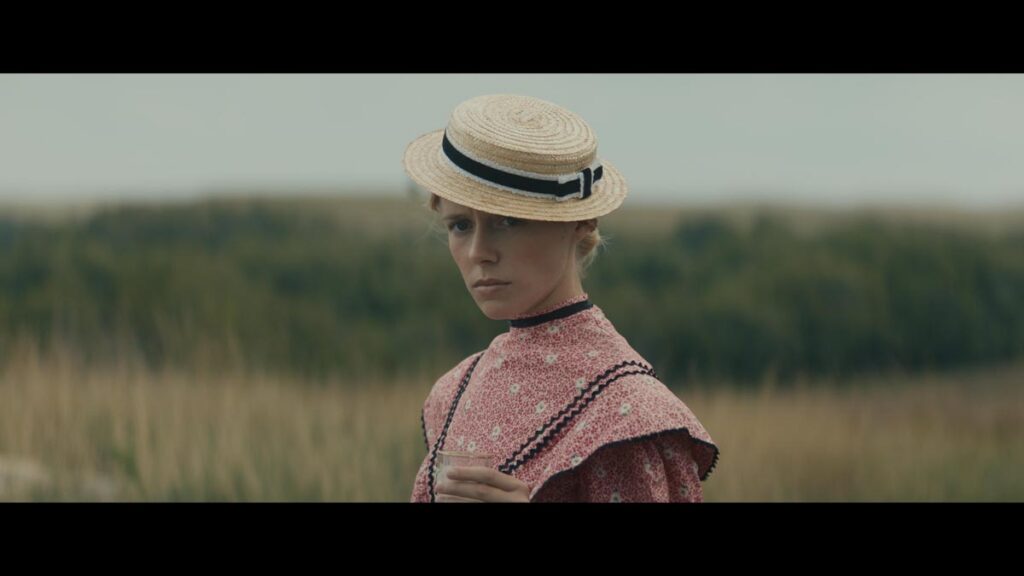
In the turbulent aftermath of the Civil War, violence and superstition in rural Kansas were common. The Benders, like Jack the Ripper, killed people and were never caught, possibly because their cabin was 8 miles away from Cherryvale, the nearest town. “I’ve always been interested in isolated families and their dynamics,” Nicastro says.
Nicastro theorizes that the Benders may not have been an actual family at all. The origins of the group, who may have come from Germany, are uncertain, as are their relationships to each other. John Bender and Almira Bender, who may have been married, spoke little English and seldom interacted with the community. Their possible son, John Jr., seemed friendly and spoke English with a German accent. The “family” also included a young woman named Kate, who could have either been a sister or a wife to John Jr., or no relative at all.
Kate, who advertised herself as a psychic and gave seances, seems to have had a charismatic personality. “The Bender case is compelling not only in its depravity but also in its female focus,” Nicastro says. “This is one of only a few cases of serial murder with a woman at its center.”
Nicastro chose to film the majority of the movie in the Flint Hills. “I wanted to find a setting that resembled the prairie of the 1870s,” Nicastro says. “The Benders’ homestead near Cherryvale, Kansas, is now a farmer’s field. I stood there and looked at it, realizing that the land had changed significantly from when the Benders lived there.
“Our crew built the exterior of the Benders’ cabin on a ranch near Cottonwood Falls, Kansas,” Nicastro continues. “The nearby Tallgrass Prairie Preserve has a lovely schoolhouse that I’ve used as the combination schoolhouse/church like the one in the Benders’ community at the time. We had previously finished filming the cabin’s interior scenes on my property in Virginia.”
Major casting has been completed, Nicastro says. “I am excited to be working with Grainger Hines and Bill Moseley.” Hines has starred in movies such as Lincoln and The Ballad of Buster Scruggs as well as in television series such as True Blood, Hell on Wheels and The Knick. Moseley is well known in the horror film community for such roles as Chop Top in The Texas Chainsaw Massacre Part 2, as Otis B. Driftwood in House of 1000 Corpses and its sequel The Devil’s Rejects, and as Possum in the HBO television series Carnivale.
The movie includes information about the Benders based on public records, Nicastro says. In 1870, the Bender family settled on 160 acres of land and built a cabin near Cherryvale along the Great Osage Trail that led from Franklin, Missouri, westward into southeastern Kansas. According to Library of Congress records, the Osage Trail “was an easy place to disappear” because much of Kansas was still sparsely settled.
The Benders’ cabin was divided by a canvas wagon cover into a front room that served as a dry goods store and kitchen and a small back room that served as their living quarters. Advertisements told travelers on the trail they could have meals with the Benders and spend the night.
The Benders murdered at least 11 of those travelers.
“Obviously, one motive for their crimes was robbery,” Nicastro says. “Also, when the cabin was ransacked for souvenirs, there were supernatural markings and carvings on the walls. It is possible that there were occult functions there. Some people may believe that the Benders were devil worshippers, but the use of charms and incantations was very popular at the time. There were rumors that cows were being milked from a distance, that guns wouldn’t shoot straight, that clocks wouldn’t keep time. There was a strong belief in the supernatural in the community.”
According to a Library of Congress Blog, several high-profile disappearances led to the discovery of the Benders’ crimes. In 1873, George Longcor, who was traveling with his young daughter, disappeared somewhere along the Great Osage Trail. His friend Dr. William York decided to travel the same route to find out what happened to the Longcor family.
Then Dr. York disappeared too.
Dr. York’s brother, Col. Alexander M. York, a Kansas state senator, searched along the trail but could find no evidence that his brother had gone any farther than the Benders’ cabin. Col. York then hired Osage Township Deputy Sheriff Leroy Dick and detective Thomas Beers to investigate. According to a May 1873 Emporia News article, when these men went to the homestead, they found it abandoned, but they saw “a queer depression in the soil and, suspecting something wrong, dug down.”
They found William York’s body in a shallow grave. Soon, 10 other victims were discovered on the property. Evidence suggested that the Benders’ victims would be seated at the kitchen table in a chair in front of the canvas room divider. The Bender men would be hiding behind the canvas with hammers and then suddenly attack, bludgeoning their victims. The Bender women would cut the victims’ throats and dump the bodies into the basement through a trap door under the table. The Benders then would wait to sell the victims’ valuables and explain them away as “traded for dry goods.” Although the Benders were eventually suspected in the disappearance of 22 people, no other bodies were ever found.
News of the gruesome nature of their crimes drew crowds; the Benders’ cabin was torn apart by souvenir hunters who even took the bricks that lined the basement.
Senator York offered a $1,000 reward for the Benders’ arrest. Rumors of their whereabouts ran wild: The Benders had fled to Texas, to Missouri, to Oklahoma. No one ever claimed the reward.
The Benders made the Chicago Tribune’s front pages in 1880 when two people confessed to the crimes, but they were found to be imposters. More sensational news items regarding the Benders appeared. A Pennsylvania newspaper claimed that the Benders had been executed in 1873. Anonymous letter writers claimed to have witnessed the execution.
In 1889, two women in Niles, Michigan, were arrested and accused of being the Bender women. Charges against them were dismissed when they were proved to have been living in Michigan at the time of the murders.
Laura Ingalls Wilder’s book Little House on the Prairie recounts her life in a cabin close to Independence, Kansas, which is 11 miles from Cherryvale. In 1937, she gave a lecture in Detroit, telling her audience that her father had been part of a group of vigilantes that had hunted the Benders. She also said that he had told her “they will never be found.” However, an article in the Christian Science Monitor states that Wilder’s family had left their cabin by 1871.
Archeological research students from the University of Kansas have done field studies of the Bender homestead, finding broken glass, pieces of china, wagon parts and other items that were probably used to build the cabin. They did not find any graves. The site is now owned by Bob Miller, who encouraged the investigation.
What happened to the Benders? Nicastro says that they might have split up, they might have been hung by vigilantes, but that “the movie will have a very plausible, very exciting ending to the Bender story,” he says.