Local filmmaking students take a look at the Civil War battles between MO and KS. Tracing the rivalry’s roots through the battles, bloodshed and historic Civil War sites that shaped the region in a documentary structured around Kansas City magazine writer Susie Whitfield’s story.
But before a deep dive into history, meet the teacher and students behind the project.
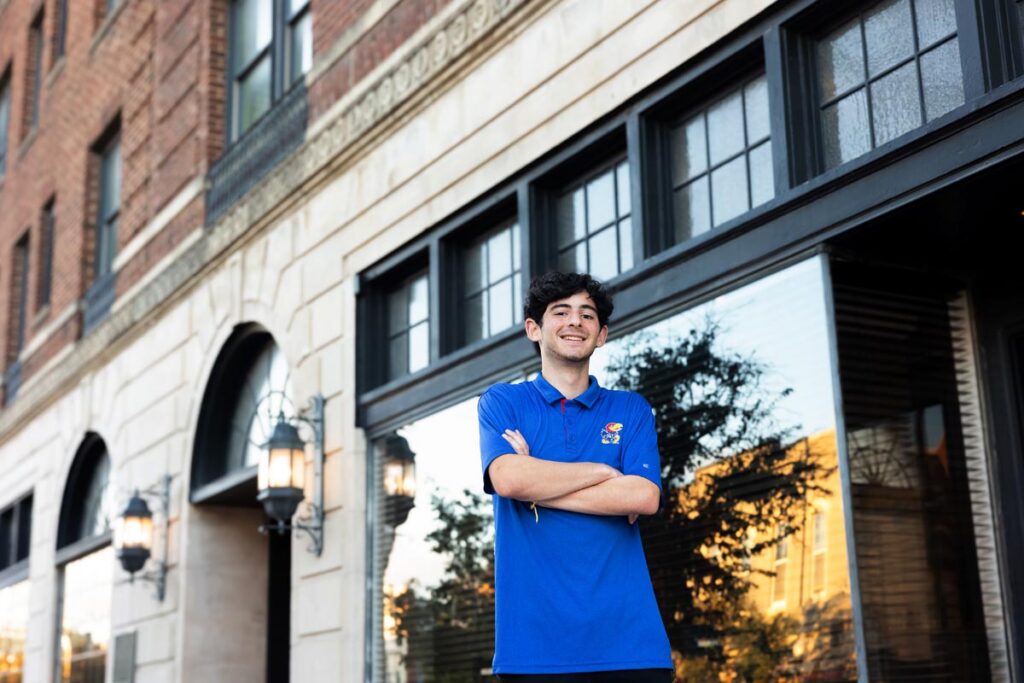
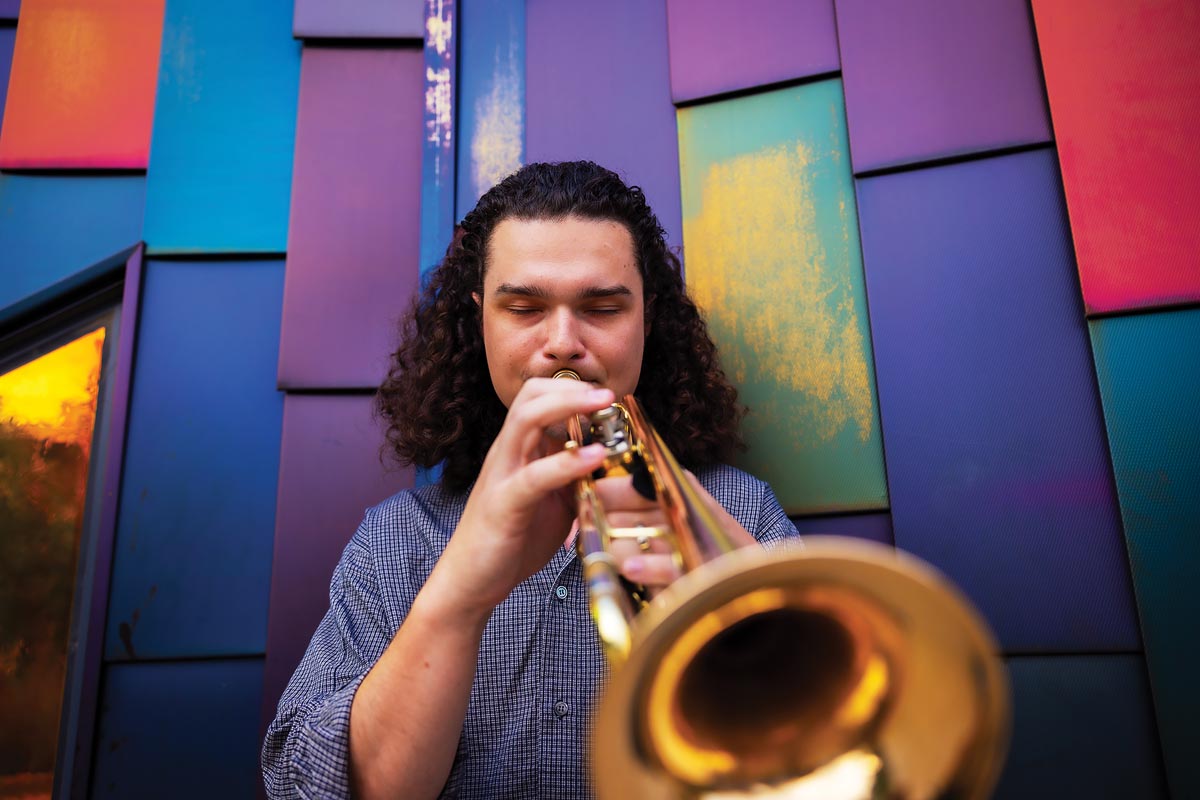
Kansas City magazine collaborated with teacher Todd Campbell and students in the Blue Valley Center for Advanced Professional Studies’ Filmmaking and Animation program to bring the Kansas City area’s rich Civil War history to life on film.
The project was inspired by a story that Kansas City magazine writer Susie Whitfield was working on, exploring the region’s rich and nuanced Civil War history. Working from Whitfield’s reporting, CAPS students expanded on the story through interviews with local history professors and Kansas City Mayor Quinton Lucas, who narrated the documentary’s opening and provided historical context in other parts of the students’ film. The film was directed by student Hunter Brown, who has since graduated high school and is now a freshman at the University of Kansas.
CAPS is a Blue Valley North district-wide program designed to give students hands-on, professional experience. The Filmmaking and Animation path operates more like a working production studio than a conventional high school elective, with students working on projects through the entire filmmaking process—from developing a concept and conducting interviews to shooting, editing and producing a finished film.
A Rivalry Forged in War
“Kansas and Missouri have one of the fiercest rivalries in all of sports,” Kansas City Mayor Quinton Lucas declared in a student-made documentary about the metro’s Civil War history. “However, to find the root cause of this hatred, you have to go way back,” he says—to 164 years ago, when the Civil War started and Kansas City was caught in its crosshairs. That’s how it all began. “When you look at Bleeding Kansas and the years that precede the Civil War, our area brought the warring factions together.”
Lucas was one of several people interviewed for a film that students in Blue Valley North School District’s Center for Advanced Professional Studies’ Filmmaking and Animation program created centered on historical Civil War events that occurred throughout the region.
“Blue Valley CAPS is an innovative, immersive high school program where students experience profession-based education,” says Todd Campbell, who teaches the Filmmaking and Animation class. “They partner with industry and community leaders in a variety of real-world projects.”
Last school year, the CAPS Filmmaking and Animation class collaborated with KC magazine in a year-long project to make a documentary that brings the history of the Border Wars to life.
“It was an incredible experience for our students, and I’m just so proud of the work they did,” Campbell says. “Not only did they learn how to actualize a film but they also discovered that there is value in what they do and what they have to say,”
The students involved in the project—director Hunter Brown, producer Dominic Mills, camera operator Peter Asta and boom mic operator Jaden Osman—researched records, visited historic sites and interviewed experts in Civil War history. The result is a powerful depiction of the violence that tore the nation apart and left wounds that are still healing today.
Lucas acknowledges that much has been said about the Civil War already, but he enjoyed being part of the project. “I think it’s a difficult story to tell,” Lucas said in the film, “but I think we need more storytellers.”
WATCH: “The KC region’s Civil War history” on Kansas City magazine’s Youtube channel.
History Happened Here
From Bleeding Kansas to the Battle of Westport, explore the sites where the Kansas City region’s Civil War history unfolded
Quindaro Ruins and Overlook
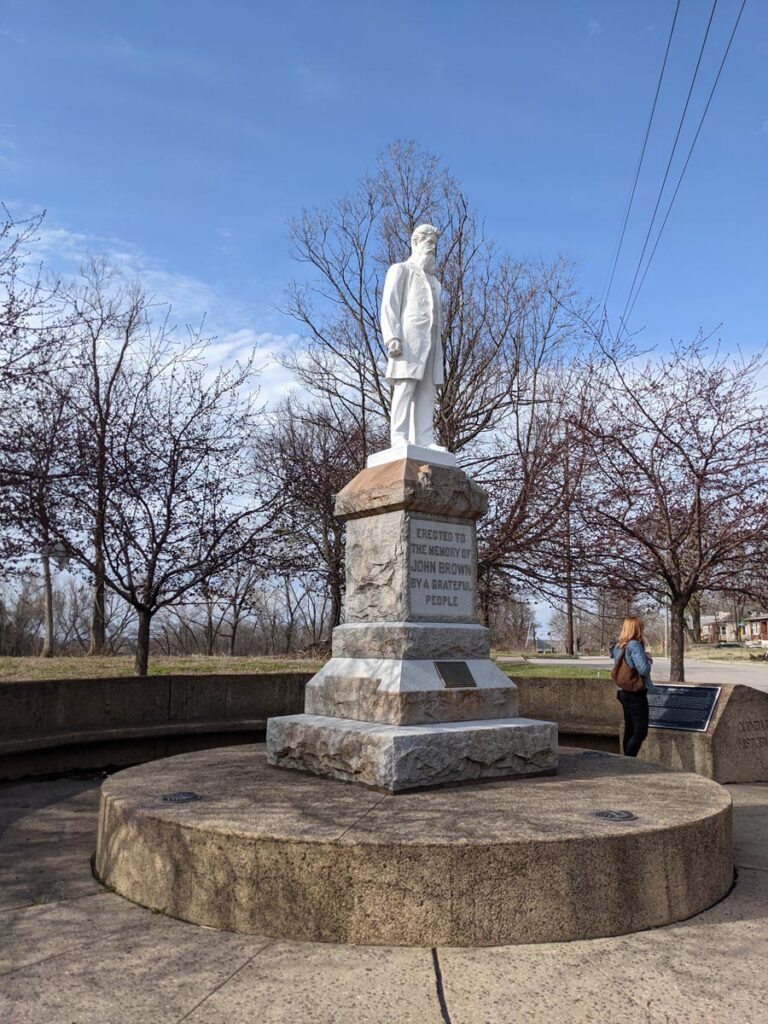
quindaroruinsprojectfoundationkck.org
After Kansas became a territory in 1854, abolitionists purchased land from Wyandot tribe members and began construction of a town along the Missouri River in order to provide a free-state river port to steamboats and free-state settlers.
The town, named Quindaro for the Wyandot word meaning “bundle of sticks,” also became an important station on the Underground Railroad. Enslaved people escaping from Platte County crossed the river in small boats, hid with local citizens and then traveled north to Nebraska and freedom.
The town was also home to Western University, the first Black school west of the Mississippi. A life-size statue of John Brown still stands on the grounds of the former school.
Tour the Quindaro archaeological site, which is on the U.S. National Register of Historic Places.
The Union Prison Collapse Marker
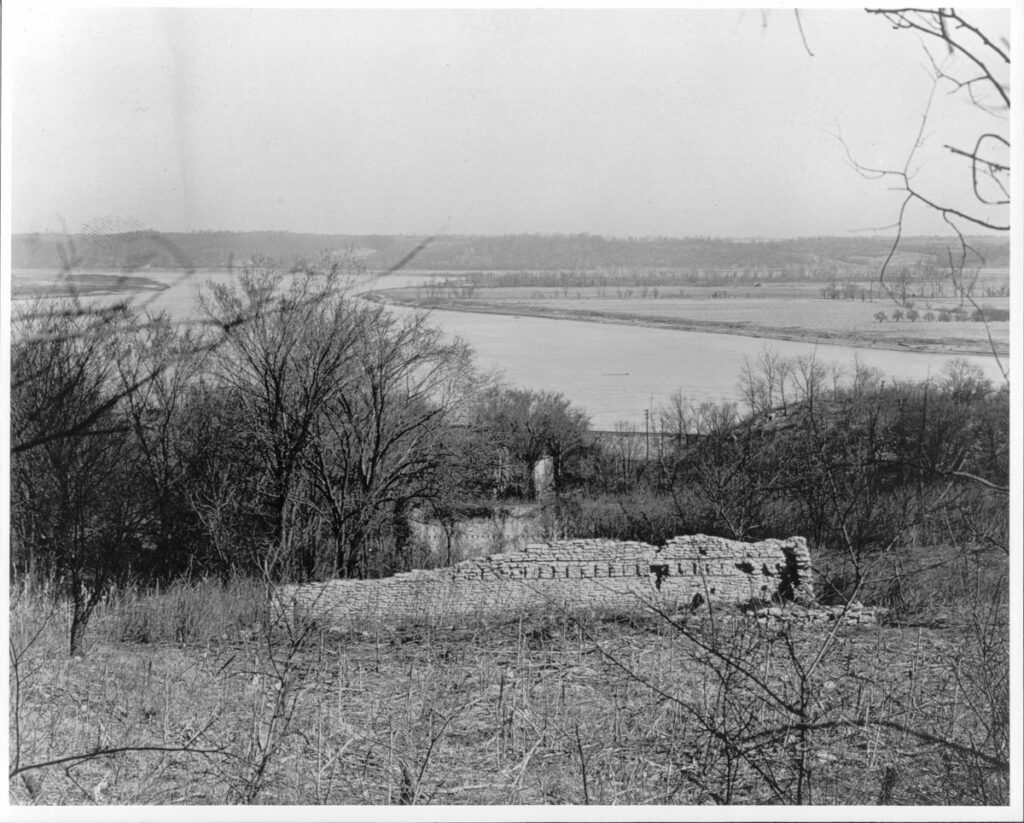
The T-Mobile Center now occupies the site of the three-story building that once was the temporary Union army prison for the female relatives of the pro-slavery guerillas known as bushwhackers. A nearby marker commemorates the tragedy of the prison’s collapse.
Union Gen. Thomas E. Ewing Jr. determined to halt the increasing violence of William T. “Bloody Bill” Anderson, a confederate soldier and leader of a contingent of bushwhackers, issued Gen. Order No. 11. The order authorized the forcible removal of Southern sympathizers and the burning of their homes and farms.
Ewing also ordered the imprisonment of the bushwhackers’ female relatives. They were held in an old brick building owned by artist George Caleb Bingham. On Aug. 13, 1863, the building collapsed under the weight of so many people. Anderson’s 15-year-old sister Josephine was killed; his 16-year-old sister Mary Ellen was badly injured, and his 13-year-old sister Jenny, who had been shackled to a ball and chain, was permanently disabled.
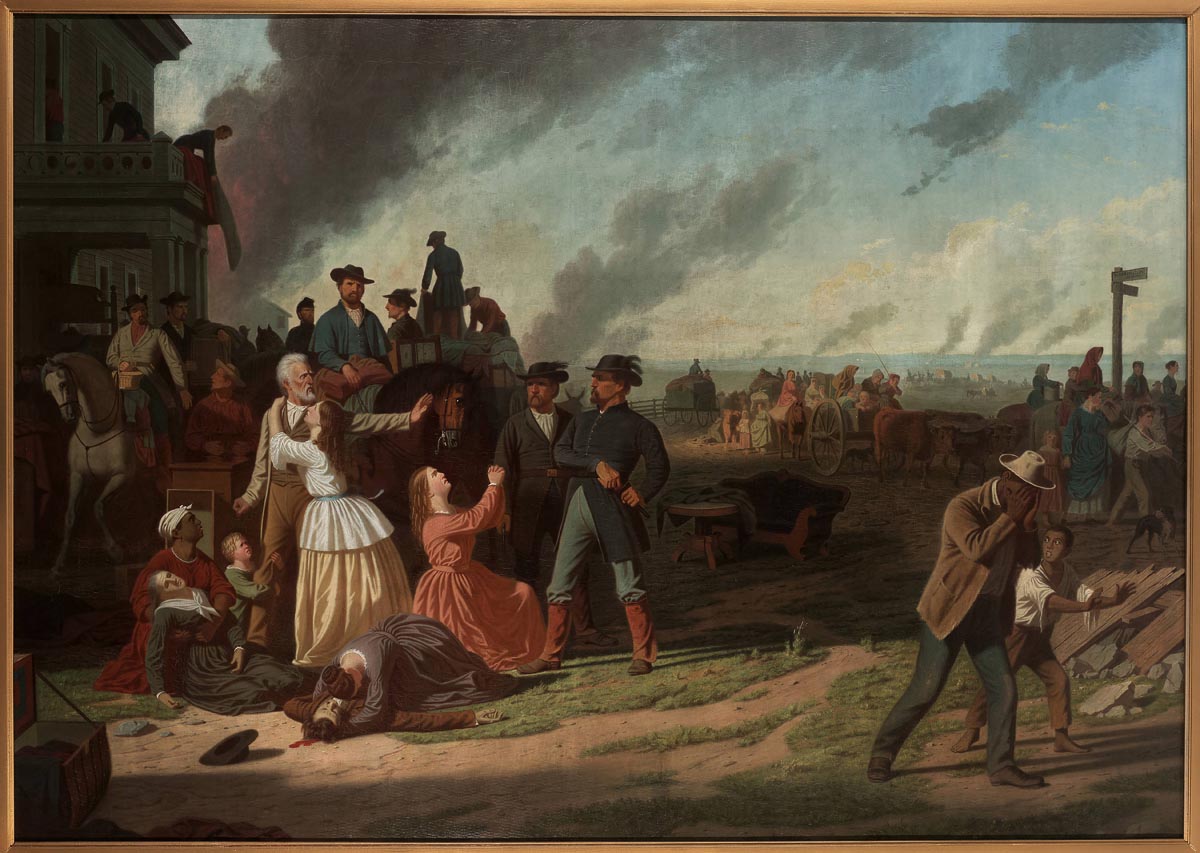
Martial Law, 1868 (Reproduction), a painting by George Caleb Bingham, The Kansas City Public Library
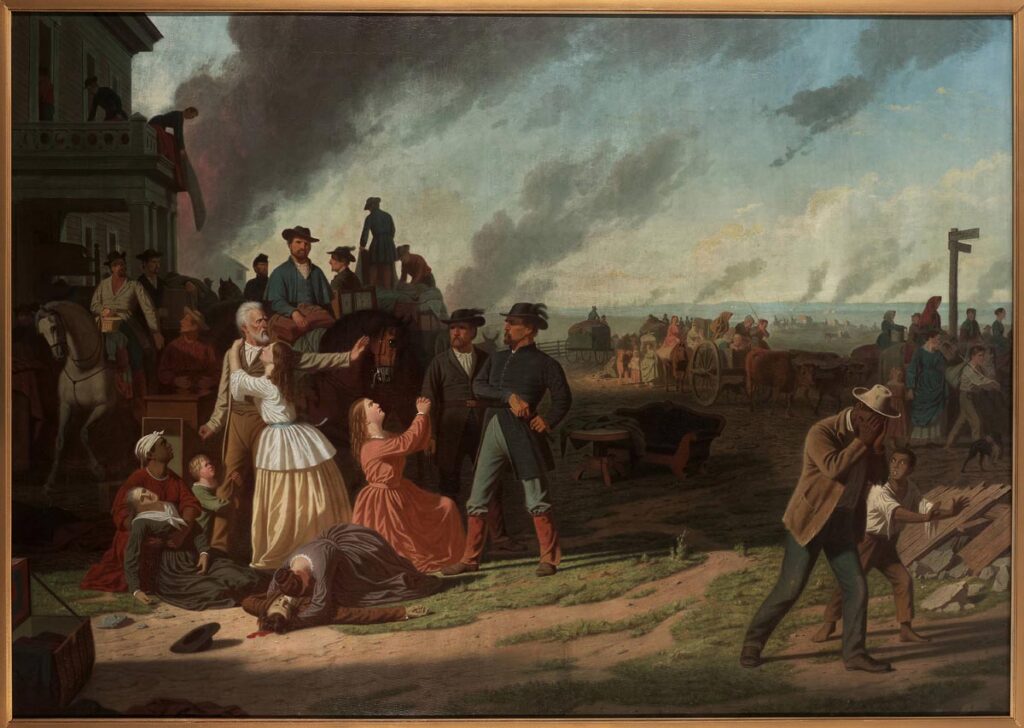
Artist George Caleb Bingham, a Union officer and politician from Missouri, portrayed the brutality of Gen. Ewing’s Order No. 11 in his 1868 painting Martial Law. The painting caused a public outcry because of Bingham’s obvious criticism of Ewing’s Order.
The Bingham-Waggoner Mansion
313 W. Pacific Ave., Independence
The most famous owner of this legendary home was Bingham. Tour the home where Bingham lived from 1864 to 1870 and where he painted Martial Law in his studio on the grounds of the estate.
You can also see one of Bingham’s self-portraits, currently on loan from the Kansas City Public Library, in the Nelson-Atkins Museum of Art.
The Eldridge House Hotel
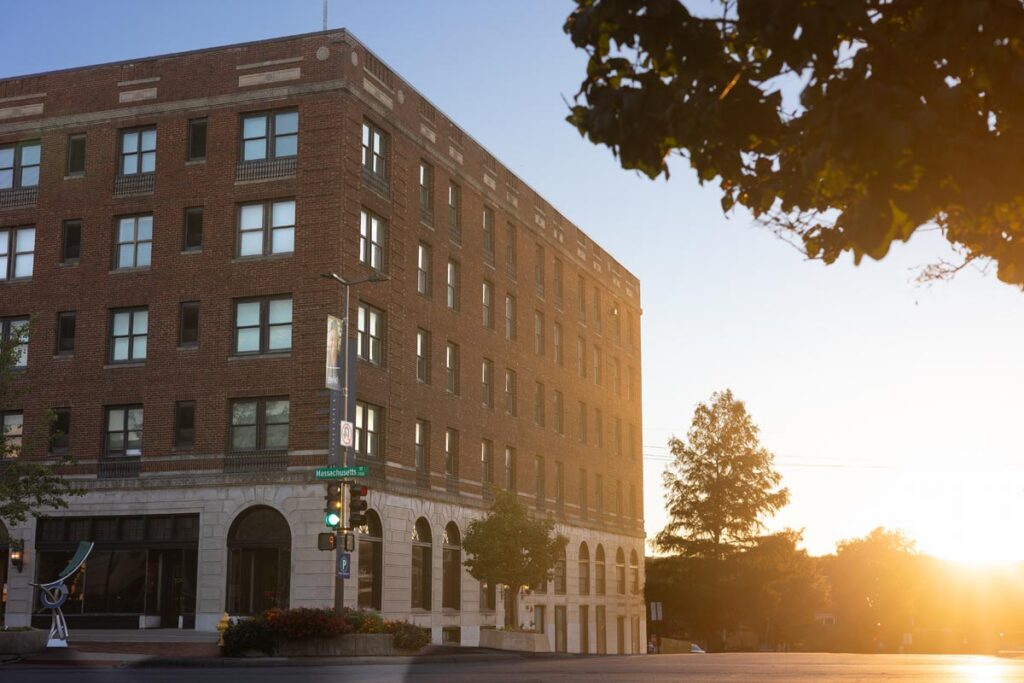
701 Massachusetts St., Lawrence
See Civil War memorabilia in this Lawrence Hotel that includes photographs of the Lawrence Massacre of Aug. 21, 1863.
The Eldridge House Hotel in Lawrence, originally named the Free State Hotel, was built as temporary lodging for anti-slavery settlers after the Kansas-Nebraska Act of 1854.
Violence followed the Act, as free state jayhawkers from Kansas and slave state bushwhackers from Missouri battled for control. Lawrence in particular was the center of much anti-slavery activity and the target of bushwhacker violence. The moniker “Bleeding Kansas” became infamous.
The Lawrence Massacre occurred six days after the Union Prison Collapse. William Clarke Quantrill and as many as 450 other bushwhackers entered Lawrence shortly after 5 am, some having ridden all night tied to their saddles in case they should fall asleep.
The raiders took over the Eldridge House, made it their headquarters and then broke into smaller groups. For four hours, the bushwhackers looted and burned a quarter of the city’s buildings including the Eldridge House and murdered at least 150 men and boys. The bushwhackers then rode out of Lawrence at approximately 9 am, breaking into groups again on their way back to Missouri.
When Quantrill was killed in Kentucky in 1865, he was 27. Only a few of his men, including Frank and Jesse James, were still with him.
(Ang Lee’s 1999 Ride with the Devil includes a portrayal of the massacre and was filmed on location in Sibley, Missouri, KCMO, and KCK. Pattonsburg, Missouri, was the stand-in for Lawrence.)
The Eldridge House Hotel was rebuilt in 1866, renovated in 1925, closed in 1970, renovated again in 2004 and reopened a year later, having been restored “to its original 1925 grandeur,” according to Historic Hotels of America.
Tragic Prelude, a mural by John Steuart Curry, 1942
Kansas State Capitol building, S. Eighth Avenue and S.W. Van Buren Street, Topeka
In 1937, John Steuart Curry was chosen by Emporia Gazette editor William Allen White to create murals for the Kansas Capitol that would portray the history of the state. In his iconic Tragic Prelude, Curry painted Kansas resident and violent anti-slavery activist John Brown “as a fanatic, for John Brown was a fanatic,” Curry said at the time.
Brown’s outstretched hands hold a rifle and a Bible; his giant figure stands between the pro- and anti-slavery forces, and his wild expression and flying hair and beard foreshadow the devastation of the Civil War.
Unfortunately, the Kansas Legislature refused to hang the mural when it was completed, and the infuriated Curry left Kansas. The mural was finally hung after Curry’s death.
(Side note: Tragic Prelude was used as the cover for the rock band Kansas’ 1974 debut album.)
Brown’s actions were a prequel to the Civil War. An ardent abolitionist, Brown believed that as “an instrument of God,” he was mandated to use violence to end slavery.
On May 24 and 25, 1856, Brown and his sons killed five pro-slavery men in Pottawatomie County, Kansas, to avenge the bushwhakers’ destruction of Lawrence. In the Battle of Osawatomie on Aug. 13, 1856, Brown’s son Frederick was killed, and Brown and his 40 men were forced to withdraw as over 200 pro-slavery fighters looted and burned the town.
In October of 1859, Brown attacked the armory at Harper’s Ferry, Virginia, in order to arm enslaved men with the armory’s weapons and to end slavery, as he had naively hoped, “without very much bloodshed.” U.S. Marines led by Gen. Robert E. Lee captured Brown and his men.
Brown was found guilty of treason, murder and inciting a slave insurrection. On December 2, 1859, he rode to the scaffold sitting on his coffin and was hanged in front of a large crowd that included John Wilkes Booth, President Abraham Lincoln’s assassin.
Battle of Lexington State Historic Site
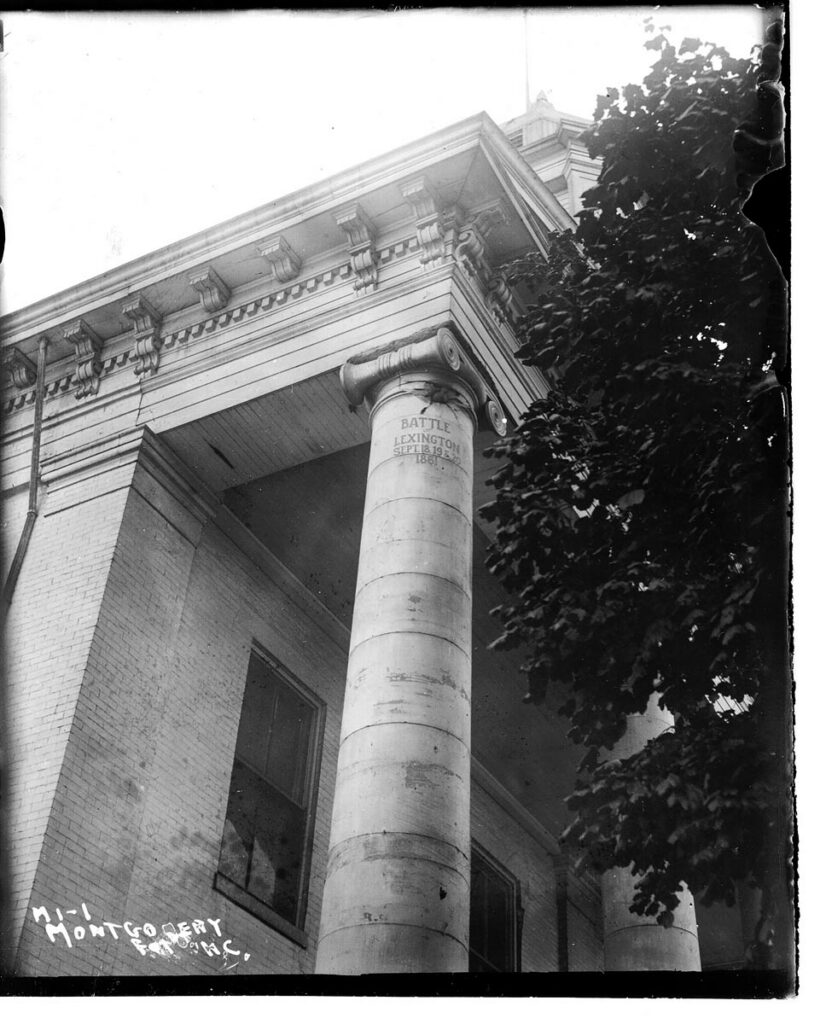
1101 Delaware St., Lexington, MO
Although Missouri never seceded from the Union, the city of Lexington was strongly pro-slavery. Union Gen. Nathaniel Lyon and the Fifth Regiment U.S. Reserve Corps set up headquarters in Lexington to control access to the Missouri River and deprive Confederate forces of necessary supplies.
Confederate Gen. Sterling Price, ordered to force Union troops to withdraw, surrounded Lexington with 15,000 troops. On Sept. 12, 1861, the battle began. Each side continually bombarded the other with heavy artillery.
However, on the night of Sept. 19, Confederate soldiers began soaking large bales of hemp in the Missouri River; the next day they pushed the bales forward while advancing on the Union troops.
The bales protected the Confederates from artillery, and then they rushed the Union garrison. It surrendered on Sept. 20.
Tour the Anderson House, which became a field hospital, and the Visitor Center to see artifacts and exhibits. The site also has a self-guided interpretive trail on the battlefield.
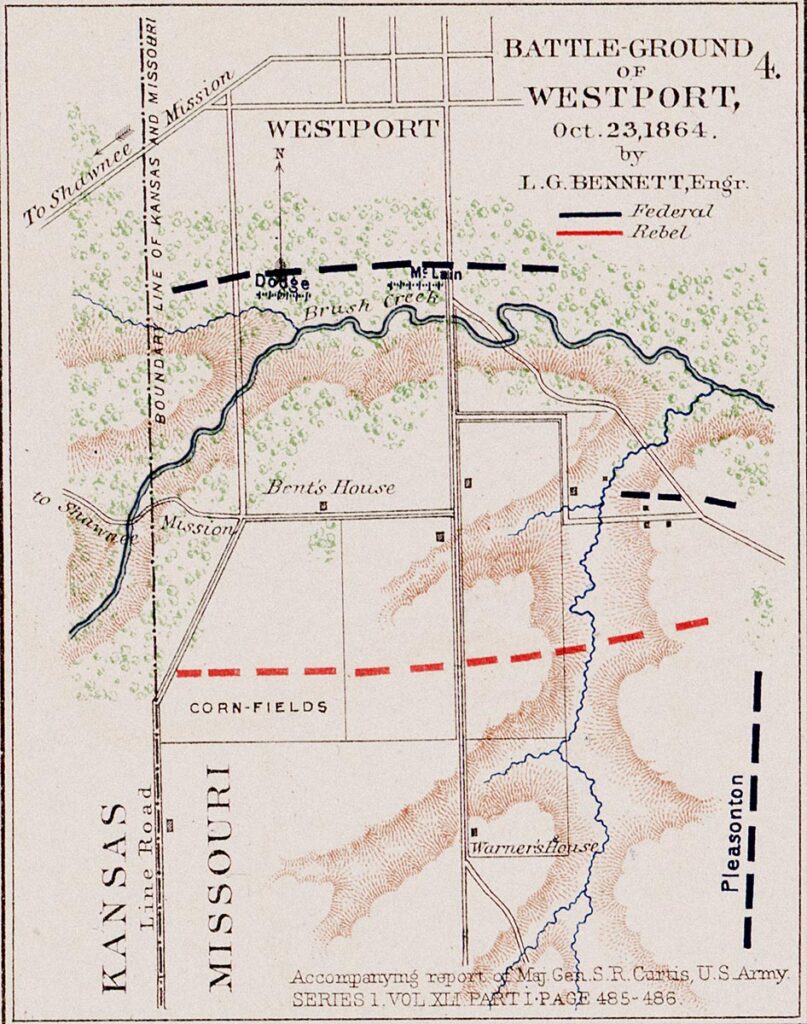
The Battle of Westport, Loose Park
Nine historical markers identify key elements of the battle on this self-guided tour.
In an attempt to bring Missouri into the Confederacy and defeat Abraham Lincoln in the 1864 election, Gen. Price and his Army of the Missouri advanced on Kansas City. Learning of the army’s movements from scouts including Wild Bill Hickok, Union Gens. Samuel R. Curtis and James G. Blunt constructed a defensive line south of Westport along Brush Creek.
On the morning of Oct. 23, 1864, Union troops attacked the Confederates in an open field but were forced back across Brush Creek into what is today Westwood, Kansas. The Confederate forces seemed to be winning until local farmer George Thoman showed Gen. Curtis a gulch that ran along Shelby’s left flank. The Union attacked again and slowly pushed the Confederates back to the Wornall House.
Meanwhile, a second battle had begun near Hickman Mills, where Union troops forced the Confederates to retreat again along what is now Gregory Boulevard. Price’s troops made a desperate cavalry charge against the Union cannon battery. In one of the fiercest battles of the Civil War, the Union cavalry won the day, and the Confederates fled, setting fire to the prairie grass to hide their retreat. Pursued by Gen. Blunt through Kansas and Missouri, Gen. Price finally led the remains of his army back to Arkansas.
The Mine Creek Civil War Battlefield
The Mine Creek Battlefield Visitor Center is located at the site of one of the Civil War’s largest cavalry battles.
On Oct. 25, 1864, Gen. Sterling Price and the Army of Missouri made their way south after being defeated at the Battle of Westport. At Mine Creek near Pleasanton, Kansas, they encountered two Union brigades led by Cols. Frederick Benteen and John Philips.
Once again, Price’s army was defeated. He had hoped to reach Confederate territory with a 10-mile-long wagon train of supplies but was forced to burn half of the wagons in order to outrun Union forces.
Price and what was left of his army were pursued relentlessly. They eventually retreated into Missouri, then Arkansas and finally into Indian Territory in present-day Oklahoma.
Kansas City International Airport
Travelers headed to Platte County’s KCI pass a series of signs marking spots that describe local events that lead to the Civil War.
On Aug. 10, 1821, Missouri entered the Union as a slave state according to the terms of the Missouri Compromise.
Platte County became known as “Little Dixie,” as Southerners from Kentucky, Tennessee, Virginia and North Carolina migrated westward across the state. Using enslaved labor, they raised crops such as cotton, tobacco and hemp.
In 1854, the Kansas-Nebraska Act allowed a popular vote to determine whether Kansas would enter the union as a free or a slave state, which ignited a series of violent encounters known as the Border Wars, where guerilla warfare raged on each side as the various factions fought to control the outcome. Eventually, Kansas was admitted to the Union as a free state.
Wornall House Museum
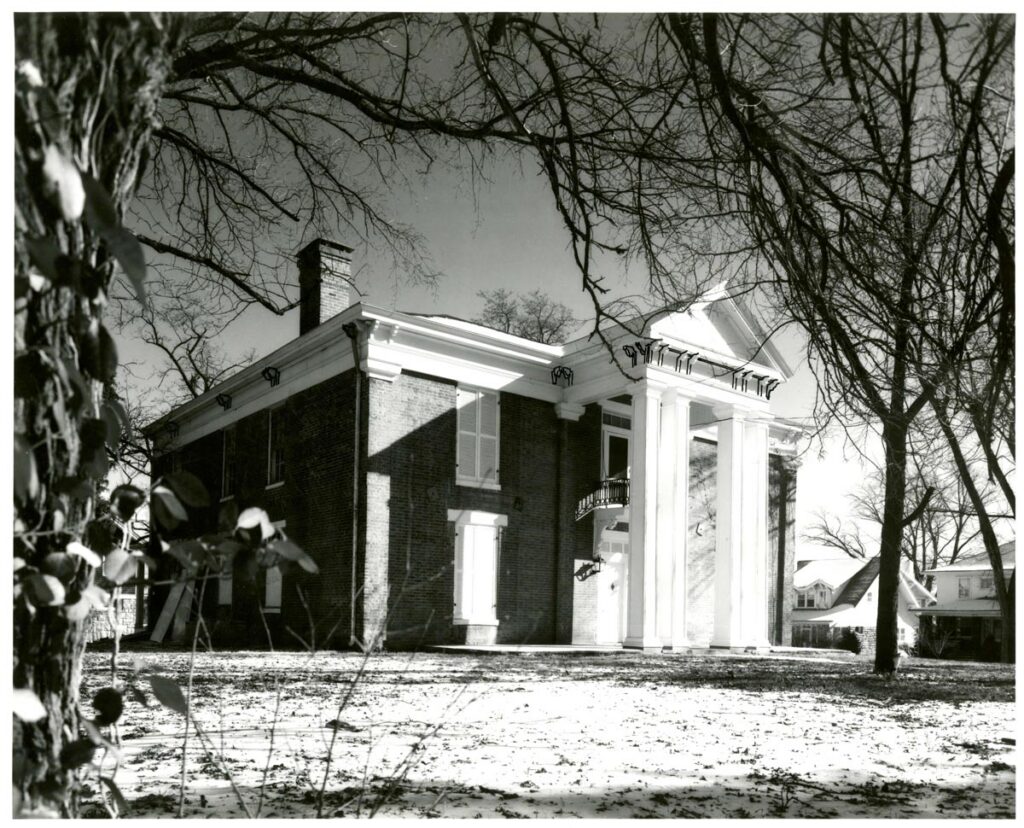
John Wornall, a prosperous businessman, built this house for his second wife, Eliza S. Johnson Wornall. Eliza was the daughter of Rev. Thomas Johnson, founder of the Shawnee Methodist Mission. Like his father-in-law, Wornall owned enslaved people, and before the Battle of Westport, he went into hiding.
Tour the Wornall House, which became a field hospital during the Battle of Westport for both Union and Confederate soldiers. Wornall’s wife, Eliza, helped tend the wounded. When Wornall returned several days later, he is said to have found the bodies of both Union and Confederate soldiers and buried them in the same grave under the cover of darkness in what is now Loose Park.
When the Civil War began, Rev. Johnson signed a loyalty oath to the United States. He and his wife moved to a house on 35th Street and Agnes Avenue, and his mission became a Union barracks. On the night of Jan. 2, 1865, armed men came to Johnson’s door and shot him dead on the threshold. His murderers were never identified.
The Harris-Kearney Historical House Museum
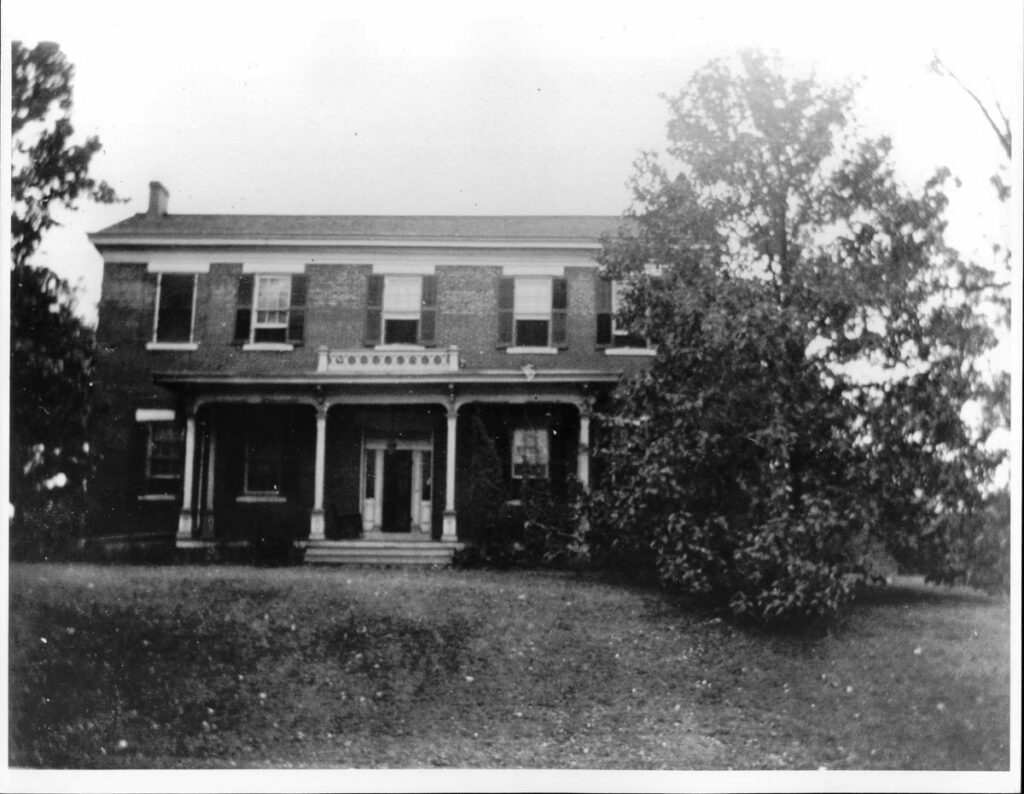
The Harris-Kearney house is KC’s oldest two-story brick house. During the Battle of Westport, the home was the headquarters of Union Gen. Samuel R. Curtis. The Westport Historical Society has renovated the home with antiques appropriate to the era, including items from descendants of the Harris and Kearney families.
Col. John Harris and his wife, Henrietta, built the brick home in 1855 at the corner of Westport Road and Main Street, where the Santa Fe Trail turned west. The family ran Westport’s first hotel, the Harris House Hotel at Pennsylvania Avenue and Westport Road, just a few blocks away. Eventually, the home passed to their daughter Josephine Harris and son-in-law Col. Charles Kearney, who lived there until 1909. In 1922, the home was saved from demolition and moved to its current location at 40th Street and Baltimore Avenue.