Patriotism takes many forms. Some folks celebrated America’s 250th birthday by shooting off fireworks. Some got drunk and waved the flag. The Nelson-Atkins celebrated America’s semiquincentennial, among other ways, with a new commitment to American art. Specifically, they hired Carrie Rebora Barratt.
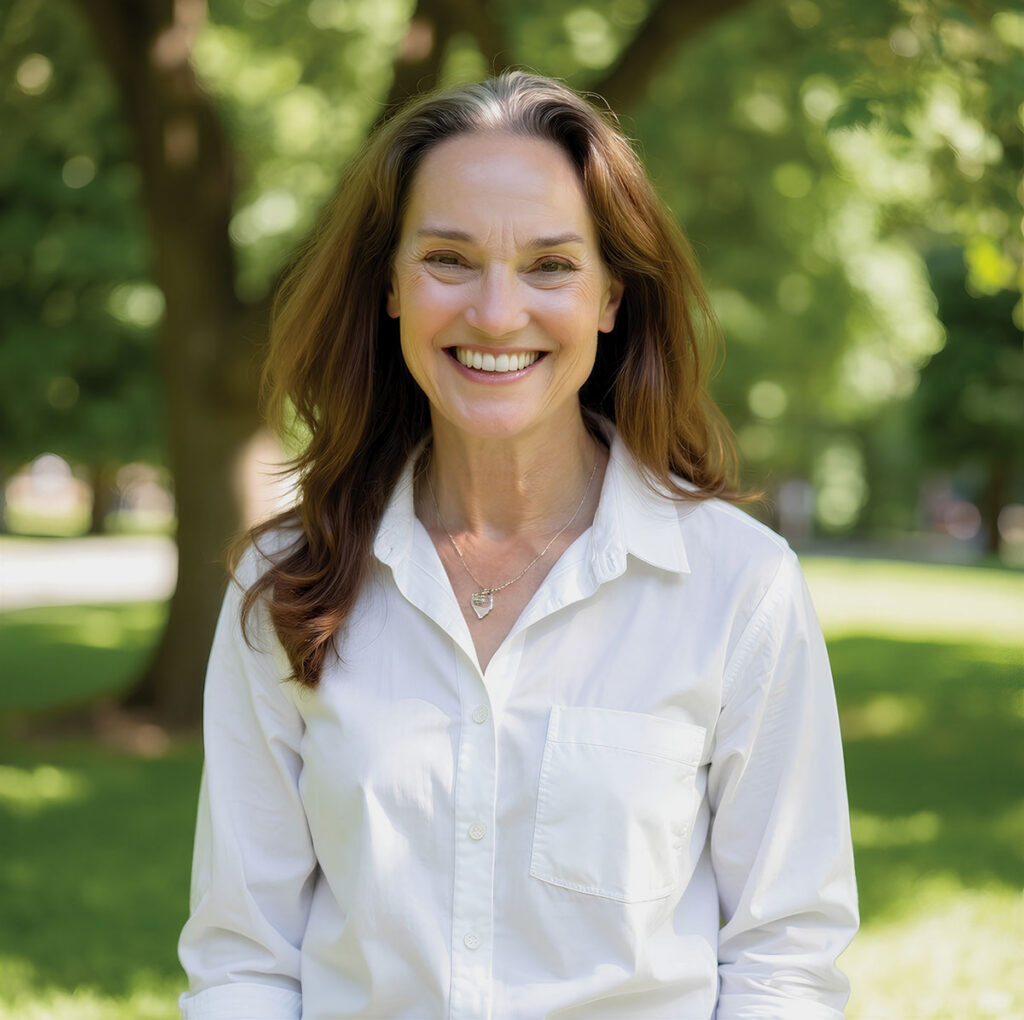
We spoke with Barratt, the Nelson-Atkins’ new senior curator-at-large for American Art, in a well-lit, contemporary conference room under the museum’s grand galleries. In a black gauzy tunic and elegant silver pendant, Barratt was warm, confident, accessible, thoughtful—and passionately committed to the idea of art as a fundamental building block of human wellness.
She also showed a lot of love for her new employer.
Specifically, Barratt raved about the museum’s permanent collection. “It’s phenomenal. Phenomenal,” she says. “It’s encyclopedic. It goes from ancient to contemporary. It covers all the bases. It’s one of the great, great, survey museums in the world.”
Barratt expressed a particular admiration for the great men and women, from William Rockhill Nelson to the generous philanthropic families of Kansas City today, who make the museum what it is. Not every city, she noted, is lucky enough to have citizens who care so deeply about the arts in their community.
“It takes people of great vision to create great museums—and then endow them so that they’re never at risk,” Barratt says.
High praise from a woman who knows. Barratt is, by any measure, a remarkably accomplished arts professional. After growing up in Chicago, she started her education at Mary Washington College in Fredericksburg, Va. She only stayed two years, though, discovering herself to be a visual learner.
“I needed to be in a place where there are actually pictures to look at, so I went home,” she says. “That was partly a financial thing, too.”
Back in Chicago, she studied at the University of Illinois and “went to the Art Institute every single day.” Ultimately, her education would include a Bachelor’s degree from UIC, along with a Masters in art history from UCLA and a Ph.D. in art history from the City University of New York.
New York is where she found her calling, too, getting an internship at the Metropolitan Museum of Art and rising through the ranks.
“I did the normal kind of academic route through the American wing,” Barratt says. “I was a curator, assistant, associate, full curator. I did exhibitions, I helped renovate the American wing. In 2009, when (former director) Philippe de Montebello retired, a whole new regime was pulled upstairs. I was one of those people.”
She became deputy director for collections, a ridiculously demanding and prestigious job that she held for nearly a decade. Then, in 2017, a search firm called and asked her to interview for the position of president of the New York Botanical Garden.
She kind of baulked. “’I’m an art historian with a Ph.D,’” she recalls saying. “‘I’ve worked at the Met more than half my life. What makes you think I can run a garden?’ And they said, ‘It’s a museum of plants.’”
She got the job. After a few years at the botanical gardens, though, and the disruption of the pandemic, Barratt decided that she missed working at great museums. All kinds of new projects followed, including a fellowship at Crystal Bridges in Bentonville, Ark. and the start of a forthcoming book titled Martha Washington and the American Widow.
At one point, Barratt was tapped for a job in East Hampton, helping to get the showplace former home of famed textile designer Jack Lenor Larsen onto the National Register of Historic Places. As that project, known as LongHouse Reserve, wound down, Barratt found herself in KC doing an accreditation for the American Alliance of Museums. While here, a few folks from the Nelson-Atkins asked if she was interested in a new position. She was. Barratt was already “looking for ways to get back to my roots as an Americanist.”
Three days later, she got a phone call. Shortly thereafter, Kansas City got a wildly qualified new curator.
But why American art specifically? What drives Barratt’s lifelong fascination with the creative output of her home country? Ultimately what makes anyone love one genre over another must remain something of a mystery, but Barratt absolutely lights up when she talks about early American portraiture.
“So my expertise—my true, true Ivory Tower expertise—is portraits from before the Civil War,” Barratt says. “So let’s say 1730 to 1860, pretty much before photography really takes hold.”
She particularly loves portrait miniatures: highly detailed, small-scale paintings, mostly measuring just a few inches in size, that were typically painted on vellum, card or ivory. Today, museums display them in climate-controlled glass cases. When they were made, however, portrait miniatures were deeply private things, profoundly sentimental and designed to be carried or worn.
“They’re especially dear because they were painted for people as personal keepsakes,” Barratt says. “They were often called tokens of affection. They would fit in the pocket. If I had a locket of my husband, it would always be in my pocket. The backs of them have hair work and jewelry. They’re fantastic, like beautiful watercolor on ivory with jewels around them. They’re so intensely personal and intensely intimate and exquisitely done. When you think about how hard it would be, watercolor on slippery ivory—just mind-blowing to me. I could look at them all day long.”
Perhaps just as significant is the subject matter of these miniatures. These are portraits of regular, albeit affluent, Americans. They are not glorifications of kings. They do not honor gods or figures from the Bible. They celebrate the beauty of simple, ordinary human love. They celebrate the individual. What could be more American than that?
In conjunction with her appointment, Barratt will deliver the museum’s 44th Annual Atha Lecture on September 10. Visit nelsonatkins.org for tickets and more information.