Kansas City has never been a one-size-fits-all kind of town. And nowhere is that more apparent than in its neighborhoods.
Are you a Brookside bungalow person or more of a River Market loft dweller? Do you dream of a grand Victorian in Hyde Park, a Saturday morning stroll through downtown Parkville or a neighborhood bar where everybody knows your name in Waldo?
From leafy, century-old neighborhoods to bustling urban districts and reimagined suburban downtowns, every corner of the metro has its own personality—and its own fiercely loyal following.
Some neighborhoods are steeped in history, where generations of families have put down roots and front porches are practically a social institution. Others are finding new energy, trading sleepy streets and empty storefronts for lively gathering places, new restaurants and a fresh sense of community. And some are managing to do a little of both.
So what makes a great neighborhood? That depends on whom you ask. For some, it’s walkability and a great coffee shop around the corner. For others, it’s good schools, beautiful architecture, a lively downtown or simply neighbors who look out for one another.
We took a closer look at 12 Kansas City neighborhoods, each with its own particular appeal. Some are familiar favorites. Others might surprise you. All offer a different way to call Kansas City home.
Brookside
Best for Classic KC
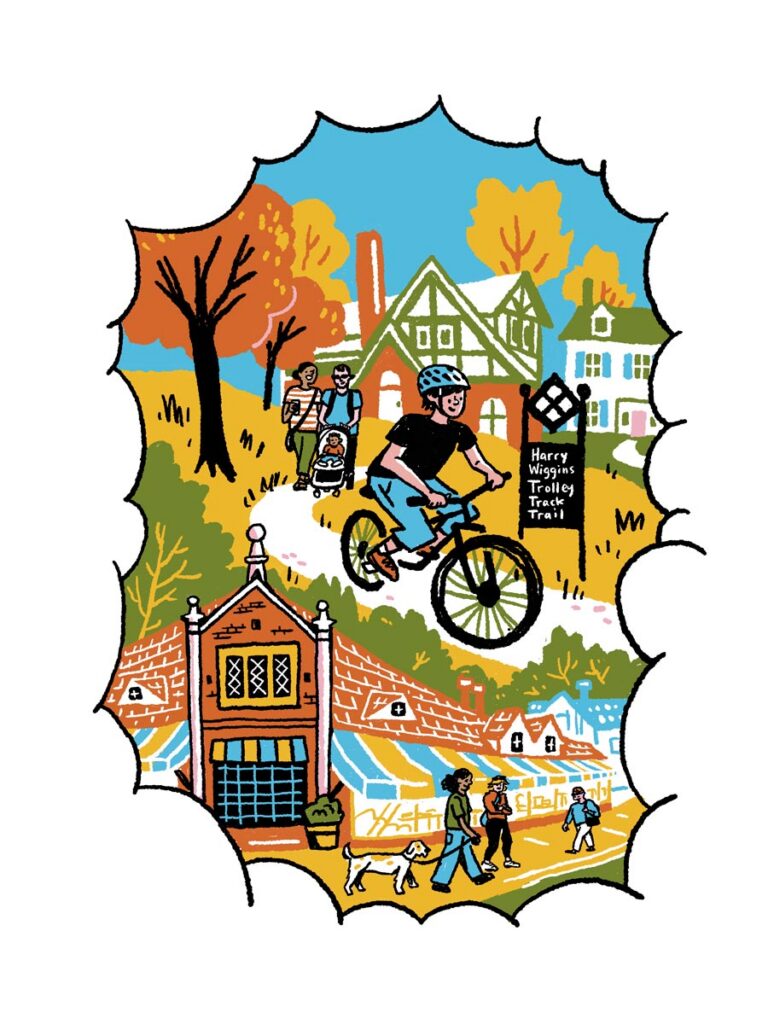
Tree-lined streets, century-old homes and neighbors who actually know each other’s names: Brookside is classic Kansas City with just enough modern energy to keep things interesting.
Just south of the Plaza, this sought-after neighborhood mixes stately Tudors, charming bungalows and newer homes. Its thriving shopping district dates to 1919, making it one of the city’s earliest outdoor retail destinations—even older than the Country Club Plaza.
Today, Brookside’s shops, restaurants, neighborhood bars and two longtime grocery stores give residents plenty of reasons to stay close to home. New businesses come and go, but the neighborhood’s old-school charm remains.
Brookside is especially popular with families. Kids still play in front yards, neighbors chat on sidewalks and, after a good snowfall, Brookside Hill becomes a sledding free-for-all.
Picture a Norman Rockwell painting, only with better coffee shops.
It’s a neighborhood that feels comfortably settled without being stuck in the past. And that’s a big part of its appeal.
The Lowdown
Typical home: 1920s–1940s Tudor Revival, Colonial Revival and American Georgian
Housing: $507K median
Commute: 10–15 minutes to downtown KC; 5 minutes to the Plaza
Walkability: High
Don’t miss: Brookside shops and restaurants, winter sledding, and the spring art fair
Saturday morning: Coffee and pastries at Heirloom Bakery & Hearth followed by a stroll through Loose Park
The vibe: Classic, leafy, neighborly, established and quietly stylish
Hyde Park
Best for Architecture
If houses could talk, Hyde Park would have some of Kansas City’s best stories.
Once among the city’s most fashionable addresses, Hyde Park remains an architectural showpiece. Its roots date to the late 1880s, when the area began developing around a private park. By the early 1900s, its streets were being filled with grand Victorians, stately Colonial Revivals and classic Kansas City shirtwaists—many of which still stand today.
The neighborhood sits between downtown and the Plaza, offering easy access to the city’s cultural attractions while maintaining a distinctly residential feel. New restaurants and bars along Armour Boulevard and nearby 31st Street are adding fresh energy to the historic surroundings.
The real stars, though, are the houses. Nowhere is that more apparent than Janssen Place, a historic enclave of 19 grand mansions that recalls Kansas City’s early wealth and architectural ambition.
Preservation is practically a neighborhood pastime. The Hyde Park Neighborhood Association works to protect the area’s historic character, and its popular homes tour has been a tradition since 1977.
But Hyde Park isn’t simply a collection of beautiful old buildings. It’s a living neighborhood where longtime residents share sidewalks with young families.
“A lot of families are raising their kids here, right next to people who have lived here for half a century,” longtime resident Andrew Johnson told KSHB. “And so it’s a place that a lot of people care about.”
The Lowdown
Typical home: Victorian, Kansas City shirtwaist, Queen Anne, Colonial Revival and neoclassical
Housing: $535K median in central Hyde Park; $303K in north and south Hyde Park
Commute: 10 minutes to downtown; 10 minutes to the Plaza
Walkability: High
Don’t miss: Historic boulevards, parks and Janssen Place
Saturday morning: An architecture walk followed by breakfast at Billie’s Grocery
The vibe: Grand, historic, leafy, artistic and proudly preserved
Downtown Lee’s Summit
Best of Both Worlds
Lee’s Summit has come a long way from its sleepy small-town roots. These days, it’s a booming suburb with a downtown that knows how to put on a show.
Once closely tied to the Western Electric assembly plant, Lee’s Summit has evolved into one of the metro’s fastest-growing communities. Its revitalized historic downtown is now packed with shops, restaurants and gathering spots, blending old-fashioned Main Street charm with a distinctly modern energy.
The transformation has earned national attention, including recognition from the National Trust for Historic Preservation in 2010.
And the city isn’t slowing down. The new three-acre Green Street development and farmers market are adding another gathering place downtown. Meanwhile, economic development projects totaling nearly $1 billion are planned through 2030, including a $250 million sports and entertainment complex. The massive $900 million Discovery Park development promises another mix of housing, recreation, retail and green space.
Beyond downtown, residents have access to six recreational lakes, 31 public parks and three highly ranked high schools.
For all its growth, Lee’s Summit still manages to hold on to its hometown personality. That’s no small feat for a city thinking this big.
The Lowdown
Typical home: Ranches, split-levels and newer two-story suburban homes
Housing: $395K median
Commute: 25–30 minutes to downtown KC; Amtrak access downtown
Walkability: Medium
Don’t miss: Historic Downtown Lee’s Summit
Saturday morning: Green Street farmers market, coffee at Whistle Stop and a little window shopping
The vibe: Hometown, growing, convenient, historic and suburban
Westside
Best for Urban Character

Colorful houses, generations-old family businesses and some of the city’s best Mexican food: Kansas City’s Westside has character to spare.
Just west of downtown, this historic neighborhood grew from the communities of railroad and stockyard workers who helped build the city. Its deep Hispanic and Latino roots remain central to its identity, reflected in its architecture, restaurants, businesses and family traditions.
Today, the Westside is a lively mix of old and new. Modest early 20th-century homes sit alongside renovated properties and contemporary infill while independent businesses continue to give the neighborhood its distinctive flavor.
Its location is another advantage. Downtown, the Crossroads and West Bottoms are all close by, making the Westside an appealing option for residents who want urban convenience without living in a high-rise.
But change has brought challenges, too. Rising interest in the neighborhood has sparked new investment, redevelopment and concerns about preserving its historic character.
“It’s a mixed bag of who’s coming in and buying,” says Katrina Rojas Vincent, president of the Westside Neighborhood Association. “There are rehabbers and resellers and those who are buying lots and selling homes. There’s a lot of homes here that need to be rehabbed because they were built in the early 1900s.”
Efforts to reconnect the neighborhood with surrounding districts, including a federally funded planning initiative, could help address some of the barriers created by past highway construction.
For neighborhood advocates, the challenge is making room for change without losing what makes the Westside special.
As Rojas Vincent puts it, residents must keep fighting for their community to remain “a neighborhood, not a condo-hood.”
The Lowdown
Typical home: Historic cottages, Victorians and contemporary infill
Housing: $199K median; 500K–1.2M along the northeastern edge
Commute: 5–10 minutes to downtown KC
Walkability: High
Don’t miss: Southwest Boulevard’s Mexican restaurants, cultural shops and Summit Street destinations
Saturday morning: Brunch at Los Alamos Cocina and conversations with neighborhood shop owners
The vibe: Historic, eclectic, urban, culturally rich and evolving
North Kansas City
Best Reinvention
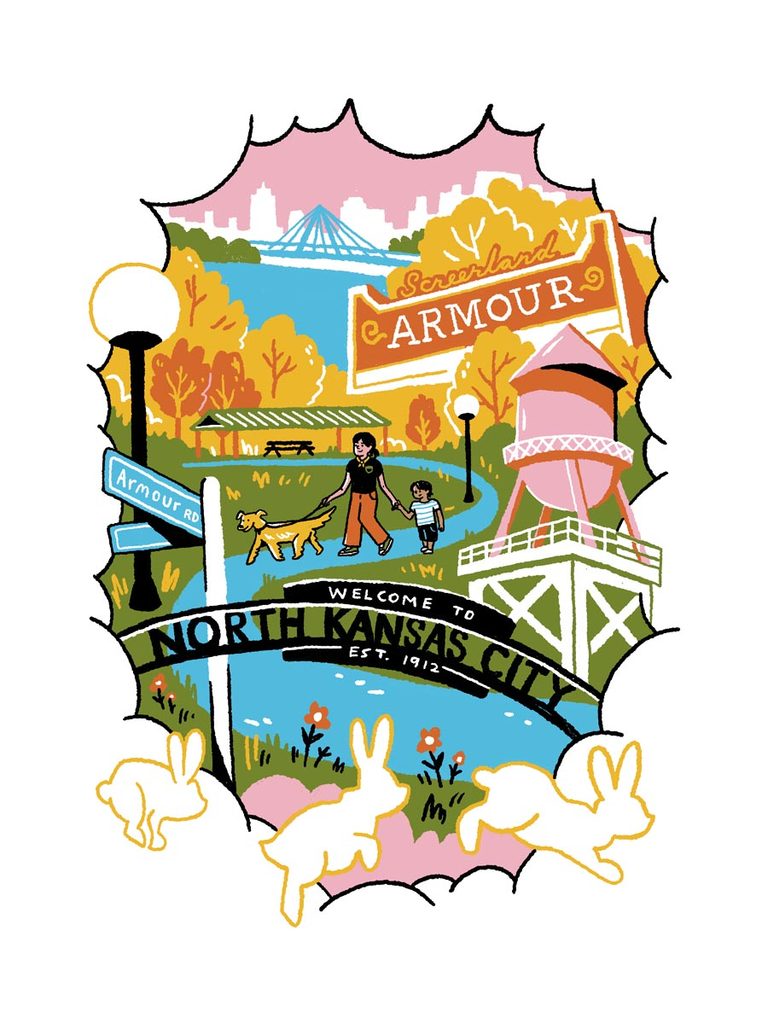
For years, North Kansas City was the little city across the river that too many people overlooked. Not anymore.
Known affectionately as North Town, this independent municipality has reinvented itself as one of the metro’s liveliest pockets for dining, drinking and entertainment.
Its compact downtown is packed with restaurants, breweries, boutiques and the beloved Screenland movie theater. Add a growing apartment scene, and North Kansas City has become an appealing alternative to downtown living.
“The small-town feel here is kind of refreshing,” says Richard Groves, executive director of the North Kansas City Business Council. “You don’t see too much of that in the Kansas City area, especially in a location that’s so central.”
That location is a big advantage. Just across the Missouri River from downtown KC, North Kansas City offers quick access to the urban core without giving up its own identity.
The population has grown from roughly 4,500 to nearly 6,000 in recent years, Groves says, fueled partly by new apartments and an influx of young professionals.
More residential development is planned, and discussions about extending the streetcar across the Heart of America Bridge have added to the sense of possibility.
North Town may be small, but it’s thinking big—and having a pretty good time along the way.
The Lowdown
Typical home: Older bungalows and ranches, newer single-family homes and apartments
Housing: $387K median
Commute: 5–10 minutes to downtown KC
Walkability: Medium
Don’t miss: North Kansas City’s restaurant and entertainment district
Saturday morning: Breakfast sandwiches at District Biskuits followed by browsing local shops
The vibe: Independent, compact, energetic, reinvented and accessible
Lenexa City Center
Best New Urbanism
Who says suburban living has to mean getting in the car for everything?
Lenexa is challenging that idea with City Center, a 200-acre district designed to bring a little urban buzz to the suburbs.
For decades, Lenexa’s appeal was straightforward: good schools, comfortable neighborhoods and convenient highway access.
Those advantages haven’t disappeared. But City Center has given residents something new—a walkable downtown with restaurants, apartments, entertainment and public gathering spaces.
Located near I-435 and 87th Street, the district brings together City Hall, a public market, a library, a recreation center and restaurants including Grand Street, Jack Stack and Tupelo Honey.
Central Green Park adds trails, ponds and open space while events such as Food Truck Frenzy, the Lenexa Art Fair and City Center Live keep the calendar busy.
“We’re known as a city of festivals,” says Assistant City Manager Mike Nolan. “We have dozens every year. We like to have a lot of these community-focused events for no other reason than just to bring people together to have fun.”
More development is on the way. The recently approved Rise project at 87th Street and Renner Boulevard will bring an 11-story building with apartments for adults 55 and older, office space and a rooftop restaurant and bar.
The result is a suburban community where a Saturday morning might mean walking to coffee, browsing the market or catching an outdoor event—all without moving the car.
The Lowdown
Typical home: Older suburban ranches and Cape Cods
Housing: $333K median
Commute: 10–15 minutes to downtown KC
Walkability: Medium-high
Don’t miss: Mission’s Johnson Drive shops and Mission Mart
Saturday morning: Quiche and a cappuccino at Urban Prairie Coffee followed by a leisurely drive through nearby Mission Hills
The vibe: Compact, central, local, evolving and approachable
Mission
Best Little City
Small footprint, big personality: Mission has made an art of being close to everything without feeling swallowed by the city around it.
Just minutes from downtown Kansas City, this compact Johnson County community has long appealed to first-time buyers, young families and empty nesters looking for a central location and manageable homes.
Its older ranches, Cape Cods and modest residential streets offer a different kind of suburban living—less sprawling, more connected. Walkability is another selling point. Mission’s Johnson Drive corridor is lined with restaurants, bars and locally owned businesses, giving residents plenty of reasons to venture out.
And the city continues to evolve. The planned Mission Beverly development near Martway Street and Beverly Avenue will bring new residential and retail space just south of the downtown commercial corridor.
Mission isn’t trying to compete with the shiny new developments farther west. Its appeal is simpler: established neighborhoods, local character and a location that’s hard to beat.
The Lowdown
Typical home: Apartments, condos, townhouses and mixed-use urban housing
Housing: $480K median citywide; 2K–3K monthly for City Center apartments; mid-200K–950K for townhomes
Commute: 20–25 minutes to downtown KC
Walkability: High
Don’t miss: City Center’s public spaces, market and community events
Saturday morning: Donuts at Mr. D’s Coffee followed by a City Center event
The vibe: Modern, polished, planned, social and convenient
Parkville
Best Small-Town Escape
With hillside homes, a postcard-worthy downtown and the Missouri River practically at your doorstep, Parkville feels like a weekend getaway—even if you live there.
Tucked into the northwest corner of the metro, this historic river town has built its appeal around natural beauty, local businesses and a strong sense of community.
Downtown Parkville is made for wandering. Antique stores, boutiques, restaurants and coffee shops line its streets, and nearby English Landing Park offers miles of riverfront scenery.
“You could spend a morning walking along the river, enjoy lunch or breakfast downtown and meet friends at a neighborhood restaurant,” says Ed Linnebur, executive director of the Parkville Economic Development Council. “I think it gives you that pedestrian feel.”
But Parkville is more than its charming downtown. The community offers a mix of established neighborhoods, newer subdivisions and luxury homes, along with convenient access to KCI and the growing Creekside development.
The surrounding hills and wooded landscape give the area a character that feels distinctly different from much of suburban Kansas City. Come fall, the scenery becomes an attraction of its own.
“As you’re walking along the river, you really do get a feel for not only the size and power of that river but also the beauty around it,” Linnebur says.
Parkville’s real draw, though, may be its pace. Life here feels just a little less hurried—and that’s exactly how residents like it.
The Lowdown
Typical home: Historic cottages, traditional suburban houses and luxury golf course and lake homes
Housing: $591K median; 700K–3M for luxury homes
Commute: 20–25 minutes to downtown KC; 13 minutes to KCI
Walkability: Medium
Don’t miss: English Landing Park and downtown restaurants and shops
Saturday morning: Breakfast at The Market at Prima Facie followed by a riverfront walk
The vibe: Historic, scenic, relaxed, hilly and small-town
Waldo
Best for Keeping It Casual
Waldo isn’t fancy. And that’s exactly why people love it.
This laid-back neighborhood has long been a favorite of Kansas Citians who prefer neighborhood bars to velvet ropes, local businesses to big chains and houses with a little character.
Originally part of Dr. David Waldo’s farm, the area has evolved into a lively residential and commercial district filled with modest cottages, Craftsman bungalows and Tudor-style homes.
Waldo’s independent spirit runs deep. Of its roughly 600 businesses, about 60% are locally owned, giving the neighborhood a distinctly homegrown personality.
“Waldo definitely has more of an urban feel than Brookside does,” says Kyle Talbot, a real estate agent and former honorary mayor of Waldo. “It’s all walks of life, all people, accepted here. It’s embraced a kind of eclectic vibe.”
That easygoing attitude extends to its residential streets, where neighbors wave from front porches and impromptu sidewalk conversations are part of daily life.
Waldo is changing, too. New apartment developments along Wornall Road and 75th Street are bringing more residents and energy to the area. Pedestrian improvements and the Trolley Track Trail make it easier to get around.
For young professionals, Waldo can be an entry point into south Kansas City living. For longtime residents, it’s simply home.
Either way, the dress code is casual.
The Lowdown
Typical home: Craftsman bungalows, Tudor cottages and Colonial Revival
Housing: $230K median
Commute: 15–20 minutes to downtown KC
Walkability: High
Don’t miss: Neighborhood bars and restaurants near 75th and Wornall
Saturday morning: Breakfast at Hemma Hemma followed by a stroll along the Harry Wiggins Trolley Track Trail.
The vibe: Casual, local, friendly, unpretentious and lively
River Market
Best for Car-Light Living
Want to live in Kansas City without spending half your life behind the wheel? The River Market makes a pretty convincing case.
One of the city’s oldest neighborhoods, dating to 1838, the River Market has reinvented its historic warehouses and commercial buildings as lofts, restaurants, shops and gathering places.
Today, it’s one of downtown’s most walkable districts, with easy streetcar access and an ever-growing mix of residents, businesses and attractions.
The neighborhood’s heartbeat is City Market, where farmers, food vendors and small businesses create a lively mix of sights, sounds and flavors. On busy weekends, as many as 20,000 visitors browse produce stands, specialty shops and food stalls.
“The businesses here are very small, usually one-family operations,” says Sue Patterson, the market’s director of marketing and communications. “They are scrappy. We’ve been through the pandemic and survived.”
The market’s cultural diversity is another draw, reflected in its international food offerings and events such as Asian Glow Fest.
New development near CPKC Stadium has brought additional energy to the riverfront, and the streetcar connects residents to destinations well beyond the neighborhood.
For urban dwellers who want restaurants, entertainment, fresh produce and public transportation within easy reach, the River Market checks a lot of boxes.
The Lowdown
Typical home: Lofts and condos
Housing: $275K median; luxury lofts 700K–2M
Commute: Five minutes to downtown; about 25 minutes to the Plaza via the streetcar
Walkability: High
Don’t miss: City Market
Saturday morning: Browse the farmers market, then walk the Riverfront Heritage Trail
The vibe: Urban, energetic, historic, convenient and social