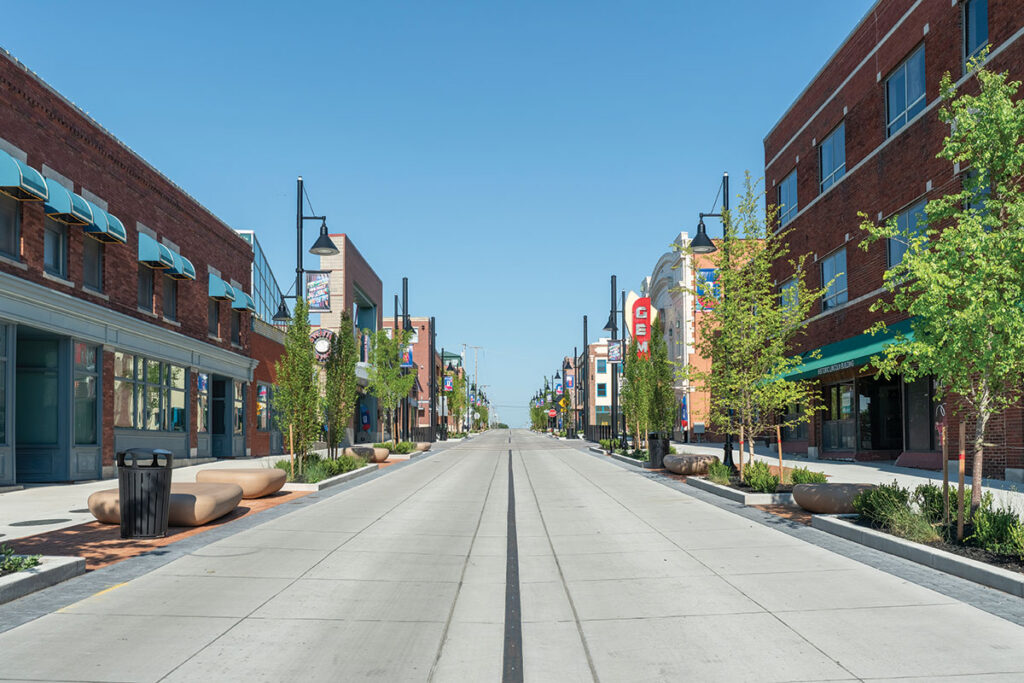
Kansas City’s ongoing 18th and Vine revitalization project known as Revive the Vine was recently celebrated with the grand opening of a new 18th Street pedestrian mall. The roadway is now pedestrian friendly and seamlessly transitions from a car-centric street to a walkable corridor for community events.
“The walkway is a symbol of connectivity,” says Shawn Edwards, executive director of the Black Movie Hall of Fame, also on 18th Street. Edwards has worked closely with the groups involved in the Revive the Vine effort and is an enthusiastic cheerleader of the project.
This $400 million initiative aims to enliven the area by investing in the district’s historical sites and strengthening local businesses. The investment is broken down into multiple key projects, each with the aim of celebrating the city’s roots. “A lot of the things that Kansas City is known for have all originated from the 18th and Vine Historic Jazz District,” says Edwards, a Kansas City native.
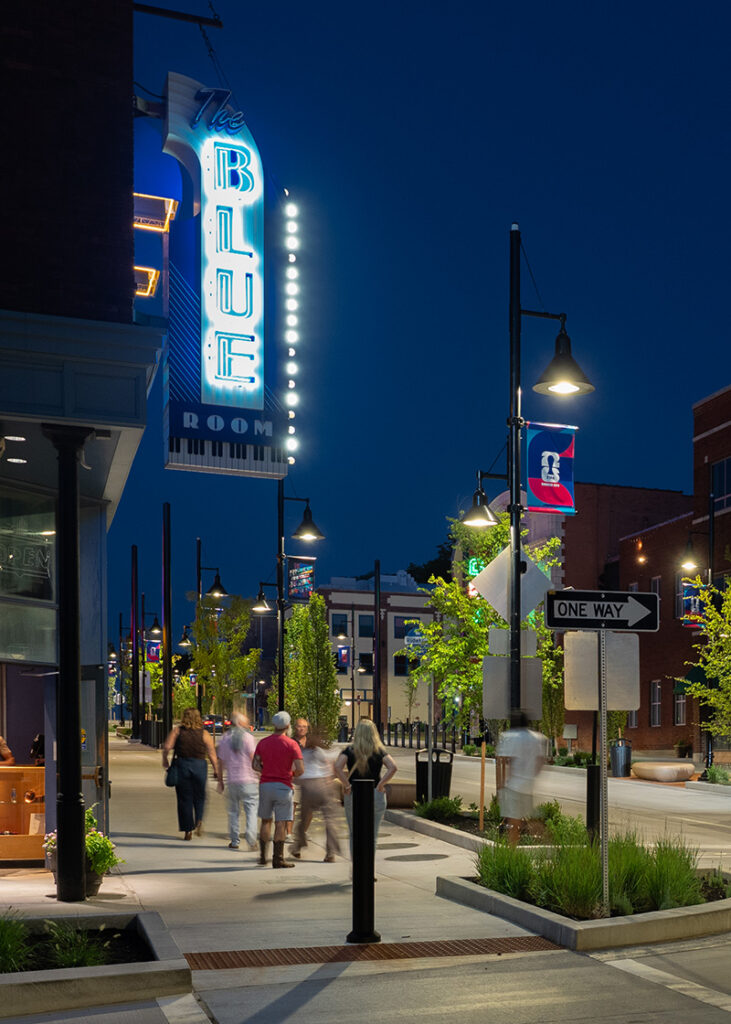
With that in mind, the city is investing $3.2 million in the American Jazz Museum (1616 E. 18th St., KCMO). The museum pays homage to and celebrates the city’s rich jazz history. It is often said that jazz might have been born in New Orleans, but it grew up in Kansas City, specifically in the many clubs, restaurants and bars that populated the 18th and Vine area. The museum will undergo a full renovation with new galleries, a cafe and retail shop.
Another such project is the Boone Theater (1701 E. 18th St., KCMO), located in the heart of the district, named in honor of Black American composer and pianist John William “Blind” Boone. For decades, the once-popular theater stood empty and unused. But with the revitalization project underway, local stakeholders realized the theater’s potential and began renovations in 2024. The theater is expected to be fully restored by 2027 and will feature the privately funded Black Movie Hall of Fame, a multimedia experience founded by Edwards.
“[The Black Movie Hall of Fame] celebrates the entire history of Black film from around the world,” Edwards says. “It creates a really unique historical experience that you perhaps can’t find in any other city in America.”
Across the street from the Boone Theater and in the former Paseo YMCA sits the district’s largest attraction: the Negro Leagues Baseball Museum. A $35 million, 30,000-square-foot expansion of the museum that includes a hotel is underway and is expected to be finished in late 2028. The original building is where, in 1920, the owner of the Chicago Giants, Andrew “Rube” Foster, and other owners of Midwestern Black baseball teams signed the league’s charter. It’s considered the league’s birthplace.
While the shift from car-dependent streets to a pedestrian mall is merely a first step in the overall project, it signifies a bright new era for the district. “That walkway will be used to connect the entire district together,” Edwards says. “It’s a sign of progress, and it’s an example of what can be and what will happen in the future.”