Don’t call Maher Chebaro’s new restaurant off 39th street “fusion.” And don’t call it “Middle Eastern” either. You may, however, refer to Beirut Taco as “Lebanese” or “Mexican” or maybe even “Mexi-teranean,” Chebaro’s own term for his style of cooking.

The restaurant is one of several in a current wave of Lebanese spots opening throughout Kansas City. Last year saw the opening of two distinct Lebanese restaurants: Al Beik off State Line Road and Nour’s in Midtown. The lamb and chicken shawarma burritos at Beirut Taco might seem familiar; maybe you have the slightest inkling you’ve devoured similar tortilla-wrapped fare at Nour’s. If the feeling resonates, you have. Chebaro helped his brother, Marwan, open Nour’s last year, and seeing the success of those burritos spurred Beirut Taco, his new 39th Street lovechild born from the cuisines of his Levantine homeland and the country he swears he belonged to in another life, Mexico.
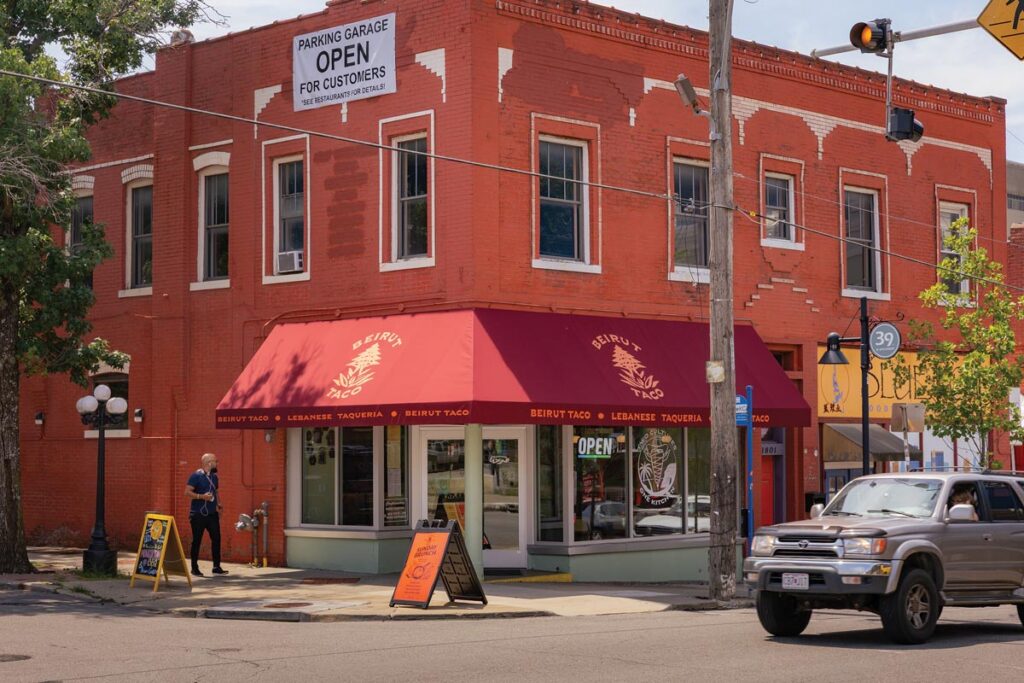
Chebaro has already tested this multicultural menu at his restaurant El Cedro, a Lebanese taqueria that sits in the Middle Eastern grocery strip of Brooklyn’s Atlantic Avenue in New York City. Both Chebaro and Marwan opened restaurants throughout KC in the ’80s, like Blvd Café, Cafe Rumi and Tribal Grill. After some time away from KC’s restaurant scene, the brothers are back, and their considerable expertise is evident in polished atmospheres (renowned designer John O’Brien helmed Nour’s interior) and unabashed menus intent on avoiding the generic “Middle Eastern” category while standing firmly rooted in Lebanon. Beirut Taco, however, might be the first Lebanese-Mexican restaurant in the city.
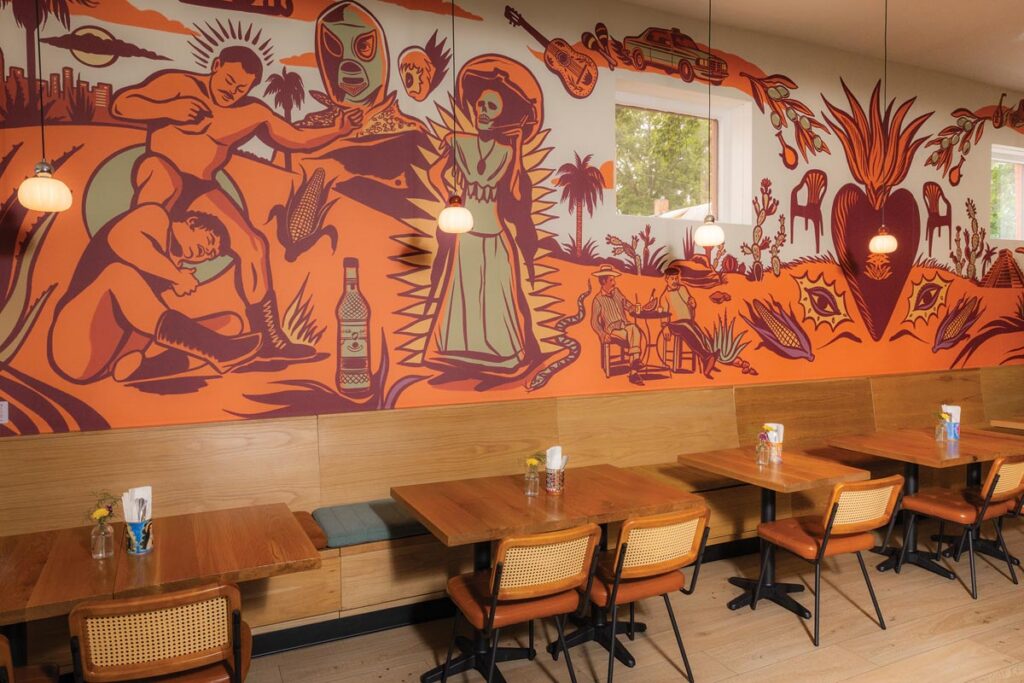
The restaurant doesn’t look all that different from its former life as Zhoug Mediterranean. The layout is the same. Chebaro even kept the same seats. But murals by Lebanese illustrator Tracy Chahwan and some new tiling behind the bar give the space its own style. The restaurant is comfortable, but it’s the menu that does all the talking.
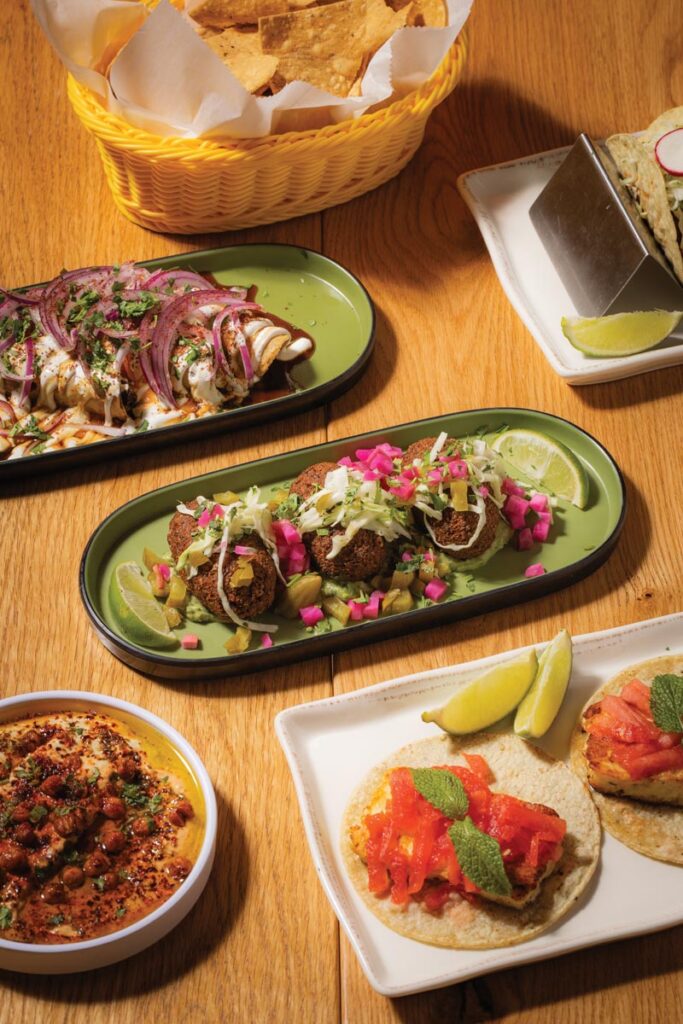
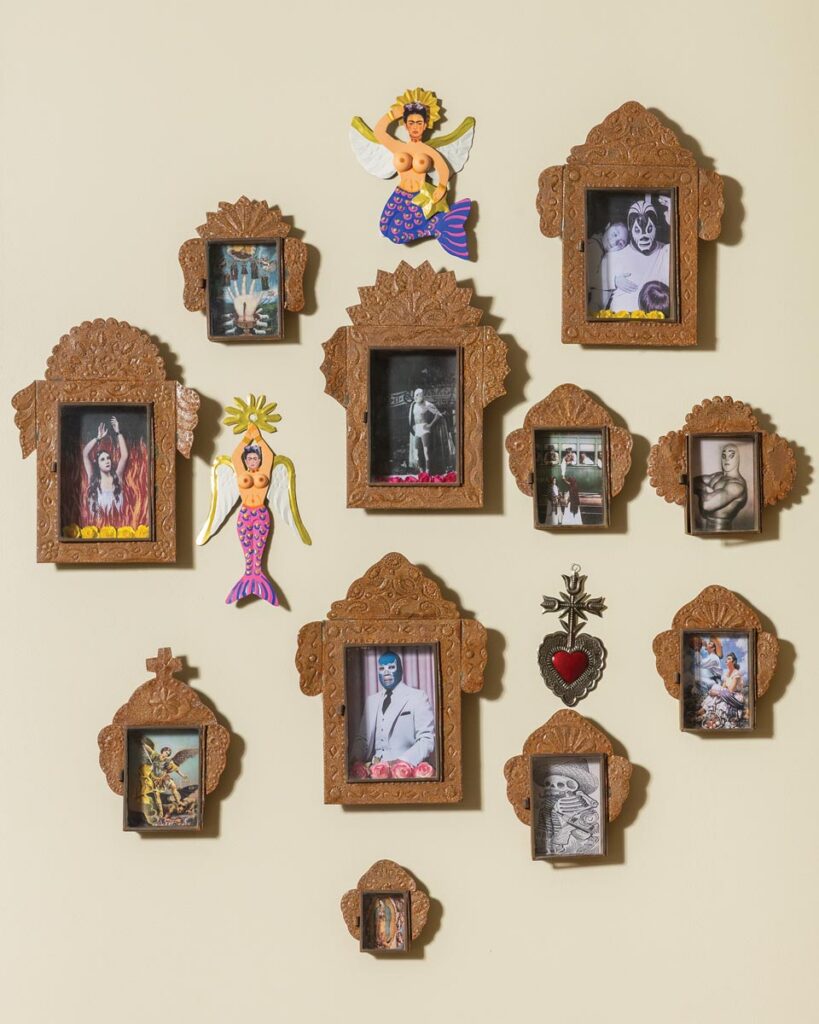
At Beirut Taco, ceviche is sharpened with the bite of a parsley-mint studded taboule, a falafel is frittered to the color of a 63% chocolate bar then spiced with chipotle, and eggplant is worked into salsa. For the most part, dishes take the shape of Mexican foods and are given the zesty, earthy tang of the Mediterranean. Sumac, harissa, toum and tahini are worked into flautas, esquites, tacos and more. But not arbitrarily so. For Chebaro, who grew up watching lucha libre wrestling matches in Beirut (beyond the mural, you can peep framed photos of beefy masked luchadors on the east wall), Mexican and Lebanese flavors speak the same language. It’s actually surprising that tacos árabes and al pastor don’t make an appearance on Taco Beirut’s menu, both of which are the product of Lebanese immigrants bringing their vertical rotisserie cooking methods to the coasts of Yucatán, Veracruz and Puebla in the 19th and 20th centuries. Kansas City has already seen chefs acknowledge that history, like when T’ähä opened on the Plaza in 2024 and owner Jose Gomez described his lamb barbacoa as an homage to the legacy of Lebanese influence in Mexico. Beirut Taco is not advertised as such, but aside from the carne asada tacos with tender outskirt steak, the rest of the food is halal, which is why you’ll see Muslim families pushing tables together for Sunday brunch and why tacos al pastor might never see the light of day on Chebaro’s menu.
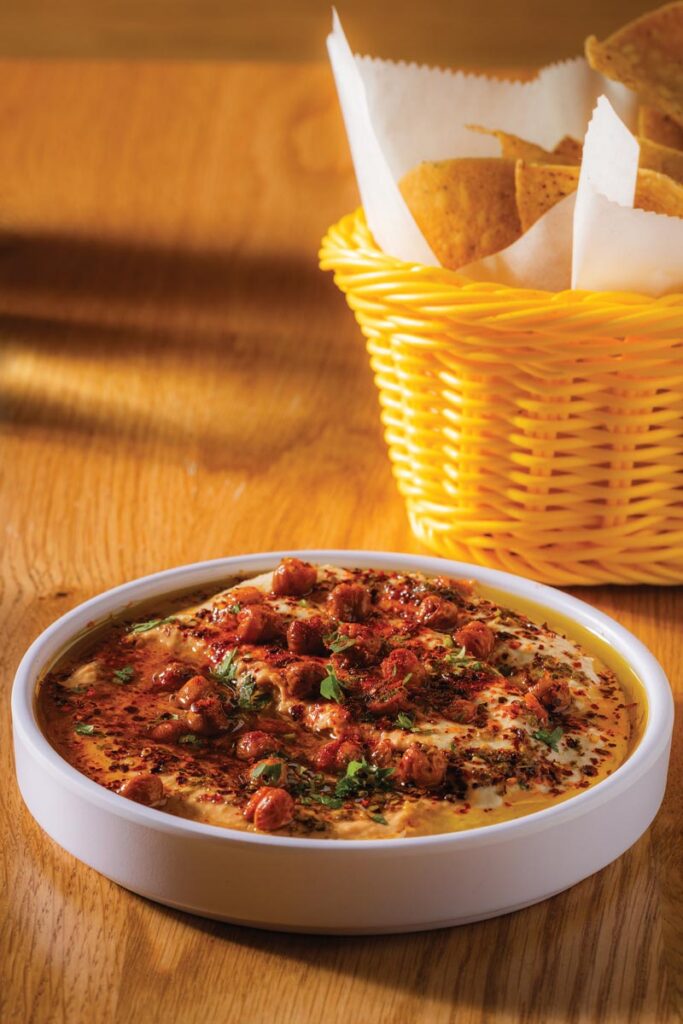
The mezzes, usually considered the starting point for Middle Eastern and Mediterranean meals, are so wonderfully substantial at Beirut Taco that you could very well contain yourself to this section of the menu and not experience FOMO when you see the plate of chicken harissa tinga tacos being served to the neighboring table (don’t hold me to this). Begin with the kibbe queso fundido, which, albeit delicious, is admittedly misleading. Instead of a cast iron of bubbling, stringy cheese, the gooey Oaxacan queso is served in kibbe—crisp nutty croquettes made of bulgur wheat, beef and poblano peppers (think falafel’s more savory, cheese-filled cousin). You’ll want to drag the kibbe in its accompanying avocado, tahini and cabbage mixture for every bite. Order the hummus too, which comes in both its traditional unscathed chickpea form and another infused with chipotle, so you can experience the ultimate testament to any Lebanese restaurant. It’s the real deal, velvety and smooth. Is chipotle an almost all-too-easy spice to reach for when looking to dub a dish a Mexican crossover? Of course it is. But Chebaro isn’t trying to rework, reinvent or rewire what is already delicious. The beauty of Beirut Taco is in the simplicity: These flavors have shared a dialogue for generations. Enjoy the flavor combinations when tasting flautas spiced with sumac, esquites grounded with za’atar and a pea-green house jalapeño salsa zapped with cardamom and caraway.
To be fair, the aforementioned hummus is also equally delicious because Chebaro imports many ingredients, like extra virgin olive oil, tahini and pickles, straight from Lebanon. For some of the Mexican ingredients, like tortillas, it seems KC has plenty to offer. The burritos are wrapped in Caramelo’s elite Sonoran-style flour tortillas (made with avocado oil), while the tacos and chips are made with the corn variety from the Northeast’s Las Marias Tortilleria.
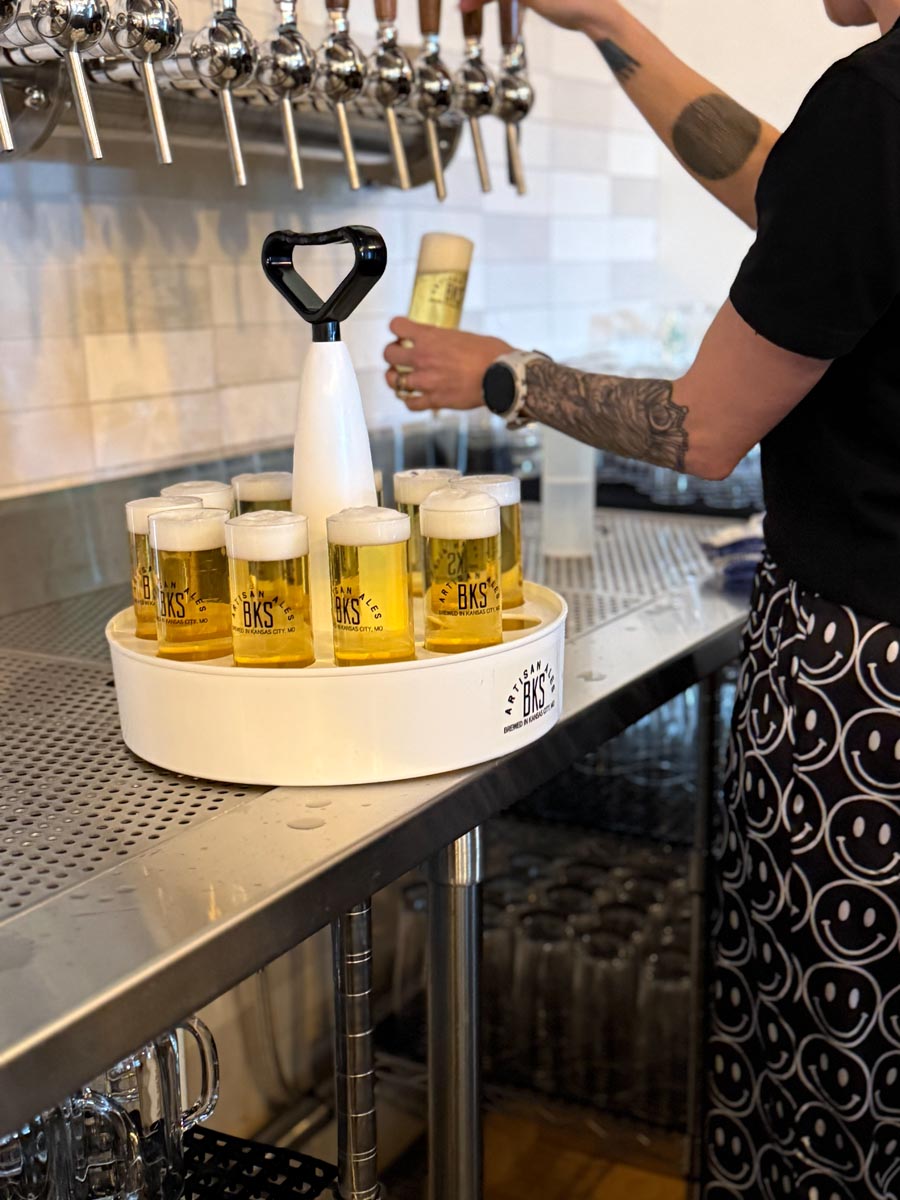
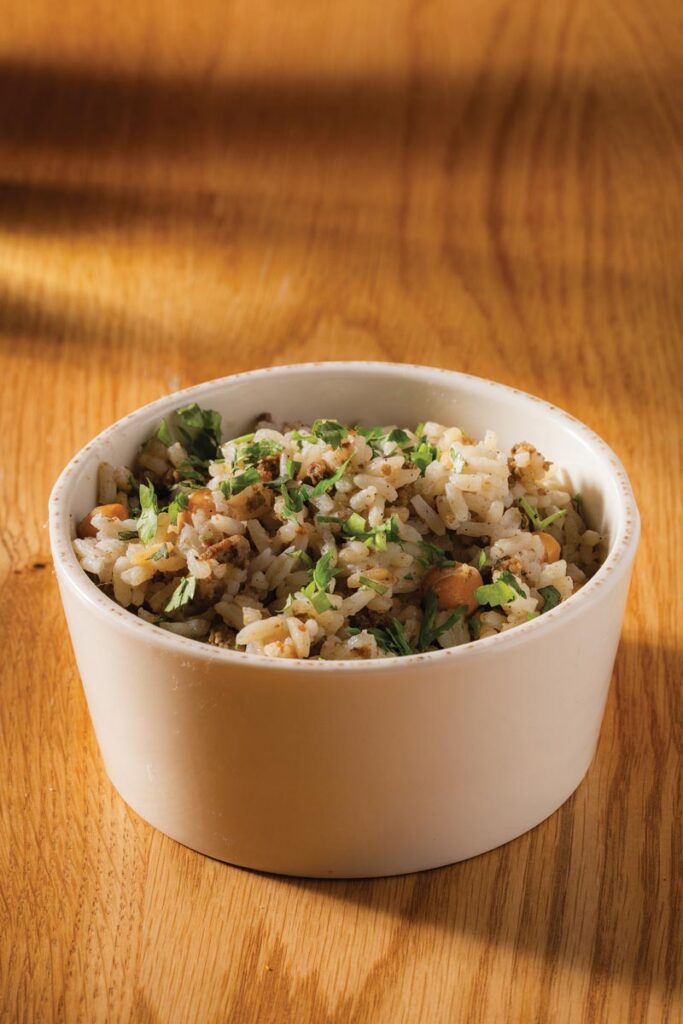
If you’re unable to resist beyond the mezzes, spring for either of the lamb tacos. One is made with the shoulder cut and the other blended with chorizo; both are delicious. Take a chance with the seared halloumi cheese tacos served with watermelon salsa, but eat it while it’s still warm, and order a side of hashweh rice, which is so grounded with savory aromatics that all I could think of is how it should be a staple postpartum meal. The cocktails are batched and good but probably not what’s drawing you to the restaurant. Focus on filling your belly at Beirut Taco, then afterwards, have your fun down the street at Hi-Dive Lounge or Goat & Rabbit.
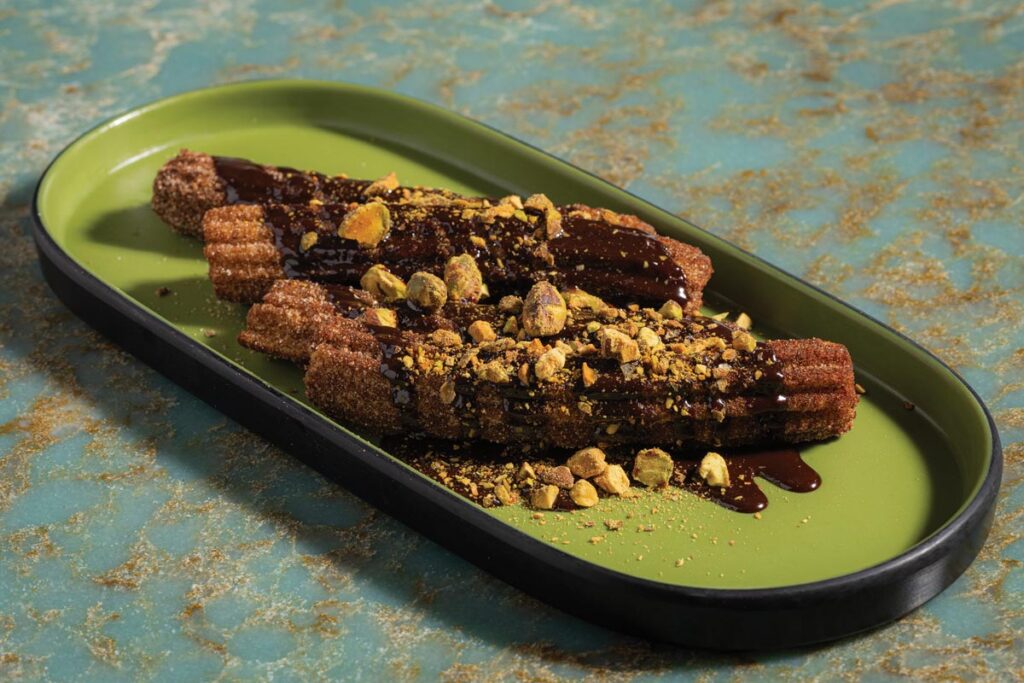
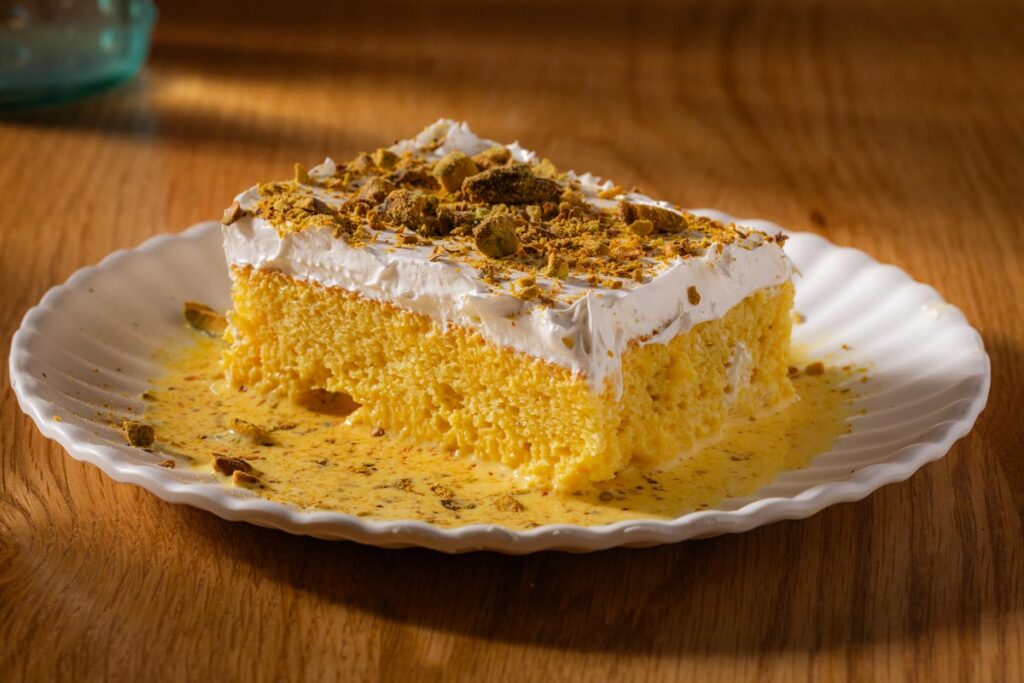
After you’ve finished your desserts of churros, walnut baklava or maybe a scoop of saffron pistachio ice cream from Fairway Creamery, your voice might be getting strained from projecting across the table. At its busiest, the restaurant is noisy. Chebaro says he’s working on it.
He’s also working on brunch, now available on Sundays from 10 am to 3 pm. This is where those delicate sweeter Lebanese flavors get to be seen beyond the usual dessert section—mainly in the pancakes, which are topped with crispy strands of kunafa and drizzled with a cardamom maple syrup. On the more savory side, the red shakshuka ranchero remains the pinnacle of morning meals, although you won’t regret giving the nachos with stewed fava beans and chickpea verde a chance.
Burritos and tacos might make up a large portion of the main menu right now, but Chebaro says he’s ready to start testing some boundaries. The restaurant will soon implement specials. This way, Chebaro can get all of his seemingly endless ideas onto the plate and survey customer’s responses. Currently, he’s working on a menudo-like version of kroush, a traditional Lebanese dish where spiced rice, meat and chickpeas are stuffed into tripe, or animal stomach, and sewn to slow-cook in water.
GO: 3904 Bell St, KCMO. beiruttaco.com. Open Tuesday–Saturday, 11:30 am–9 pm, and Sunday, 10:30 am–3 pm.