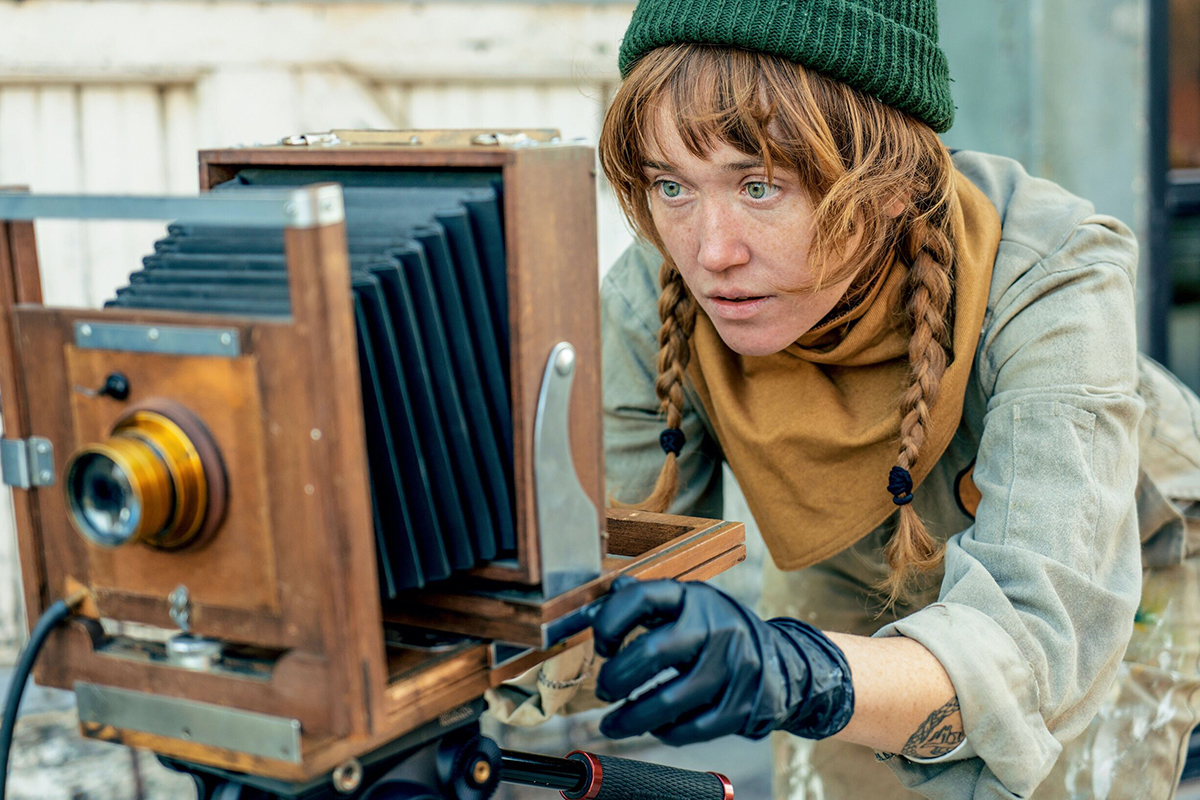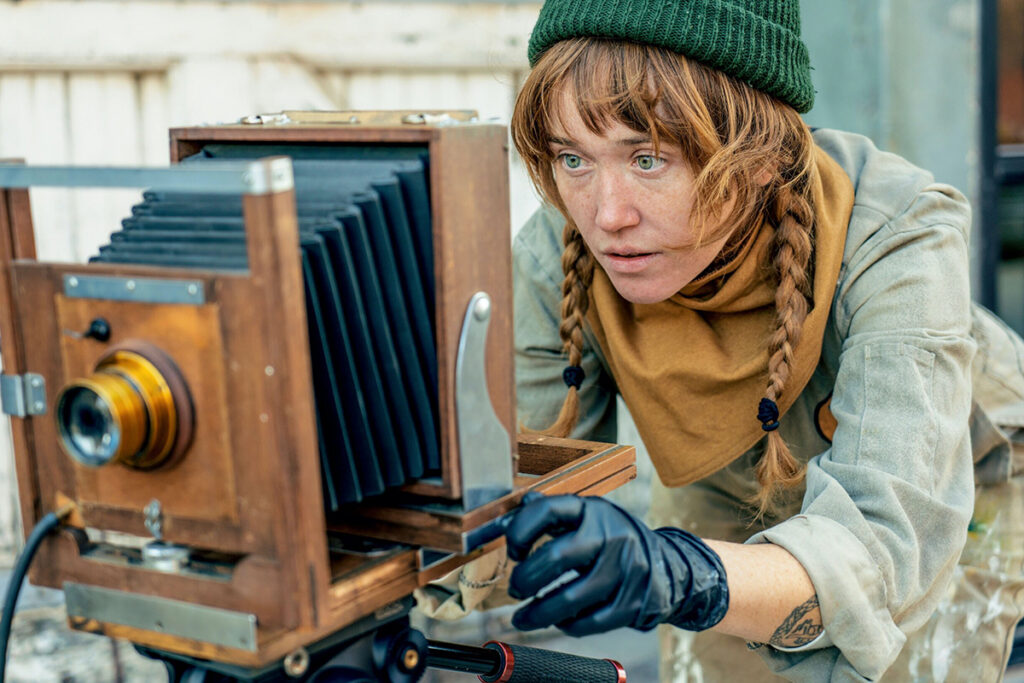
Before Megan Karson takes a single photograph, she’s already done hours of work. She’s mixed her own chemistry, prepared a light-sensitive emulsion and cut the metal that will become the finished image. And when the shot is finally made, there’s no reviewing a screen, deleting and trying again. If you blinked, you blinked.
Karson is one of Kansas City’s only tintype photographers, a process that dates to the 1850s. Known as wet plate collodion, it’s one of the earliest photo methods ever developed. It predates film and nearly everything we associate with modern photography. “It’s very involved,” Karson says. “Sometimes it takes all day to make the one picture I want.”
The process requires a portable darkroom, which Karson typically sets up in the back of her car. From there, she coats a piece of metal with a light-sensitive liquid emulsion, loads it into the camera, exposes it to light and then only has a few minutes to develop the image before it’s lost.
No two results are the same. “Even if I made the same picture in the same spot five minutes apart, they would still look different,” Karson says. “It’s completely unique.” During a recent residency in Maine, she spent a full day shooting a single creek (ten images in one session), and each came out differently, influenced by shifting water, changing light and subtle differences in how she poured and developed the chemistry.
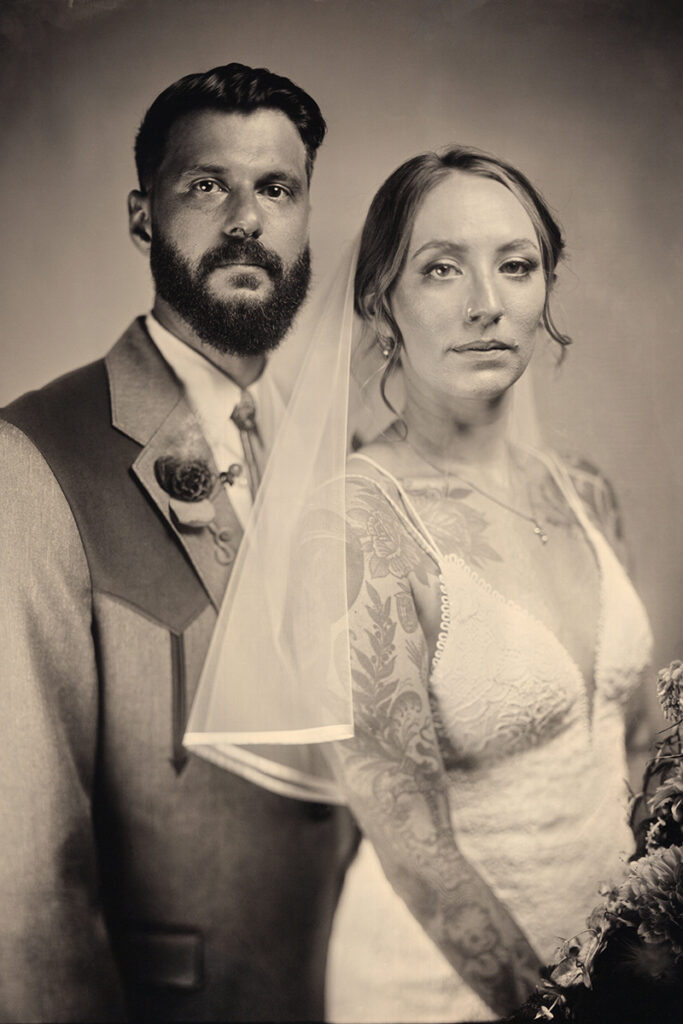
Karson has had a lifelong love for film photography, but she never envisioned it as a business. Once she started practicing tintype, though, she found that people didn’t just appreciate the images; they actively sought them out. Clients often come to her during life transitions and milestones. “I’ve had people say, ‘My mom just died, and I want to remember this moment,’” she says. “Or they’re about to have surgery and want a photo of themselves before.”
The tangible nature of tintype is also a big part of why Karson does what she does. It taps into something she feels personally, having grown up in a family where her grandmother and mother kept meticulous photo albums and scrapbooks. “We’ve moved so far away from holding pictures in our hands,” she says. “That feels important to keep alive.”
She splits her time between Kansas City and New Orleans and says the broader community of wet plate photographers is small and tight-knit. There’s a national group of tintype women photographers she’s connected with who communicate regularly, share troubleshooting tips and have meet-ups when they can.
That insularity is what makes Karson protective of her craft. Interest in tintype has grown over the years, especially with the explosion of short-form video on social media. While she loves and welcomes curiosity, she’s clear-eyed about how much learning from a mentor matters. When she herself was learning the art, she drove from KC to California to apprentice with Will Danaway, a photographer who had been working in tintype for decades, spending a full week with him near Yosemite Valley. “If you want to do tintype photography, you should pay someone for their time to teach you,” she says. “It feels respectful to the art.”
And for Karson, the respect comes from all angles: the history of the process, the community of talented photographers and the images she creates. In an age when most photos live and die in an iCloud account, she’s committed to making something that lasts. “It’s something that you can keep and hold and share forever,” Karson says. megankarson.com