When Nelle Peters struck out on her own in Kansas City in 1909, she had, as she later described it, “very small savings and a large amount of nerve.” Few could have predicted she would become one of the city’s most prolific architects, but now, you’re hard-pressed to take a 10-minute drive through town without finding one of her buildings dotting the landscape.
Ethan Starr is executive director of Historic Kansas City, a preservation advocacy organization dedicated to protecting KC’s historic buildings and neighborhoods. Peters’ work has become central to the organization’s mission, as her buildings represent some of the city’s most significant and endangered residential architecture. “I’d venture that [Peters] has built more buildings than anyone who will ever live in Kansas City,” Starr says.
During her six-decade career, Peters designed nearly 1,000 buildings (that we know of). Documentation from that time period remains fuzzy. Peters transformed the city’s residential DNA during what was arguably the most explosive time in Kansas City: the Roaring Twenties. But her legacy extends beyond sheer volume. Peters made apartment living beautiful, functional and accessible.
In the 1920s, Kansas City transitioned from small-scale apartment buildings to both larger apartment complexes and apartment hotels—multi-story structures offering kitchenettes and hotel-like amenities. Peters partnered with developer Charles Phillips beginning in 1913 and designed dozens of buildings in the Midtown, Plaza and Broadway corridors.
“Nelle Peters was right at the center of this building boom,” Starr says. As Peters told the Kansas City Journal in 1925, “I want each building to be as perfect, as economical and practical as if I were building it for myself.”
When building codes changed in 1924 to require reinforced concrete for structures over two stories, Peters embraced it with her signature style. She softened the hard surfaces of brick, stone and terracotta with whimsical patterns and ornamental details that gave each building a personality.
“Despite the functionality associated with these apartment buildings—and boy, have they functioned well over a century now—the design is intentional and it’s playful,” Starr says. “She was often working with Tudor style, but of course, she was often working with Mediterranean Spanish and these other styles that come to be very closely associated with Kansas City.”
Her grit was unmatched. When Peters made the leap as an independent designer in 1909, she numbered her first three house plans as 25, 26 and 27 so she wouldn’t appear a novice. She consistently downplayed the gender discrimination that was prevalent at the time, famously telling the Kansas City Journal in 1925, “All the talk you hear about men not wanting to take instructions from a woman is bunk, I believe.” However, she strategically changed her name from Nellie to Nelle and sometimes signed plans as N.E. Peters to obscure her gender. “Nelle Peters goes from sort of hiding the fact of her identity to overseeing other male architects,” Starr says. “That was probably profound and rather unprecedented.”
The Ambassador Hotel
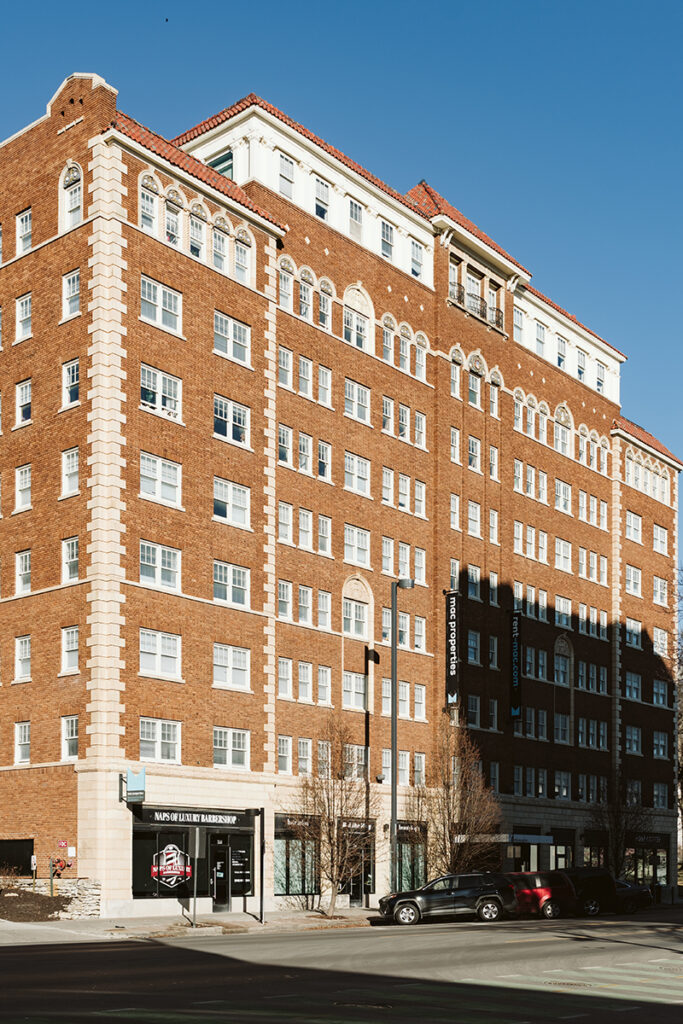
3560 Broadway Blvd., built in 1924
When it opened, this eight-story building was KC’s largest apartment hotel, with 105 apartment units, 108 hotel rooms, shops and a rooftop garden. The Ambassador perfectly demonstrates Peters’ transition to larger-scale modern buildings.
The Valentine Apartments

3724 Broadway Blvd., built in 1927
Originally the 11-story Valentine on Broadway Hotel, this Art Deco-style building still stands as one of Peters’ most prominent projects. The building originally housed 68 apartments and 72 hotel rooms when it opened. After decades of neglect and a failed condo project, the building underwent a historic renovation in 2009 and now houses 65 apartments with fully restored public spaces.
Nelle E. Peters Historic District
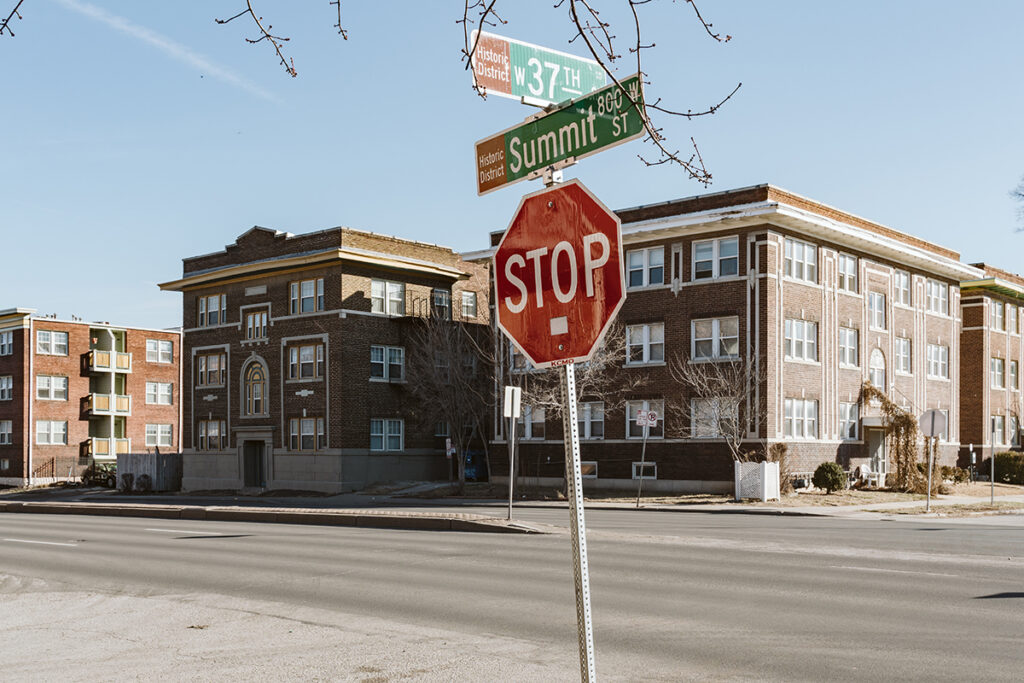
37th St. and Summit Ave., built in the early 1920s
This district, designated in 1982, includes prairie-style apartment buildings with horizontal lines, limestone sills and brick exteriors. These apartments continue serving as affordable housing. “There’s simply no way in which we can create these kinds of units remotely resembling the price that it requires to preserve existing ones,” Starr says.
The Luzier Cosmetics Building
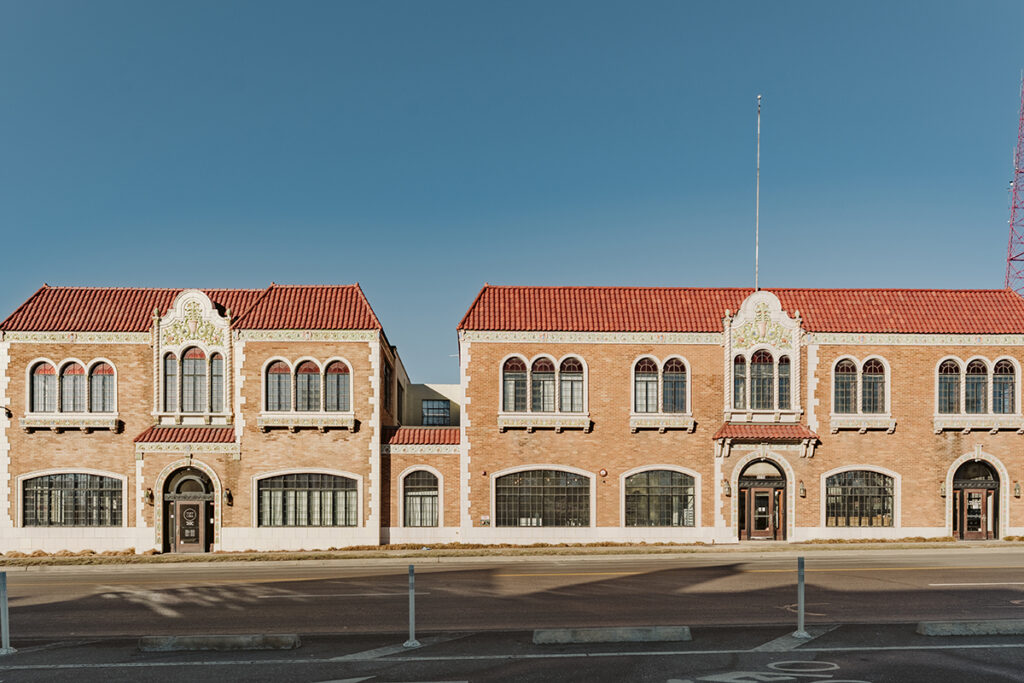
3216 Gillham Plaza, built in 1928
Now home to Billie’s Grocery and office spaces, this building’s crown jewels are its brick facade and floral terracotta panels. Peters also designed the nearby McConahay Building at 821 E. 31st St. in 1922, where a young Walt Disney had his first studio, Laugh-O-Gram, on the second floor.
The Literary Block/Poet Apartments (West Plaza)
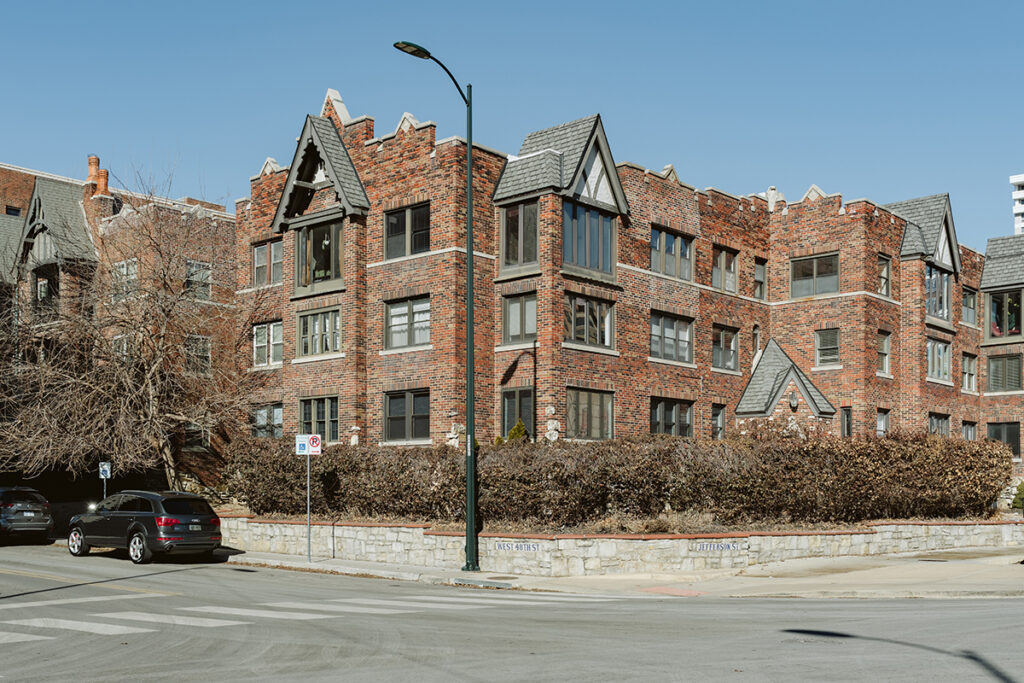
708-748 W. 48th St., built in 1927-1929
These are arguably Peters’ most famous works. Named after literary figures (including Cottesbrook, David Copperfield, Vanity Fair, Mark Twain, Washington Irving and Robert Browning), these apartment buildings form a designated historic district. Each building is built in Spanish Colonial and Tudor styles with courtyard layouts. “The stone has the effect of climbing up the corner of the building,” Starr says, creating what he calls a “storybook” look.