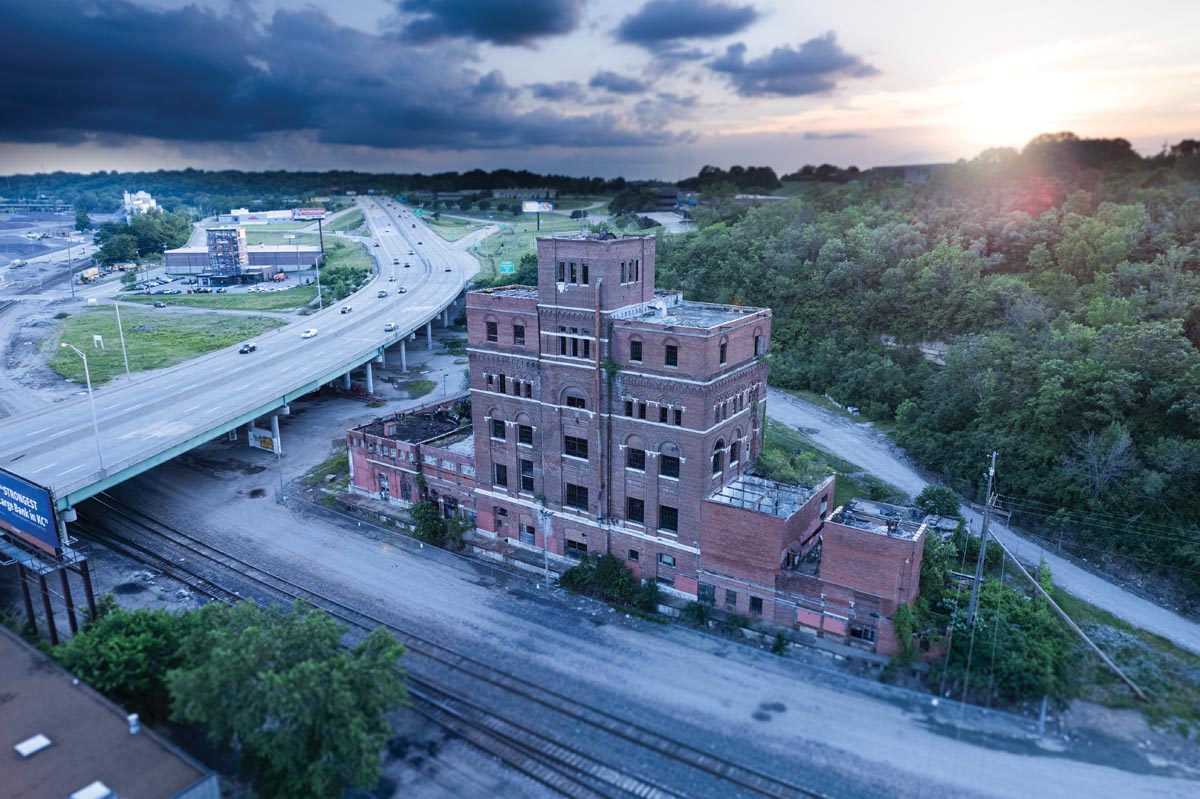
After 70 years spanning the Missouri River, the northbound US-169 bridge won’t reopen. This sudden closure is forcing tens of thousands of daily commuters to find new routes just as Kansas City prepares to host the World Cup this summer.
Missouri Department of Transportation officials made the decision in late 2025 after inspectors discovered critical structural damage beneath the bridge deck. Reports from concerned drivers about a bouncy expansion joint led to the discovery that the bridge’s foundation had shifted underground, displacing the rockers, which are curved supports that allow the structure to expand and contract.
“The abutment moved and the rockers are basically not under the bridge the way they’re supposed to be,” says Greg Bolon, district engineer for MoDOT’s Kansas City District. “Instead of rocking on the bottom, they’re actually perpendicular to where they’re supposed to be. The bridge can’t function that way.”
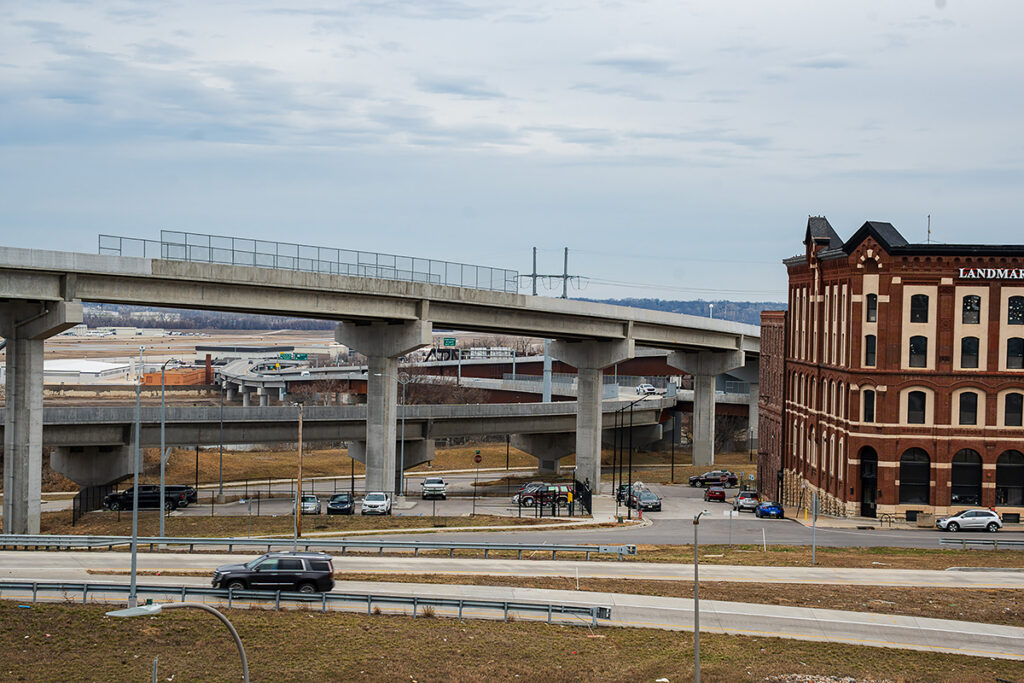
Rather than attempt temporary repairs on a bridge already slated for replacement, MoDOT opted for permanent closure. The bridge, built in the mid-to-late 1950s and absorbed into the state highway system in the 1990s, has simply reached the end of its usable life.
“When you get bridges 60, 70 years old, that’s pretty much their service life,” Bolon says. “Its time for replacement was already scheduled. We just had to close a little sooner than we’d hoped.”
The closure impacts roughly 40,000 vehicles each day, pushing traffic onto other river crossings. To keep the cross-river flow moving, MoDOT has implemented temporary head-to-head traffic on the southbound span while designing permanent crossovers that will provide one lane in each direction. Those crossovers, which require median barrier removal and new asphalt at some points, are awaiting contractor assignment and better weather.
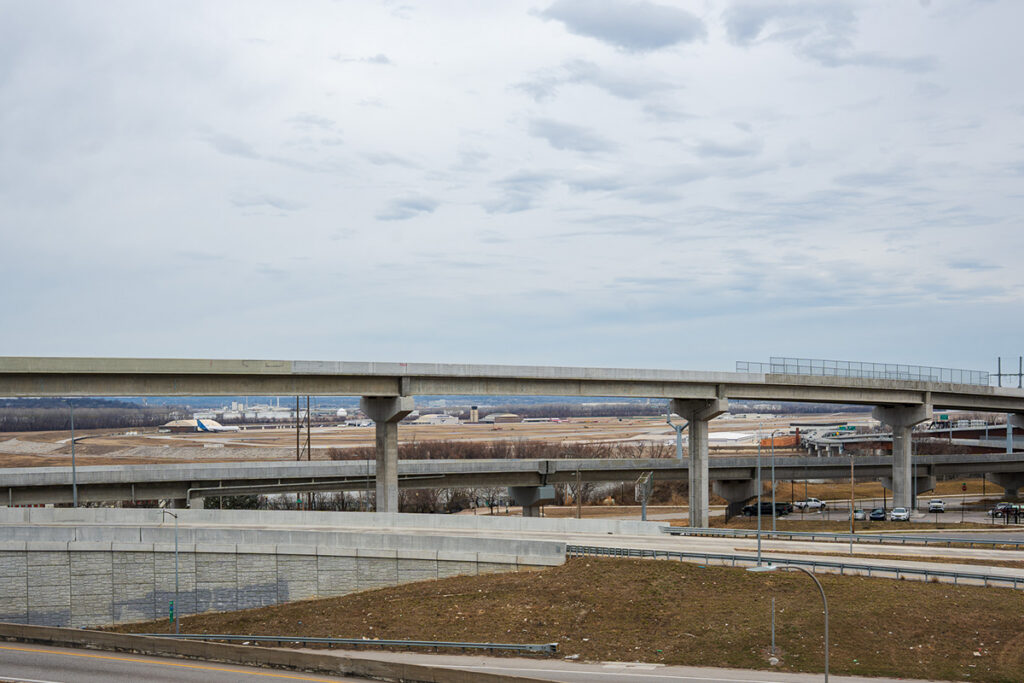
In the meantime, Bolon recommends considering alternative river crossings rather than overloading already-congested routes. “The Fairfax Bridge, the Chouteau Bridge and the Heart of America Bridge all have under 20,000 cars a day,” he says. By comparison the Kit Bond Bridge and I-435 are already near capacity at 108,000 and 80,000 vehicles, respectively.
The replacement project, originally planned for a March letting with post-World Cup construction, will now proceed on an accelerated timeline. Contractors may begin demolition earlier than anticipated, though they’ll need to coordinate with the railroad that runs beneath the bridge. The new structure, designed to modern standards, will be slightly longer than its predecessor (about 10 feet) and mirror the southbound bridge built by MoDOT in 1977.
The finish line for the new bridge is looking to be sometime in 2028, so until then, commuters will need to get creative with their routes or get comfortable with some congestion.
World Cup Worries?
As the city prepares to host World Cup matches this June and July, does the northbound 169 bridge closure add a slight wrinkle to an already-overwhelming transportation plan?
Millions of visitors are expected to visit during the tournament, and KC2026’s ConnectKC26 plan promises three new motorcoach services—Region Direct, Stadium Direct and Airport Direct—including routes from Independence Center, east of the closed bridge.
Jason Sims, the director of transportation for KC2026, Kansas City’s World Cup host committee, was unavailable for an interview before press time, but a KC2026 spokesperson offered some assurance via email: “Good news—no concerns about the 169 bridge impacting the ConnectKC26 transportation network during the World Cup.”
Bolon was similarly unconcerned. By summer, one lane in each direction will be operational, and he expects most international visitors will stick to major interstates like I-29, I-35 and I-435. Whether that holds true when World Cup watchers arrive remains to be seen.